20 Foods High in Healthy Fats You Can Eat Every Day
20 Foods High in Healthy Fats to Eat Daily
Discover 20 foods high in healthy fats, including avocados, nuts, seeds, olive oil, and fatty fish, plus simple ways to add them to meals.
foods-high-in-healthy-fats
Fat has had a complicated reputation for years. Many people still hear the word “fat” and immediately think they should avoid it. But your body needs dietary fat for energy, cell function, and absorption of fat-soluble vitamins. The bigger question is which sources you choose and what foods they replace.
For example, adding a handful of walnuts to oatmeal is very different from regularly eating foods high in saturated fat. Similarly, using olive oil instead of butter can change a meal’s overall fat profile.
If you’re trying to build a healthier everyday diet, you don’t need to remove fat from your plate. Instead, focus on foods that provide mostly unsaturated fats, such as avocados, nuts, seeds, olive oil, and oily fish. The American Heart Association recommends choosing unsaturated fats over saturated and trans fats as part of a heart-healthy eating pattern.
What Are Healthy Fats?
Healthy fats generally refer to foods rich in unsaturated fats, especially monounsaturated and polyunsaturated fats. These include Foods such as avocados, nuts, seeds, plant oils, and fatty fish. Omega-3 fats are a type of polyunsaturated fat found in foods including salmon, sardines, flaxseeds, chia seeds, and walnuts.
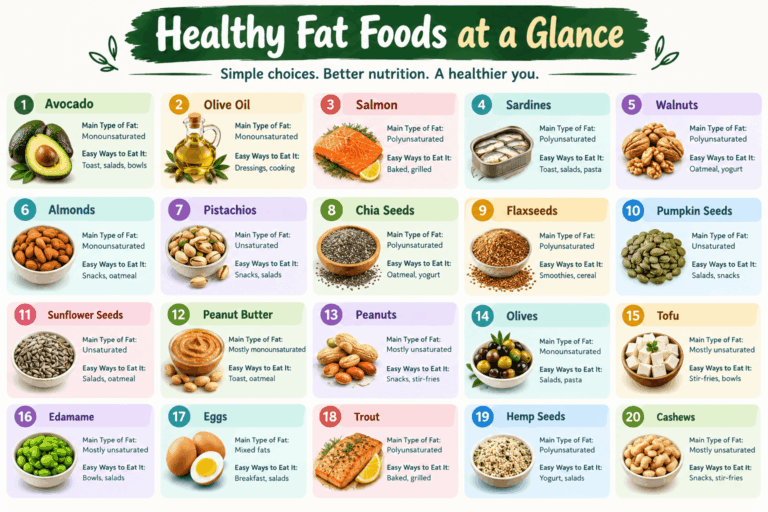
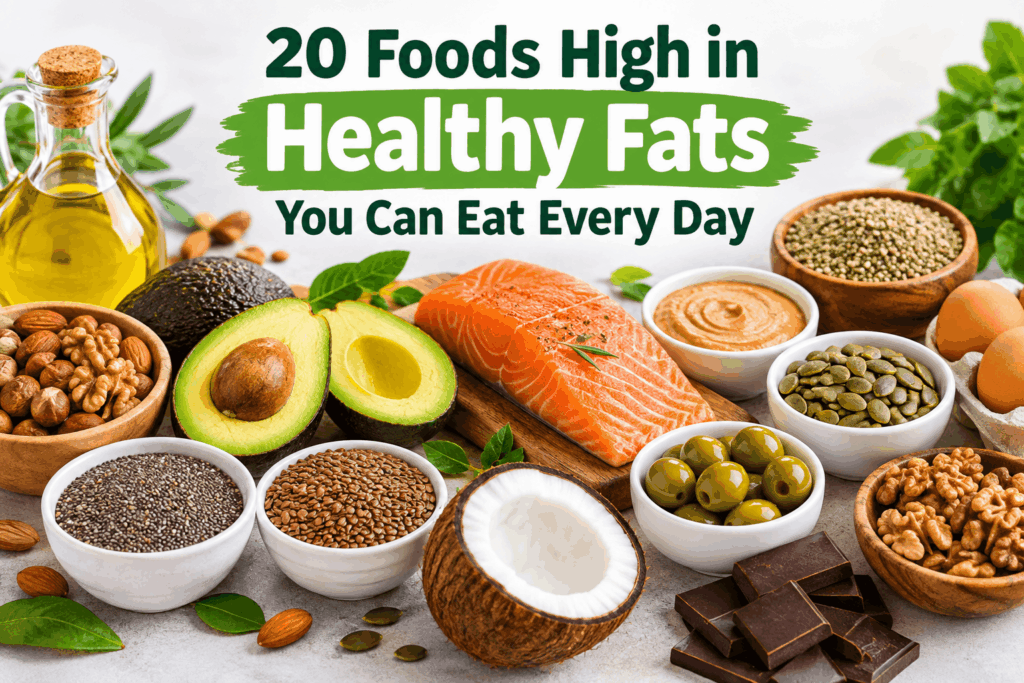
20 Foods High in Healthy Fats
1. Avocados
Avocados are one of the easiest ways to add unsaturated fat to your diet. They’re also a source of fiber and several vitamins and minerals.
Try adding sliced avocado to whole-grain toast, salads, grain bowls, sandwiches, or tacos. You can also mash it with lemon juice and herbs for a simple spread.
2. Extra-Virgin Olive Oil
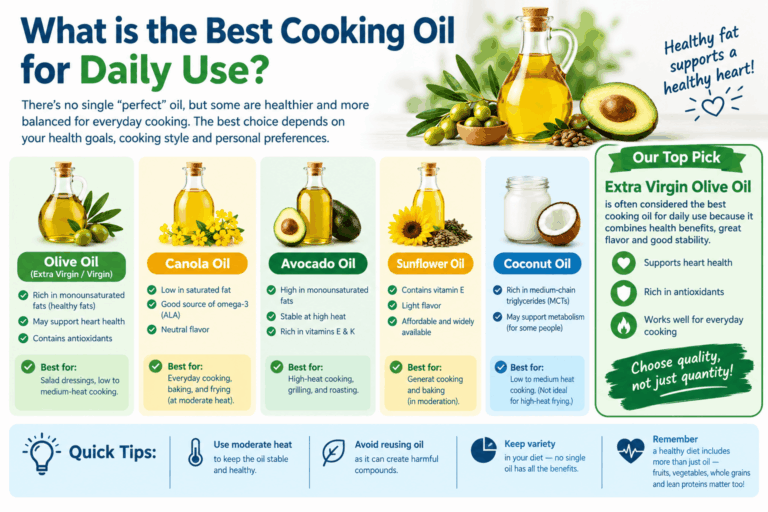
Extra-virgin olive oil is rich in monounsaturated fat and works well in everyday cooking and dressings.
it over cooked vegetables, drizzle it on beans or whole grains, or blend it into a simple homemade salad dressing. Choosing unsaturated plant oils in Place of butter and other saturated-fat-rich options can improve the overall Balance of fats in a meal.
3. Salmon
Salmon is a fatty fish that provides EPA and DHA, two long-chain omega-3 fatty acids. It also provides high-quality protein.
Bake, grill, or pan-cook salmon and serve it with vegetables and whole grains for a balanced meal. The NIH identifies salmon as one of the fish that provides significant amounts of EPA and DHA.
4. Sardines
Sardines are oily fish that offer a good combination of protein and omega-3 fats. Canned sardines are also easy to keep on hand, making them a practical pantry option.
Try serving them on whole-grain toast, adding them to salads or pasta, or mixing them into rice bowls. If you are trying to reduce your sodium intake, choose canned sardines with lower sodium levels.
5. Mackerel
Mackerel is another oily fish naturally rich in omega-3 fatty acids. NIH lists mackerel among the seafood sources of EPA and DHA.
Because fish can vary in mercury content, choose varieties that fit current local fish-consumption guidance, particularly during pregnancy.
6. Herring
Herring is a nutritious fish that provides protein, omega-3 fats, and several other nutrients. Enjoy it baked or grilled, or add it to salads and sandwiches for an easy meal.
When choosing prepared or smoked herring, pay attention to the sodium content, as some preparation methods can significantly increase the amount of salt.
7. Trout
Trout is another fish that can help you add unsaturated fat and omega-3s to your diet.
A simple baked trout fillet works well with roasted vegetables, potatoes, brown rice, or a fresh salad. Choosing fish instead of processed or fatty meats can also improve the overall quality of the meal.
8. Walnuts
Walnuts stand out among nuts because they’re a plant source of alpha-linolenic acid, or ALA, an essential omega-3 fatty acid.
Try adding chopped walnuts to oatmeal or yogurt, tossing them into salads, or enjoying a small portion as a snack. Walnuts are also recognized by the NIH as a food source of alpha-linolenic acid (ALA).
9. Almonds
Almonds are a nutrient-rich Food that supplies mostly unsaturated fats, along with protein, fiber, vitamin E, and important minerals.
Keep a small portion available for snacks, or add sliced almonds to oatmeal, yogurt, salads, and roasted vegetables. Choose unsalted almonds when possible if you’re watching your sodium intake.
10. Pistachios
Pistachios are a practical snack and provide unsaturated fats, protein, and fiber.
Their individual shells can also make it easier to eat them slowly. For an everyday option, choose plain or lightly salted pistachios rather than heavily seasoned varieties.
11. Pecans
Pecans are rich in unsaturated fats and have a naturally rich, buttery flavor.
A small portion can add texture to oatmeal, salads, or plain yogurt. Because nuts are energy-dense, a little can go a long way.
12. Chia Seeds
Chia seeds are tiny but nutritionally useful. They provide ALA omega-3 fatty acids and fiber.
Mix them into oatmeal, overnight oats, yogurt, or smoothies. They also absorb liquid and can be used to make chia pudding.
NIH lists chia seeds as a plant source of ALA.
13. Flaxseeds
Flaxseeds are another plant food rich in ALA. Ground flaxseed is often easier to incorporate into meals than whole flaxseed.
Add ground flaxseed to oatmeal, smoothies, yogurt, or homemade baked goods. Store ground flaxseed according to the package instructions to help maintain freshness.
14. Hemp Seeds
Hemp seeds provide unsaturated fats along with protein and minerals.
Their mild, slightly nutty flavor makes them easy to sprinkle over salads, soups, yogurt, oatmeal, or grain bowls. They can be particularly useful for people looking for plant-based sources of fat and protein.
15. Pumpkin Seeds
Pumpkin seeds, sometimes called pepitas when sold shelled, provide unsaturated fats, protein, and minerals.
Add them to salads, soups, oatmeal, or homemade trail mix. Choose unsalted or lightly salted versions if you want to keep sodium lower.
16. Natural Peanut Butter
Peanut butter can be a convenient source of unsaturated fat and plant protein.
Spread it on whole-grain toast, stir it into oatmeal, or pair it with apple slices. When buying peanut butter, compare labels and choose products with little or no added sugar and unnecessary ingredients.
Peanuts are technically legumes rather than tree nuts, but nutritionally they can still be a useful source of unsaturated fat.
17. Tahini
Tahini is a paste made from ground sesame seeds. It provides unsaturated fats and can add a creamy texture to meals.
Use it to make hummus, salad dressing, sauces, or a simple Dip for vegetables. A Mixture of tahini, lemon juice, water, and garlic makes an easy dressing for grain bowls and salads.
18. Olives
Rich in monounsaturated fats, olives can enhance the flavor of meals without demanding a large serving.
Add a few olives to salads, grain bowls, sandwiches, or Mediterranean-style meals. Since olives are often preserved in salty brine, check the sodium content if you need to limit salt.
19. Canola Oil
Canola oil is a liquid plant oil that contains unsaturated fats and ALA omega-3 fatty acids.
It’s a versatile option for cooking, baking, and homemade dressings. The American Heart Association lists canola oil among plant oils higher in saturated fat.
20. Soybeans and Edamame
Soybeans and edamame are nutritious plant foods that provide unsaturated fats, plant-based protein, and several other important nutrients. Add steamed edamame to rice bowls, salads, stir-fries, or soups. Whole soy foods can be a practical addition to a balanced plant-forward eating pattern.
Comparison Table
| Avocado | Mostly monounsaturated fat | Toast, salads, bowls |
| Olive oil | Mostly monounsaturated fat | Dressings, cooking |
| Salmon | EPA and DHA omega-3s | Baked or grilled |
| Sardines | EPA and DHA omega-3s | Toast, salads |
| Mackerel | EPA and DHA omega-3s | Baked or grilled |
| Herring | EPA and DHA omega-3s | Salads or sandwiches |
| Trout | Unsaturated fats and omega-3s | Baked with vegetables |
| Walnuts | Unsaturated fats and ALA | Oatmeal, yogurt |
| Almonds | Mostly unsaturated fats | Snack or topping |
| Pistachios | Mostly unsaturated fats | Snack |
| Pecans | Mostly unsaturated fats | Oatmeal or salads |
| Chia seeds | ALA omega-3s | Oatmeal or yogurt |
| Flaxseeds | ALA omega-3s | Ground into oatmeal |
| Hemp seeds | Unsaturated fats | Salads or bowls |
| Pumpkin seeds | Unsaturated fats | Soups or snacks |
| Peanut butter | Mostly unsaturated fats | Toast or fruit |
| Tahini | Unsaturated fats | Hummus or dressing |
| Olives | Mostly monounsaturated fat | Salads or bowls |
| Canola oil | Unsaturated fats and ALA | Cooking |
| Soybeans | Unsaturated fats | Edamame or bowls |
Practical Tips for Eating More Healthy Fats
Build Meals Around Whole Foods
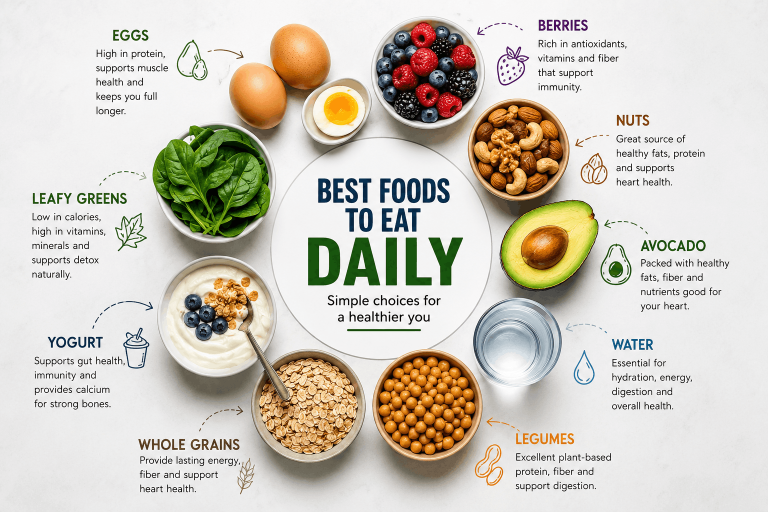
Instead of thinking about individual nutrients, look at the whole meal. Pair healthy fat sources with vegetables, fruits, whole grains, legumes, and quality protein.
For example, a lunch of salmon, brown rice, roasted vegetables, and a small olive-oil dressing is more balanced than simply adding oil to an otherwise low-nutrient meal.
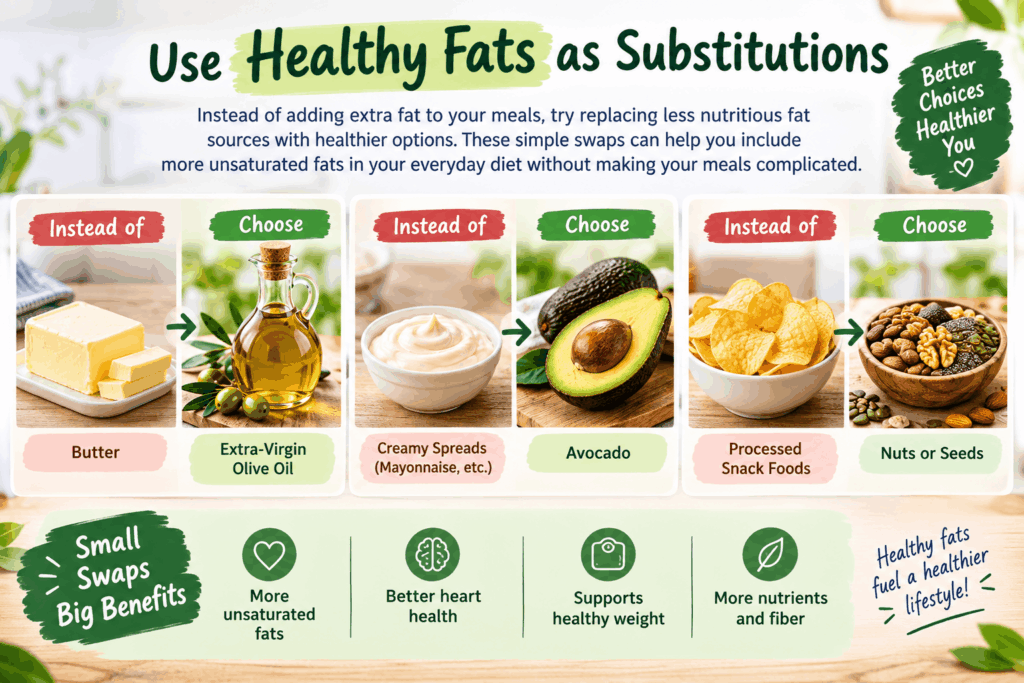
Use Healthy Fats as Substitutions
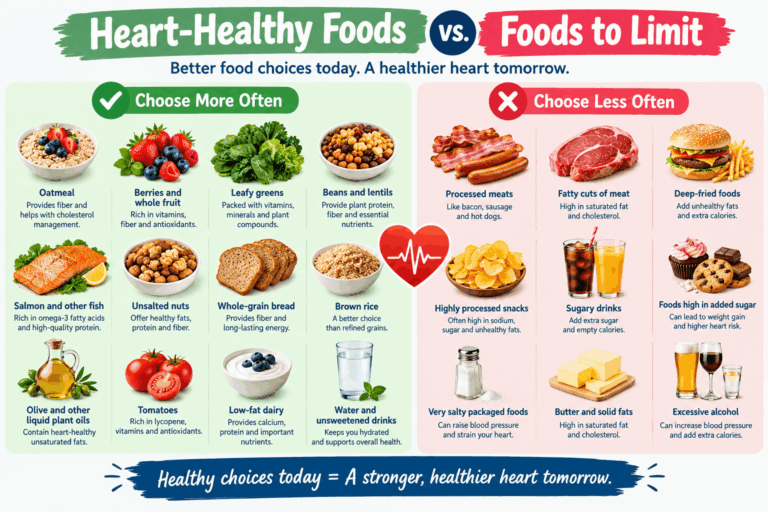
One of the most useful strategies is substitution. Try olive oil instead of butter in suitable dishes, nuts instead of highly processed snack foods, or fatty fish instead of processed meat.
The American Heart Association specifically recommends replacing saturated fats with unsaturated fats rather than simply adding more fat to the diet.
Pay Attention to Portions
Healthy fats are still calorie-dense. Dietary fat provides about 9 calories per gram; large portions can add substantial energy to a meal.
That doesn’t mean you need to avoid these foods. It simply means portion size matters, especially if you’re trying to manage your overall calorie intake.
Choose Minimally Processed Options
Whenever possible, choose foods Such as plain nuts, seeds, avocados, fish, and unsweetened nut or seed butters.
Watch for added sugar, excessive sodium, and highly processed ingredients in flavored or packaged products.
Common Mistakes to Avoid
Assuming All Fats Are the Same
Healthy fats and saturated fats aren’t interchangeable. Current heart-health guidance emphasizes choosing unsaturated fats instead of saturated fats.
Eating Unlimited Amounts
Even nutritious foods can add a Significant number of calories when consumed in large portions.
Relying Only on Supplements
Whole foods can provide healthy fats alongside protein, fiber, vitamins, minerals, and other nutrients. NIH notes that omega-3s occur naturally in foods like fish, flaxseed, chia seeds, walnuts, and certain plant oils.
Forgetting About Sodium
Some otherwise nutritious foods, including olives, smoked fish, salted nuts, and prepared spreads, can contain substantial sodium. Compare nutrition labels when sodium intake is a concern.
Thinking “Healthy” Means “Eat It at Every Meal”
You don’t need to include every food on this list every day. A varied eating pattern provides you with more nutritional diversity and makes meals more interesting.
Key Takeaways
- Healthy fats mainly come from foods rich in unsaturated fats.
- Good choices include avocados, olive oil, nuts, seeds, and fatty fish.
- Salmon, sardines, mackerel, herring, and trout provide omega-3 fats.
- Walnuts, chia seeds, and flaxseeds provide plant-based ALA omega-3.
- Make healthier fat swaps by choosing foods with unsaturated fats and limiting those That Contain high amounts of saturated fat.
- Healthy fats are calorie-dense, so portions still matter.
- Choose minimally processed foods and check sodium and added-sugar levels in packaged products.
- A balanced eating pattern matters more than any single food.
Frequently Asked Questions
What are the best foods high in healthy fats?
Some useful choices include avocados, olive oil, salmon, sardines, walnuts, almonds, chia seeds, flaxseeds, pumpkin seeds, and natural peanut butter. What works best for you can depend on your usual diet, personal tastes, budget, and specific nutritional Requirements.
Can I eat healthy fats every day?
Yes. Healthy fats can be part of a balanced diet every day. The key is variety, appropriate portions, and choosing unsaturated fats more often than saturated fats.
Which foods are highest in omega-3 fats?
Fatty fish such as salmon, mackerel, herring, and sardines are important sources of EPA and DHA. Plant foods such as flaxseed, chia seeds, and walnuts provide ALA, another type of omega-3 fatty acid.
Are nuts a healthy Source of fat?
Yes. Nuts provide mostly unsaturated fats and can also provide protein, fiber, vitamins, and minerals. Almonds, walnuts, pistachios, and pecans are all useful options.
Is avocado a healthy fat?
Avocado is a good source of monounsaturated fat and also contains fiber, vitamins, and minerals. It can be added to salads, sandwiches, grain bowls, or used as a spread.
Are olive oil and canola oil healthy choices?
Both are liquid plant oils that provide unsaturated fats. According to the American Heart Association, olive and canola oils are healthy plant-oil options that may replace Fats with higher amounts of saturated fat.
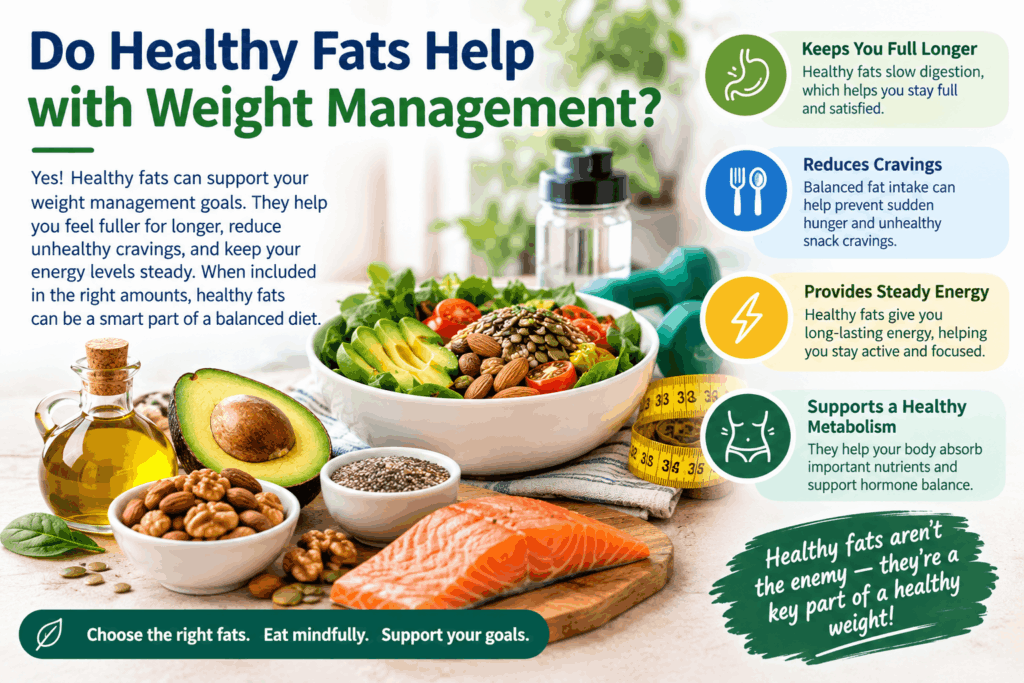
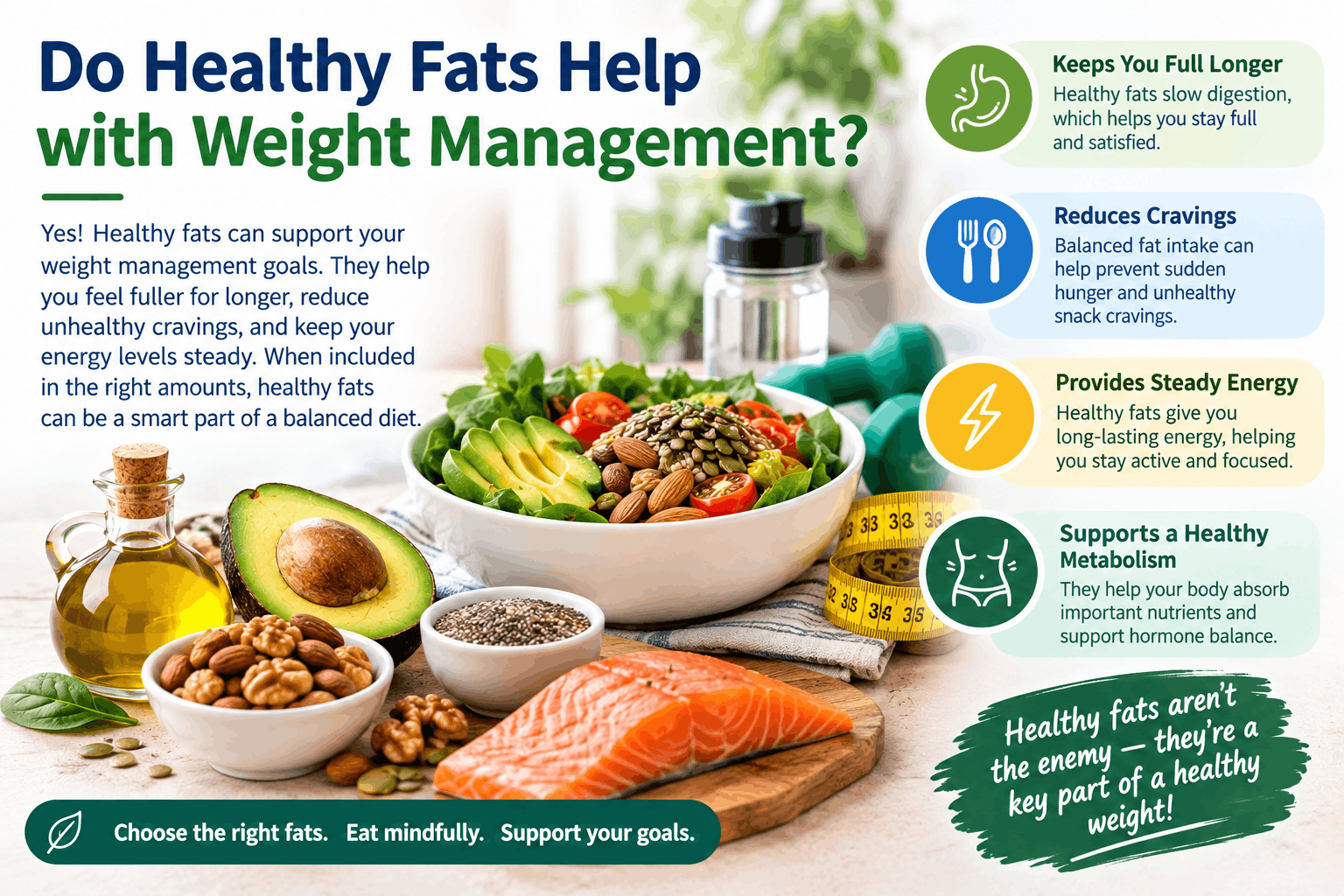
Do healthy fats help with weight management?
Healthy-fat foods can be nutritious additions to meals, but fat contains about 9 calories per gram. Eating large amounts can therefore increase total calorie intake. For weight management, overall food quality, portions, physical activity, and total energy intake all matter.
Conclusion
Healthy fats don’t need to be complicated. A few simple changes can make them a natural part of everyday meals.
Add walnuts or chia seeds to breakfast, use olive or canola oil when appropriate, choose avocado for sandwiches and salads, and include oily fish such as salmon or sardines regularly. These foods provide unsaturated fats and, in many cases, other valuable nutrients.
The bigger picture matters most. Rather than focusing on one “perfect” food, build meals around a variety of vegetables, fruits, whole grains, legumes, seafood or other quality protein sources, and healthy sources of unsaturated fat. Current American Heart Association guidance emphasizes this overall dietary pattern and recommends choosing unsaturated fats instead of saturated fats.
Disclaimer
This article is published solely for educational and informational purposes. The information provided is intended to increase general awareness and understanding of the topic. It is not medical, insurance, financial, legal, or other professional advice. Readers should consult qualified professionals before making any healthcare, insurance, financial, or legal decisions.
References
- American Heart Association (AHA)
- National Institutes of Health (NIH), Office of Dietary Supplements
- U.S. Department of Health & Human Services (HHS)
- Dietary Guidelines for Americans
- National Center for Biotechnology Information (NCBI)