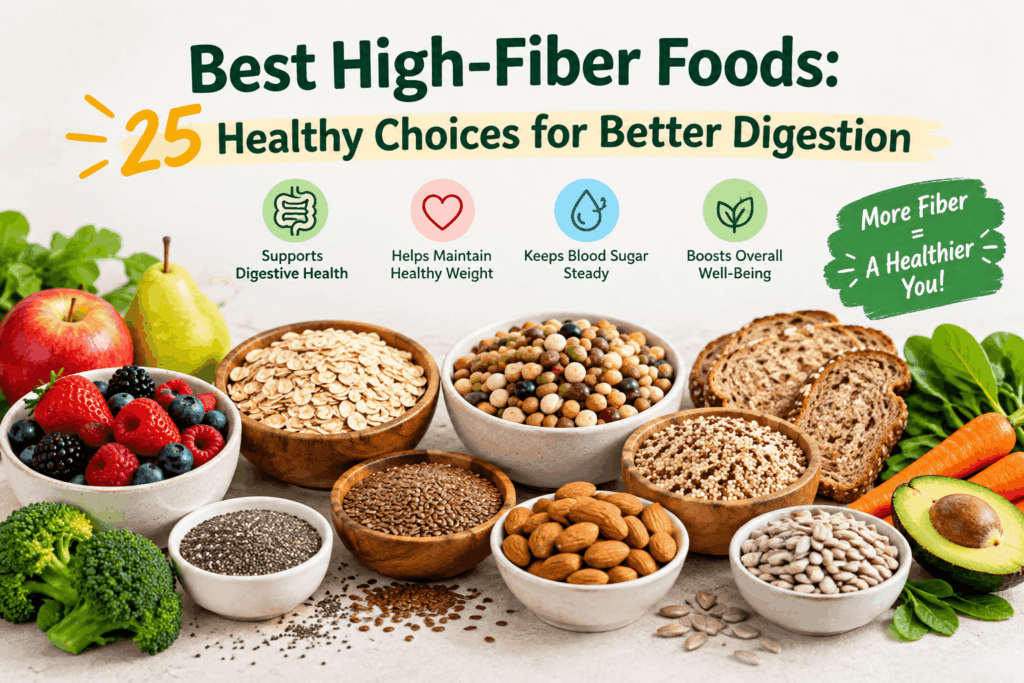
Best High-Fiber Foods: 25 Healthy Choices for Better Digestion
Best High-Fiber Foods for a Healthy Diet
Discover the best high-fiber foods, including beans, fruits, vegetables, whole grains, nuts, and seeds, plus easy ways to add more fiber daily.
best-high-fiber-foods
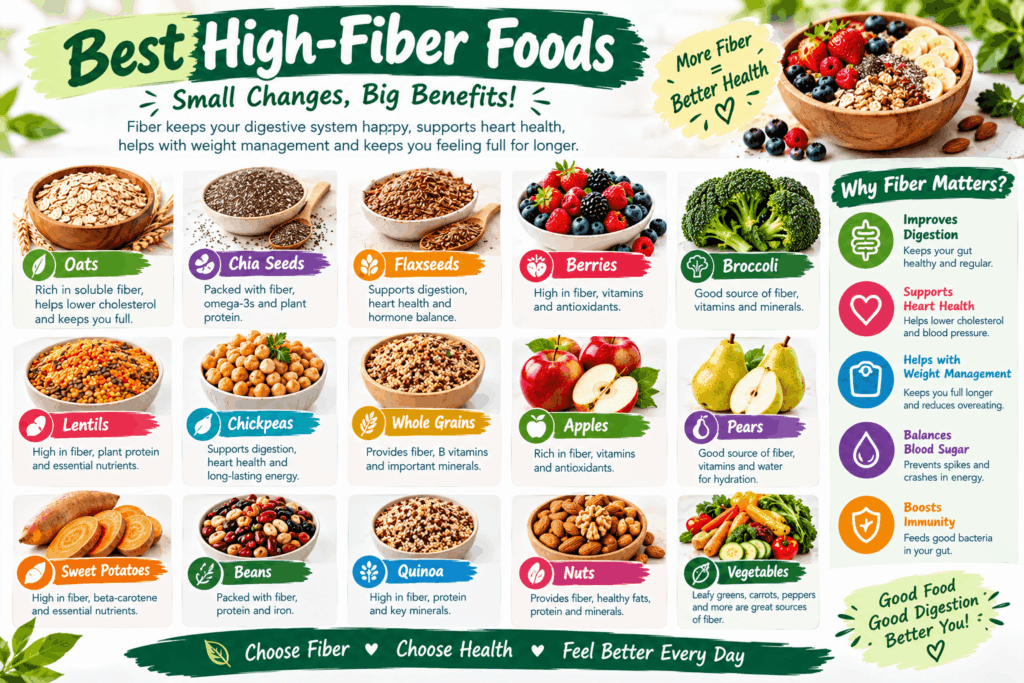
If your meals leave you hungry soon after eating, or you regularly struggle with constipation, your diet may be missing one important nutrient: fiber. Many people know that fruits and vegetables are healthy, but fewer realize how much fiber they can get from beans, lentils, whole grains, nuts, seeds, and other everyday foods.
Fiber supports healthy digestion and can help you feel satisfied after meals. A fiber-rich eating pattern is also associated with several important health benefits.
In this guide, you’ll discover the best high-fiber foods, how much fiber adults generally need, which foods provide the most, and simple ways to increase your intake without completely changing the way you eat.
What Are High-Fiber Foods?
High-fiber foods are mainly plant-based foods that provide significant amounts of dietary fiber. Good sources include beans and lentils, whole grains, fruits, vegetables, nuts, and seeds. Fiber passes through the digestive system partly or largely undigested and supports normal bowel function.
Why Is Fiber Important?
Fiber is a type of carbohydrate found naturally in plant foods. Unlike many other carbohydrates, much of it is not fully broken down and absorbed in the small intestine.
A diet containing enough fiber can support regular bowel movements and help prevent constipation. Research also links higher fiber intake with a lower risk of conditions including heart disease, stroke, type 2 diabetes, and bowel cancer.
Fiber can also make meals more filling. Foods such as beans, oats, vegetables, fruit, and whole grains often provide fiber along with other nutrients, making them useful parts of a balanced diet.
How Much Fiber Do Adults Need?
Fiber needs vary by age and sex. In the United States, general guidance has traditionally recommended about 14 grams of fiber per 1,000 calories. The National Institute of Diabetes and Digestive and Kidney Diseases also notes that adults generally need around 22 to 34 grams per day, depending on age and sex.
In the UK, government guidance recommends that adults aim for 30 grams of fiber per day. Rather than focusing on one specific number, the practical goal is to include a variety of fiber-rich foods regularly throughout the day.
Best High-Fiber Foods to Add to Your Diet
1. Lentils
Lentils are an easy way to add A good amount of fiber to a meal. They also provide plant-based protein, making them especially useful for vegetarian and vegan diets.
Add cooked lentils to soups, curries, salads, grain bowls, or pasta sauces.
A half-cup serving of cooked lentils provides about 7.8 grams of fiber according to NIDDK food-source data.
2. Black Beans
Black beans are rich in fiber and easy to add to many meals.
Try them in tacos, burrito bowls, soups, salads, or alongside brown rice. Canned black beans can also be convenient. If they contain added sodium, rinsing them can help reduce some of the salt.
3. Chickpeas
Chickpeas, also called garbanzo beans, are another versatile high-fiber food.
Use them to make hummus, add them to salads, or mix them into soups and curries. A half-cup serving of cooked chickpeas provides about 6.3 grams of fiber.
4. Kidney Beans
Kidney beans provide fiber, plant-based protein, and other essential nutrients.
They are especially useful in chili, bean salads, soups, and rice dishes. Pairing beans with whole grains creates a filling, affordable meal.
5. Green Peas
Green peas are often overlooked, but they are a good source of dietary fiber.
According to NIDDK-referenced food data, one cup of cooked green peas contains about 8.8 grams of fiber.
Frozen peas are especially convenient and can be added to pasta, rice, soups, and vegetable dishes.
6. Raspberries
Raspberries are among the fruit choices that can provide a particularly high amount of fiber.
One cup contains about 8 grams of fiber according to NIDDK food-source data.
Enjoy them with plain yogurt, oatmeal, or as a simple snack.
7. Pears
Pears are a convenient Source of fiber, especially when eaten with the skin.
A medium Asian pear provides about 6.5 grams of fiber, while other varieties also provide a meaningful amount.
Wash the fruit well and keep the skin on when appropriate.
8. Apples
Eating an apple with its skin on provides fiber, along with vitamins and other beneficial plant compounds.
One medium apple with skin contains about 4.8 grams of fiber NIDDK’s food-source table.
Instead of drinking apple juice, eating the whole fruit gives you the fiber naturally present in the apple.
9. Avocado
Avocado is a useful way to add fiber to meals while also providing unsaturated fat.
Spread it on whole-grain toast, add it to salads, or use it as a topping for beans and whole-grain bowls.
Because avocado is energy-dense, portion size still matters if you’re watching your overall calorie intake.
10. Oats
Oats are a simple and healthy breakfast choice that can help increase your daily fiber intake. You can make oatmeal more enjoyable by adding berries, apples, pears, nuts, or seeds. Oats provide soluble fiber, while other whole-grain foods can also contribute to your overall fiber intake.
Whenever possible, choose plain or lightly sweetened oats and add fresh fruit for natural sweetness.
11. Barley
Barley is a whole grain that can add fiber and texture to meals.
Use it in soups, grain bowls, salads, or as an Alternative to refined grains. Whole grains such as barley, oats, brown rice, and whole-wheat products are good sources of dietary fiber.
12. Brown Rice
Switching from white rice to brown rice is a straightforward way to increase whole-grain intake.
Brown rice can be served with beans, vegetables, grilled foods, or curries. If you’re used to white rice, start by mixing the two and gradually increase the proportion of brown rice.
13. Whole-Wheat Bread
Whole-wheat bread generally provides more fiber than refined white bread.
When shopping, check the ingredient list and Nutrition Facts label rather than relying only on words such as “multigrain.” Some products can sound healthy without containing much whole grain.
14. Whole-Wheat Pasta
Whole-wheat pasta is another simple substitute for refined pasta.
Pair it with tomato sauce, lentils, chickpeas, vegetables, or lean protein for a balanced meal.
15. Sweet Potatoes
Sweet potatoes provide fiber along with several vitamins and minerals.
Eating the skin can increase the fiber you get from the potato. A cup of cooked sweet potato contains about 6.3 grams of fiber in NIDDK food-source data.
16. Broccoli
Broccoli is a practical high-fiber vegetable that works in almost any meal.
Steam, roast, stir-fry, or add it to soups and pasta. One cup of cooked broccoli provides about 5.2 grams of fiber according to NIDDK’s food-source table.
17. Carrots
Carrots provide fiber and are easy to eat raw or cooked.
Keep baby carrots available for snacks, add shredded carrots to salads, or roast them as a side dish.
18. Green Leafy Vegetables
Spinach, kale, collard greens, and similar vegetables provide fiber along with a variety of vitamins and minerals.
Add leafy greens to omelets, soups, salads, sandwiches, or grain bowls.
19. Almonds
Nuts can contribute fiber, protein, and unsaturated fats.
A small handful of unsalted almonds makes a convenient snack. Since nuts are calorie-dense, it is important to keep portion sizes in mind.
20. Chia Seeds
Chia seeds are a concentrated source of fiber and are easy to add to meals.
Try adding them to oatmeal, yogurt, smoothies, or overnight oats. Start with a modest amount and increase it gradually if your body is not used to a high-fiber diet.
21. Flaxseeds
Ground flaxseed can be added to oatmeal, yogurt, smoothies, or baked goods.
Grinding the seeds can make them easier to incorporate into food. Store them appropriately to maintain freshness.
22. Popcorn
Plain air-popped popcorn is a whole-grain food and can be a fiber-containing snack.
Large amounts of butter, sugar, or salt can turn a simple snack into a much less balanced choice.
23. Prunes
Prunes, or dried plums, provide fiber and are commonly included in dietary approaches for constipation.
Because dried fruit is concentrated, Portion sizes are smaller than those for fresh fruit. The NHS also recommends eating dried fruit with meals because its stickiness can increase the risk of tooth decay.
24. Bulgur
Bulgur is a whole-grain option that cooks relatively quickly and works well in salads, bowls, and side dishes. refined grain and offers a convenient way to add variety to your whole-grain choices.
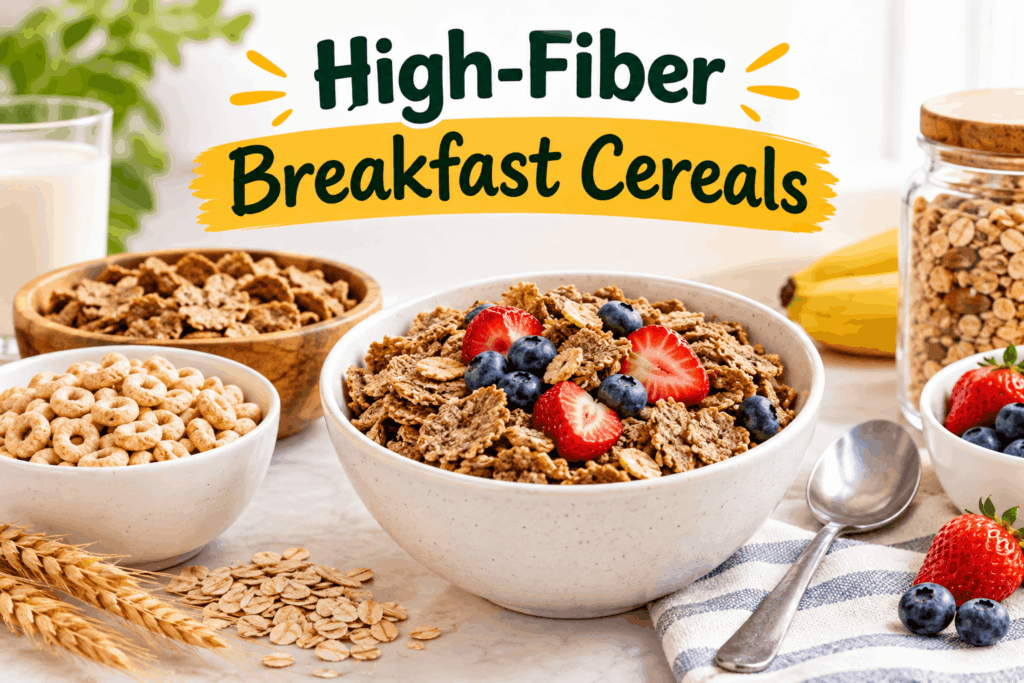
25. High-Fiber Breakfast Cereals
Some breakfast cereals can provide a significant amount of fiber.
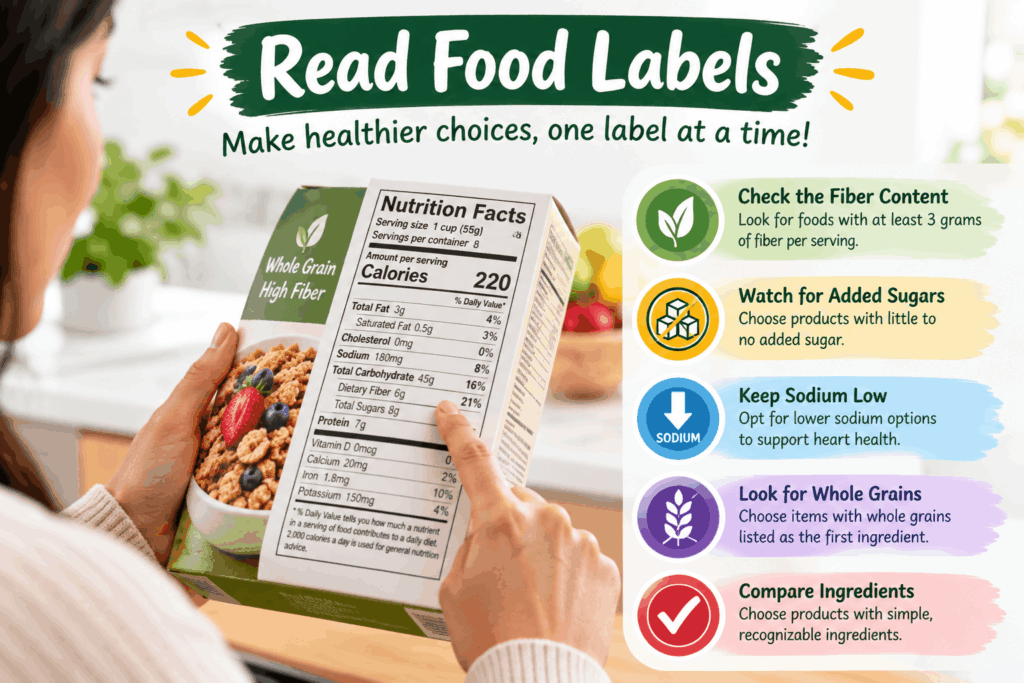
However, don’t choose cereal based on fiber alone. Compare the Nutrition Facts label and ingredient list, paying attention to added sugars, sodium, and serving size.
High-Fiber Foods Comparison Table
| Raspberries | 1 cup | 8.0 g |
| Green peas, cooked | 1 cup | 8.8 g |
| Lentils, cooked | 1/2 cup | 7.8 g |
| Chickpeas, cooked | 1/2 cup | 6.3 g |
| Sweet potato, cooked | 1 cup | 6.3 g |
| Broccoli, cooked | 1 cup | 5.2 g |
| Apple with skin | 1 medium | 4.8 g |
| Asian pear | 1 medium | 6.5 g |
Values can vary according to food Variety, preparation method, serving size, and product. The figures above are examples from NIDDK’s referenced food-source data.
Soluble vs. Insoluble Fiber
Fiber is often discussed in two broad categories: soluble and insoluble.
Soluble fiber dissolves or disperses in water and is found in foods such as oats, beans, fruits, and some vegetables.
Insoluble fiber does not dissolve in water and is common in whole grains, vegetables, and other plant foods.
Many foods contain both types, so you generally don’t need to calculate exactly how much of each you consume. Eating a wide variety of plant foods is a practical approach.
How to Increase Fiber Without Digestive Discomfort
Adding a lot of fiber overnight can cause bloating, gas, or abdominal discomfort.
Instead, increase your intake gradually. For example, add fruit to breakfast, switch one refined grain to a whole-grain option, and include beans or lentils with one meal each day.
Drinking enough fluid is also important because fluids help fiber work properly in the digestive system.
Practical Tips
Build Your Meals Around Plants
A simple approach is to include a fruit or vegetable at most meals and regularly rotate beans, lentils, whole grains, nuts, and seeds.
Upgrade Your Breakfast
Try oatmeal topped with berries and chia seeds instead of a low-fiber breakfast. Another option is whole-grain toast with avocado and a piece of fruit.
Add Beans to Familiar Meals
You don’t need to create completely new recipes. Add chickpeas to a salad, lentils to soup, or black beans to tacos and rice.
Keep Fruit Visible
Keep apples, pears, oranges, or berries in a human-friendly place. Easy access makes nutritious snacks practical.
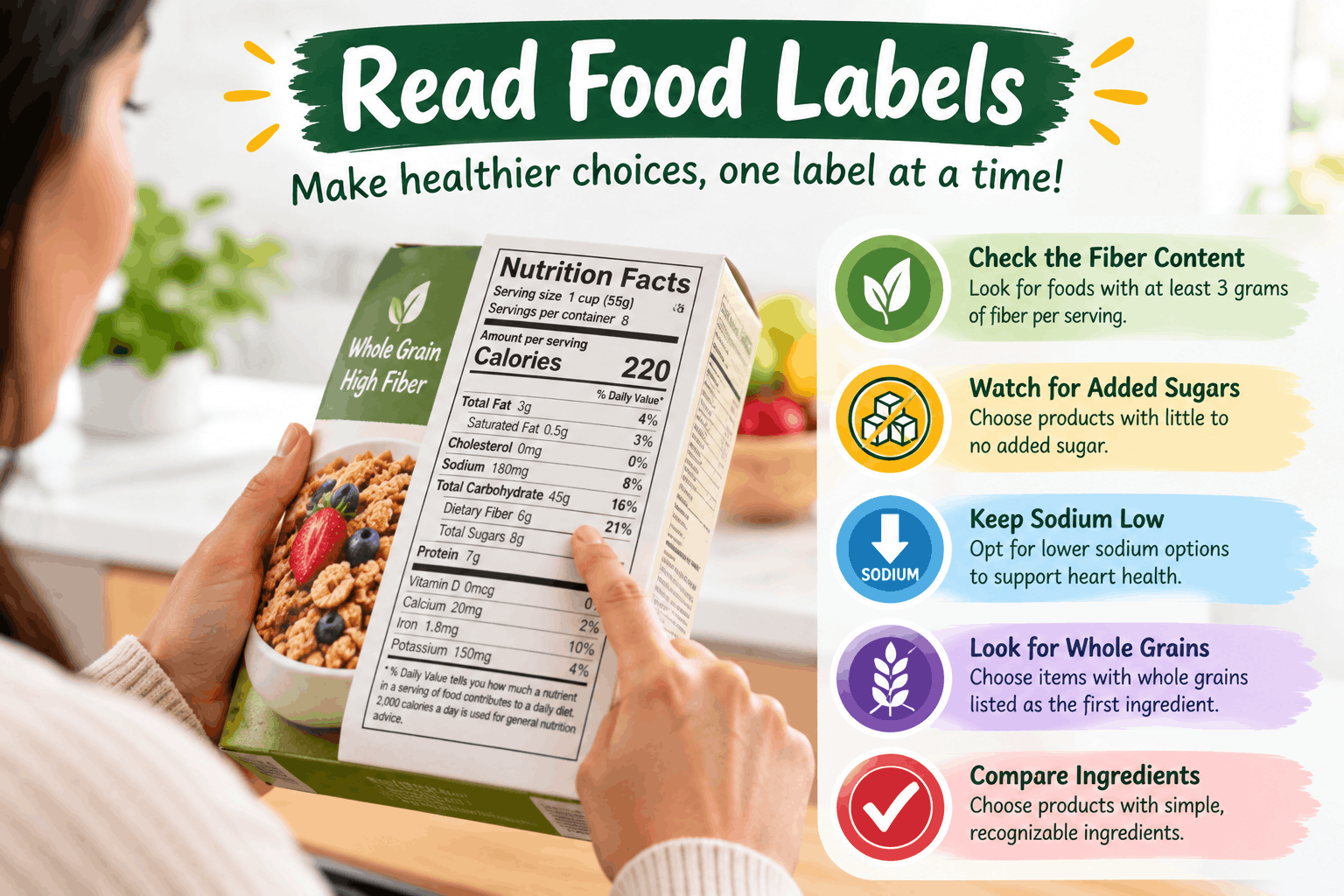
Read Food Labels
For packaged foods, compare fiber per serving and check the ingredient list. The NHS considers a food high in fiber when it contains 6 grams or more per 100 grams.
Choose Whole Grains More Often
Look for whole-wheat bread and pasta, oats, barley, bulgur, and brown rice instead of relying mainly on refined grains.
Common Mistakes
Increasing Fiber Too Quickly
A sudden increase can cause gas, bloating, and discomfort. Increase your intake gradually.
Forgetting About Fluids
Fiber works better when you’re adequately hydrated. Increase fluids as you increase fiber, unless a healthcare professional has told you to restrict fluids.
Relying on Fiber Supplements Alone
Supplements may be useful in some situations, but whole foods provide fiber along with vitamins, minerals, and other beneficial nutrients.
Assuming Every “Whole Grain” Product Is Healthy
Terms such as “multigrain” do not necessarily mean a product is high in whole grains or fiber. Always check the label.
Eating Only One Type of Fiber-Rich Food
Variety matters. Include a range of fruits, vegetables, legumes, whole grains, nuts, and seeds instead of relying on a single food.
Key Takeaways
- High-fiber foods mainly come from plants.
- Beans, lentils, fruits, vegetables, whole grains, nuts, and seeds are excellent choices.
- Adults generally need roughly 22 to 34 grams of fiber daily in U.S. guidance, depending on age and sex.
- UK guidance recommends about 30 grams of fiber per day for adults.
- Increase fiber gradually to reduce digestive discomfort.
- Drink adequate fluids when increasing fiber.
- Choose a variety of fiber-rich foods rather than relying on one source.
- Whole foods are generally preferable to getting most of your fiber from supplements.
Frequently Asked Questions
What foods are highest in fiber?
Some particularly fiber-rich choices include beans, lentils, peas, raspberries, certain high-fiber cereals, chickpeas, whole grains, nuts, seeds, and some vegetables. Exact amounts depend on the serving size and preparation method.
What is the best high-fiber food for Breakfast?
Oatmeal topped with berries, chia seeds, ground flaxseed, or a chopped pear can provide a substantial amount of fiber. Whole-grain toast with fruit is another practical option.
Can high-fiber foods help with constipation?
Yes. Increasing dietary fiber can help prevent and relieve constipation for many people. should generally be increased gradually, along with adequate fluid intake.
Are fruits high in fiber?
Many fruits provide fiber, especially when eaten whole. Raspberries, pears, apples With Their skin, and oranges are good options. Whole fruit generally provides more fiber than fruit juice.
Is brown rice higher in fiber than white rice?
Brown rice is a whole-grain food and generally contains more fiber than refined white rice. Choosing whole-grain versions of commonly eaten foods is a simple way to increase fiber intake.
Can eating too much fiber cause problems?
Increasing fiber too quickly can cause gas, bloating, or abdominal discomfort. Gradually increasing fiber and drinking adequate fluids can make the transition easier. People with certain digestive conditions may need individualized advice.
Should I get fiber from food or supplements?
For most people, a varied diet is a practical way to get fiber because high-fiber foods also provide other nutrients. Supplements may be appropriate in some situations, but they should not automatically replace a balanced diet.
Conclusion
Adding more fiber to your diet does not have to mean following a complicated meal plan. Small changes can make a meaningful difference: choose oatmeal instead of a low-fiber breakfast, eat fruit whole, keep the skin on suitable fruits and vegetables, add beans or lentils to familiar meals, and choose whole grains more often.
The key is variety and consistency. By making high-fiber foods a regular part of your meals and gradually increasing your intake, you can build a more balanced eating pattern that supports healthy digestion and overall nutrition.
Disclaimer
This article is intended for educational and informational purposes only. It provides general information and awareness about the topic and should not be viewed as medical, insurance, financial, legal, or other professional advice. Readers should seek guidance from a qualified professional before making healthcare, insurance, financial, or legal decisions.
References
- U.S. Department of Agriculture (USDA)
- U.S. Department of Health & Human Services (HHS)
- National Institute of Diabetes and Digestive and Kidney Diseases (NIDDK)
- National Institutes of Health (NIH)
- National Health Service (NHS)
- World Health Organization (WHO)