Healthy Grocery List: Simple Foods for a Balanced Diet
Healthy Grocery List: What to Buy
Build a healthy grocery list with nutritious fruits, vegetables, whole grains, protein, dairy, snacks, and pantry staples for easy everyday meals.
healthy-grocery-list
Walking into a grocery store without a plan can make healthy eating surprisingly difficult. You may start with good intentions, but after a few aisles, it is easy to end up with convenience foods, sugary snacks, or ingredients that sit unused in the pantry.
A well-planned healthy grocery list can make a big difference. Instead of deciding what is healthy while you shop, you can choose nutritious foods ahead of time and build simple meals around them. It can also help reduce food waste, control unnecessary spending, and make busy weeknight meals easier.
In this guide, you will learn what to put on a healthy grocery list, how to choose better options in each grocery aisle, how to shop on a budget, and which common mistakes to avoid.
What Is a Healthy Grocery List?
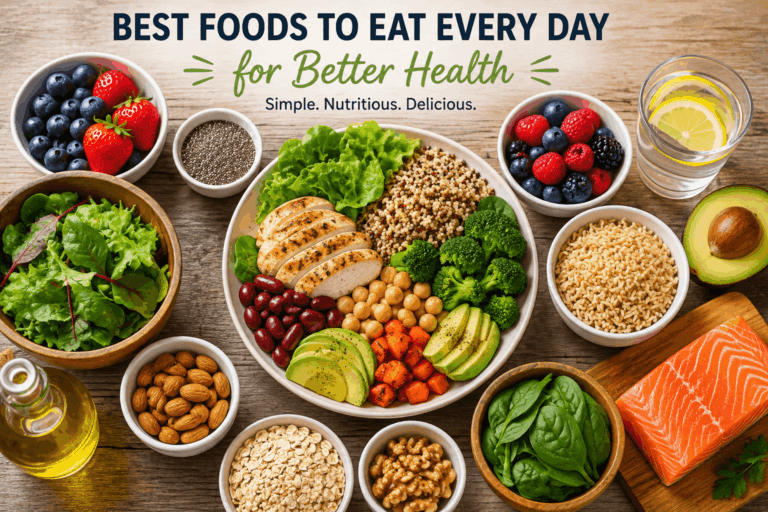
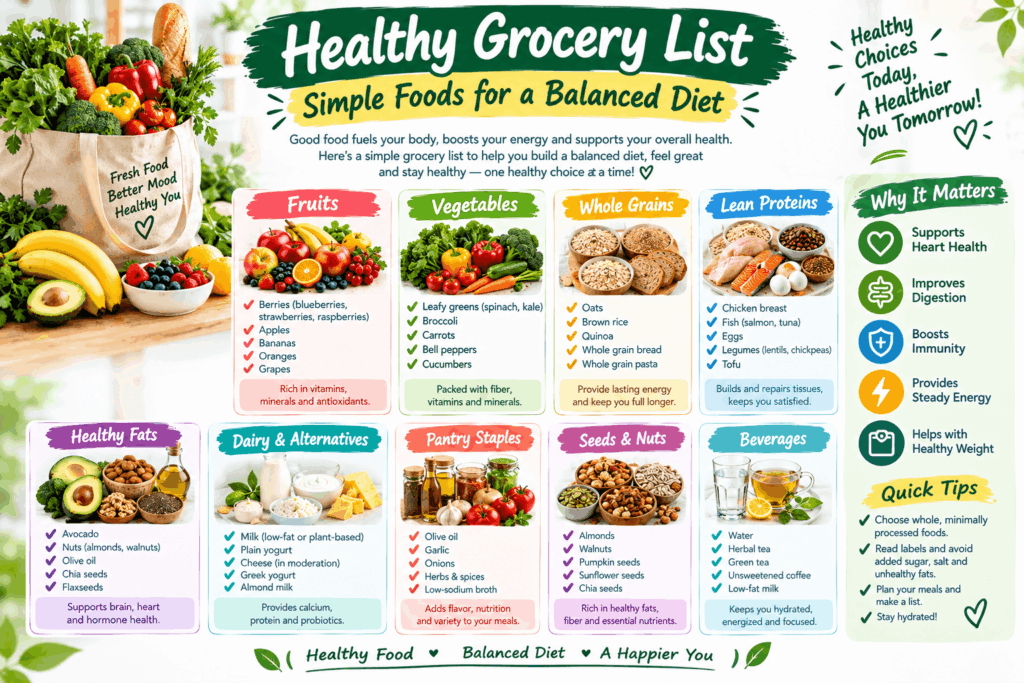
A healthy grocery list is a practical selection of foods that can help you build a balanced eating pattern. It usually includes a variety of vegetables and fruits, whole grains, protein foods, dairy or fortified alternatives, healthy fats, and minimally processed pantry staples.
The goal is not to buy only fresh or expensive foods. Frozen, canned, dried, and shelf-stable foods can also fit into a nutritious grocery plan when you choose products thoughtfully.
Why a Healthy Grocery List Matters
Healthy eating starts before you sit down at the table. It often starts with what you put in your shopping cart.
When nutritious ingredients are available at home, preparing a balanced meal becomes easier. For example, having brown rice, canned beans, frozen vegetables, eggs, and plain yogurt available gives you several options without requiring a special trip to the store.
Planning also helps you use what you already have. The USDA recommends checking your refrigerator, freezer, and cupboards before shopping and planning meals around foods you already own.
A grocery list can also help prevent impulse purchases. You do not need to eliminate treats. Instead, make nutritious foods the foundation of your regular meals.
Healthy Foods to Put on Your Grocery List
Vegetables
Vegetables deserve an important place on your shopping list. Choose several colors and types rather than buying the same few vegetables every week.
Good choices include:
- Spinach and other leafy greens
- Broccoli
- Cauliflower
- Carrots
- Bell peppers
- Tomatoes
- Cucumbers
- Cabbage
- Green beans
- Mushrooms
- Zucchini
- Sweet potatoes
- Onions
- Frozen mixed vegetables
Fresh, frozen, canned, and dried vegetables can all be part of a healthy diet. When buying canned vegetables, check the sodium on the label to choose an option that works for you.
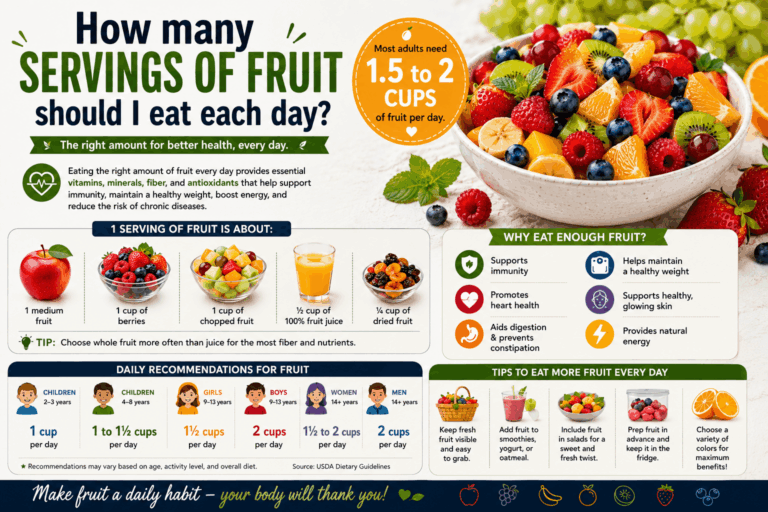
Fruits
Fruit is an easy addition to breakfast, snacks, or dessert.
Consider adding:
- Apples
- Bananas
- Oranges
- Berries
- Grapes
- Pears
- Kiwi
- Peaches
- Mangoes
- Melons
- Frozen berries
Frozen fruit can be a great option because it lasts longer and works well in smoothies, oatmeal, and yogurt bowls.
Whole Grains
Whole grains can make meals more filling while adding fiber and other nutrients.
Useful grocery choices include:
- Oatmeal
- Brown rice
- Quinoa
- Whole-wheat bread
- Whole-grain tortillas
- Whole-wheat pasta
- Barley
- Whole-grain cereal
- Air-popped popcorn
When comparing packaged grain products, look at the ingredient list and Nutrition Facts label rather than relying only on words such as “multigrain” or “natural.”
Protein Foods
Protein foods can make meals more satisfying and provide nutrients needed for normal body functions.
A flexible grocery list might include:
- Eggs
- Chicken
- Turkey
- Fish
- Canned tuna or salmon
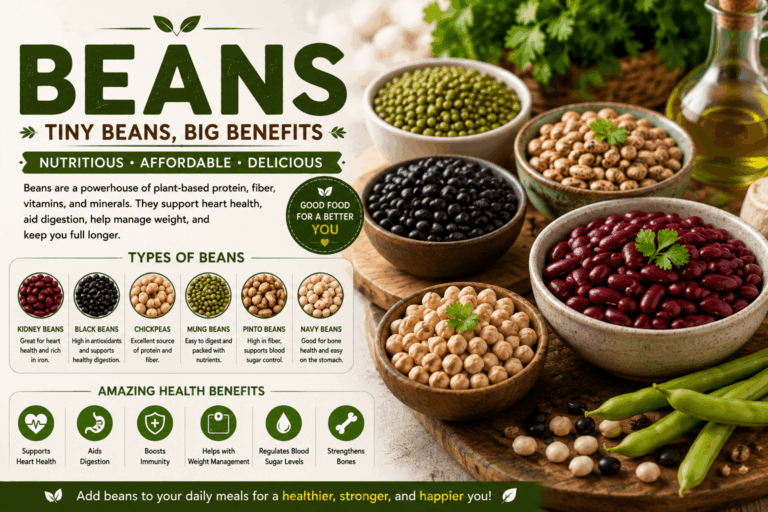
- Lentils
- Chickpeas
- Black beans
- Kidney beans
- Tofu
- Tempeh
- Unsalted nuts
- Seeds
- Natural nut butter
- Plain Greek yogurt
Including plant-based protein foods such as beans, lentils, nuts, seeds, and tofu can add variety to your meals. Canada’s Food Guide specifically encourages choosing plant-based protein foods more often.
Dairy and Fortified Alternatives
Depending on your dietary preferences, consider:
- Plain yogurt
- Greek yogurt
- Milk
- Cottage cheese
- Reduced-fat cheese
- Lactose-free milk
- Fortified soy milk
- Fortified soy yogurt
If you choose plant-based milk alternatives, check the nutrition label because their nutritional content can vary. Fortified soy milk and yogurt are also included as dairy alternatives in the USDA’s MyPlate guidance.
Healthy Fats
Fat is part of a balanced diet, but the type and amount matter.
Useful choices include:
- Avocados
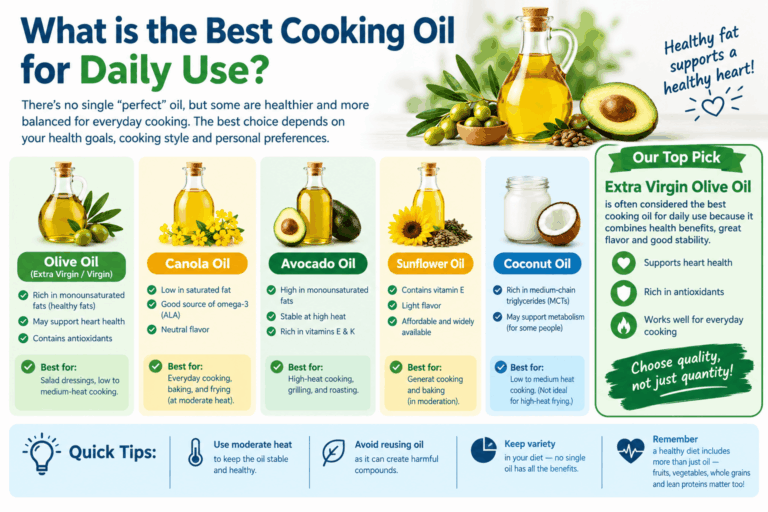
- Olive oil
- Canola oil
- Unsalted almonds
- Walnuts
- Pumpkin seeds
- Chia seeds
- Flaxseeds
- Natural peanut butter
Use oils, nuts, seeds, and other high-fat foods in sensible portions because they can provide substantial calories even when they are nutritious.
Healthy Pantry Staples
A healthy grocery list doesn’t need to include only fresh foods. Keeping a few useful pantry staples at home can make preparing meals easier.
Consider stocking:
- Dried or canned beans
- Lentils
- Oats
- Brown rice
- Whole-grain pasta
- Canned tomatoes
- Low-sodium canned vegetables
- Canned tuna or salmon
- Unsalted nuts
- Seeds
- Herbs and spices
- Vinegar
- Olive oil
- Natural nut butter
These foods can form the foundation of quick meals. For example, canned beans, brown rice, frozen vegetables, and canned tomatoes can become a simple one-pot meal.
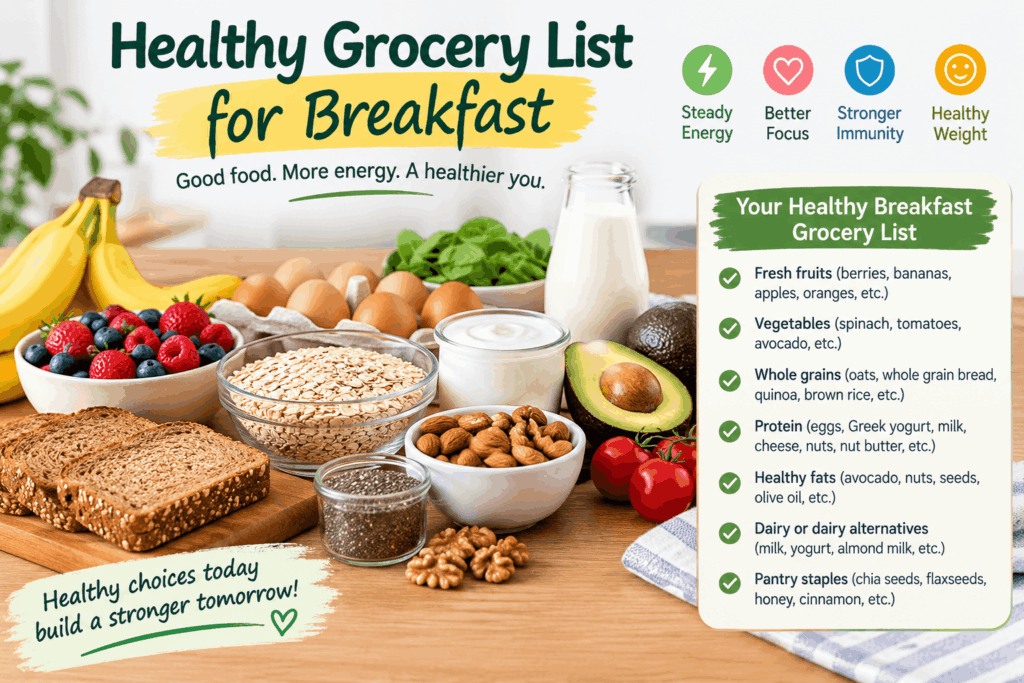
Healthy Grocery List for Breakfast
Breakfast does not have to be complicated.
A practical shopping list could include:
- Oats
- Eggs
- Whole-grain bread
- Plain Greek yogurt
- Bananas
- Berries
- Apples
- Nut butter
- Chia seeds
- Low-sugar or unsweetened cereal
Healthy Grocery List for Lunch and Dinner
Build meals around a simple combination of vegetables, a protein source, and a whole-grain or other carbohydrate source.
For example:
Lunch:
Whole-grain wrap + chicken or chickpeas + spinach + tomatoes + cucumber.
Dinner:
Salmon + roasted vegetables + brown rice.
Vegetarian dinner:
Lentils + quinoa + mixed vegetables + avocado.
This approach can make grocery shopping easier by allowing you to use the same ingredients in different meals.
Canada’s Food Guide uses a similar plate-based approach, with vegetables and fruits making up the largest portion, alongside protein foods and whole-grain foods.
Healthy Snacks to Add to Your Grocery List
Snacks can be simple and nutritious.
Good options include:
- Fresh fruit
- Plain yogurt
- Unsalted nuts
- Carrot sticks
- Celery with nut butter
- Hummus with vegetables
- Air-popped popcorn
- Hard-boiled eggs
- Whole-grain crackers
- Fruit with plain yogurt
You do not need specialty “health foods” to make a nutritious snack.
Grocery Store Comparison Table
| Grocery Category | Better Everyday Choices | What to Check |
| Vegetables | Fresh, frozen, low-sodium canned | Added sodium |
| Fruit | Fresh, frozen, canned in water | Added sugar |
| Grains | Oats, brown rice, whole-grain bread | Fiber and ingredients |
| Protein | Beans, lentils, fish, eggs, poultry, tofu | Sodium and saturated fat |
| Dairy | Plain yogurt, milk, fortified soy products | Added sugar |
| Snacks | Nuts, fruit, vegetables, popcorn | Added sugar and sodium |
| Cooking fats | Olive or canola oil, nuts, seeds | Portion size |
| Drinks | Water, unsweetened beverages | Added sugar |
Food labels can help you compare similar products and identify foods with less sodium, added sugar, or saturated fat.
How to Shop for Healthy Food on a Budget
Eating healthy doesn’t always mean buying expensive or premium products.
Start by planning several meals before going to the store. Then check what you already have. This can prevent buying duplicate ingredients and reduce waste.
Frozen vegetables and fruit can be useful when fresh produce is expensive or likely to spoil before you use it. Canned beans and vegetables can also be convenient choices.
Buying larger packages can sometimes reduce the unit price, but only buy in bulk when you are confident you will use the food before it expires. USDA guidance also recommends comparing unit prices and planning purchases around sales.
Another simple strategy is to build meals around affordable staples such as oats, beans, lentils, eggs, potatoes, rice, frozen vegetables, and seasonal produce.
Practical Tips
Plan Before You Shop
Spend a few minutes deciding what you will eat during the week. You do not need to plan every meal perfectly. Even planning three or four dinners can make shopping easier.
Shop With a List
Organize your list by sections such as produce, protein, dairy, grains, frozen foods, and pantry items. This can make your shopping trip quicker and help you stay focused.
Mix Fresh, Frozen, and Shelf-Stable Foods
A practical grocery list doesn’t have to include only fresh foods. Mixing fresh, frozen, canned, and shelf-stable options can make healthy eating easier and help reduce food waste.
Read the Label
Compare similar products by looking at serving size, sodium, added sugars, saturated fat, fiber, and the ingredient list.
Keep Healthy Foods Visible
Keep washed vegetables ready for snacks and store nutritious pantry foods where they are easy to reach.
Common Mistakes
Buying Too Much Fresh Produce
Fresh produce is nutritious, but buying more than your household can eat may lead to unnecessary waste. Buy realistic quantities and use delicate produce first.
Assuming Fresh Is Always Better
Frozen and canned foods can also be nutritious choices. How you prepare the food and what you add to it can make a big difference.
Focusing Only on Calories
Calories are only one part of food quality. Consider the overall nutritional value, including protein, fiber, vitamins, minerals, sodium, added sugars, and saturated fat.
Buying Foods Because the Package Looks Healthy
Words such as “natural,” “multigrain,” or “light” do not automatically mean a product is the best choice. Check the Nutrition Facts label and ingredient list.
Forgetting About Convenience
If healthy ingredients take too much time to prepare, you may be less likely to use them. Keep convenient options like frozen vegetables, canned beans, pre-washed greens, and eggs on hand.
Key Takeaways
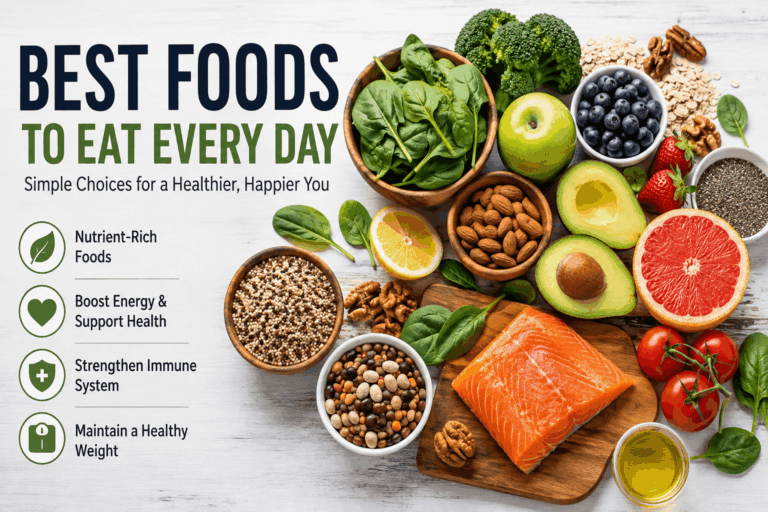
- Build your grocery list around vegetables, fruits, whole grains, protein foods, and appropriate dairy or fortified alternatives.
- Fresh is not the only healthy option. Frozen, canned, dried, and shelf-stable foods can also fit into a nutritious diet.
- When possible, choose foods with little or no added sodium, sugar, or saturated fat.
- Plan meals before shopping to reduce waste and unnecessary purchases.
- Compare food labels when choosing between similar products.
- Include affordable staples such as beans, lentils, oats, eggs, rice, and frozen vegetables.
- A healthy grocery list should reflect your household’s preferences, budget, culture, and dietary needs.
Frequently Asked Questions
What should you include on a basic healthy grocery list?
A basic healthy grocery list can include vegetables, fruit, whole grains, beans, lentils, eggs, fish, poultry, tofu, nuts, seeds, plain yogurt, milk or fortified alternatives, and healthy cooking oils.
What is the healthiest food to buy at the grocery store?
There isn’t one single healthiest food at the grocery store. A healthy eating pattern includes a variety of foods from different categories rather than relying on one food.
Is frozen fruit and vegetables healthy?
Yes. Frozen fruits and vegetables can be practical, nutritious choices. They can also help reduce waste because they generally keep longer than many fresh options.
What foods should I limit when grocery shopping?
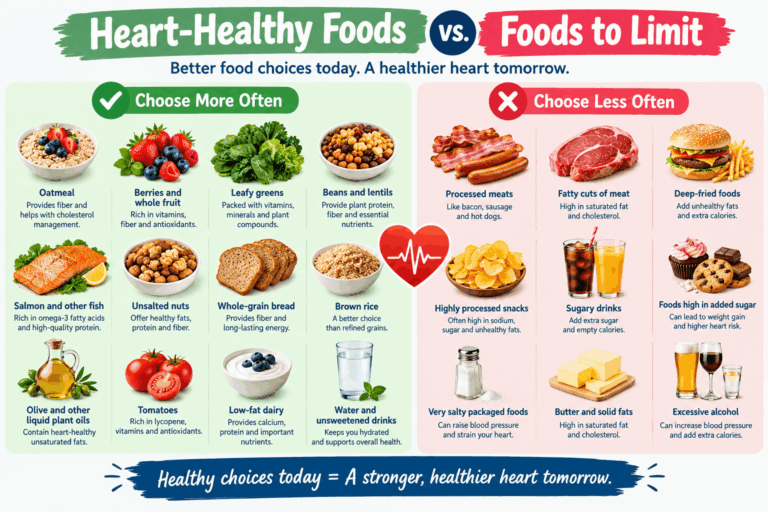
Foods and drinks high in added sugars, sodium, or saturated fat are generally best consumed less often or in smaller amounts as part of an overall healthy eating pattern.
How can I eat healthy groceries on a tight budget?
Plan meals, compare unit prices, use seasonal produce, buy store-brand staples when appropriate, and include affordable foods such as beans, lentils, oats, eggs, potatoes, and frozen vegetables.
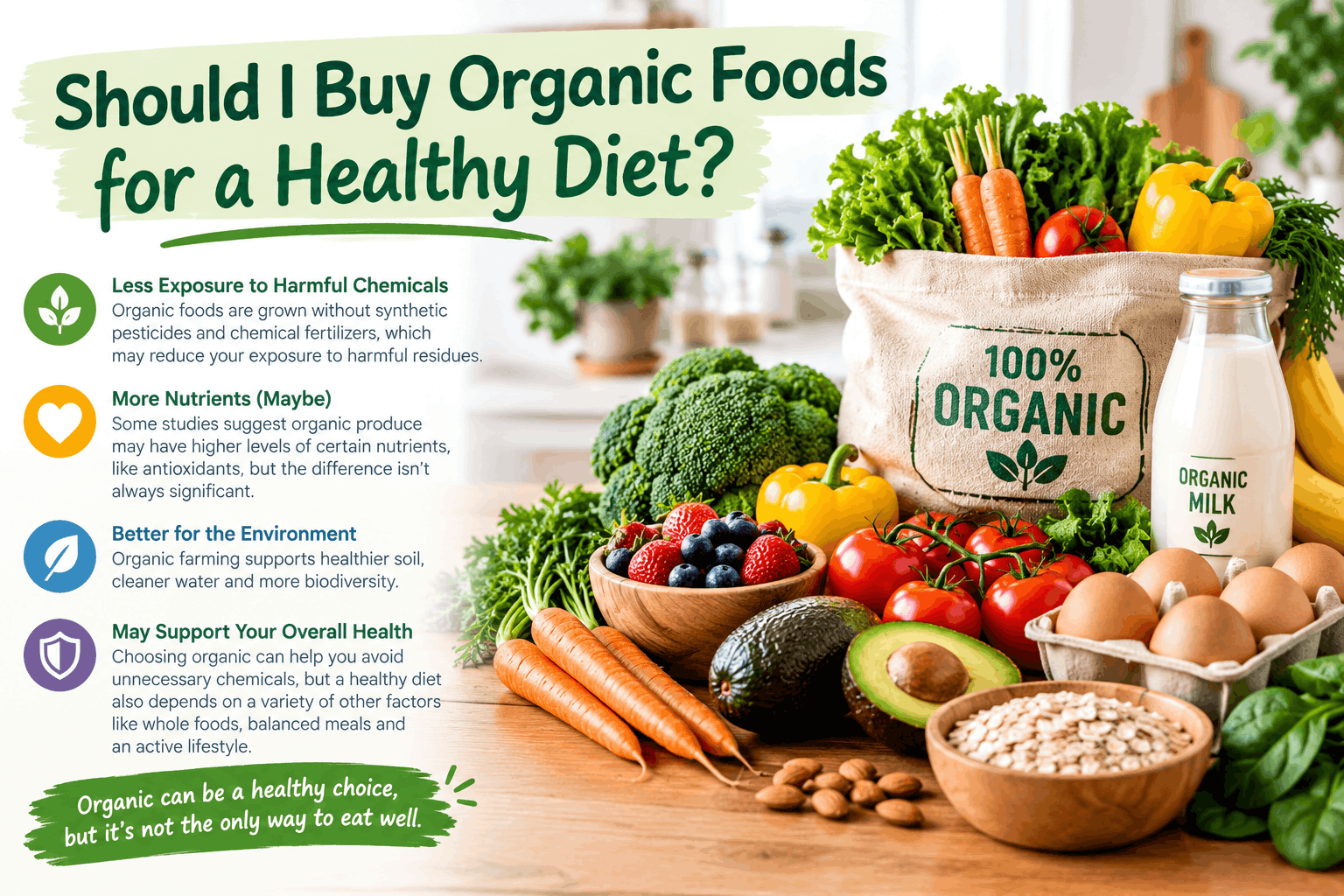
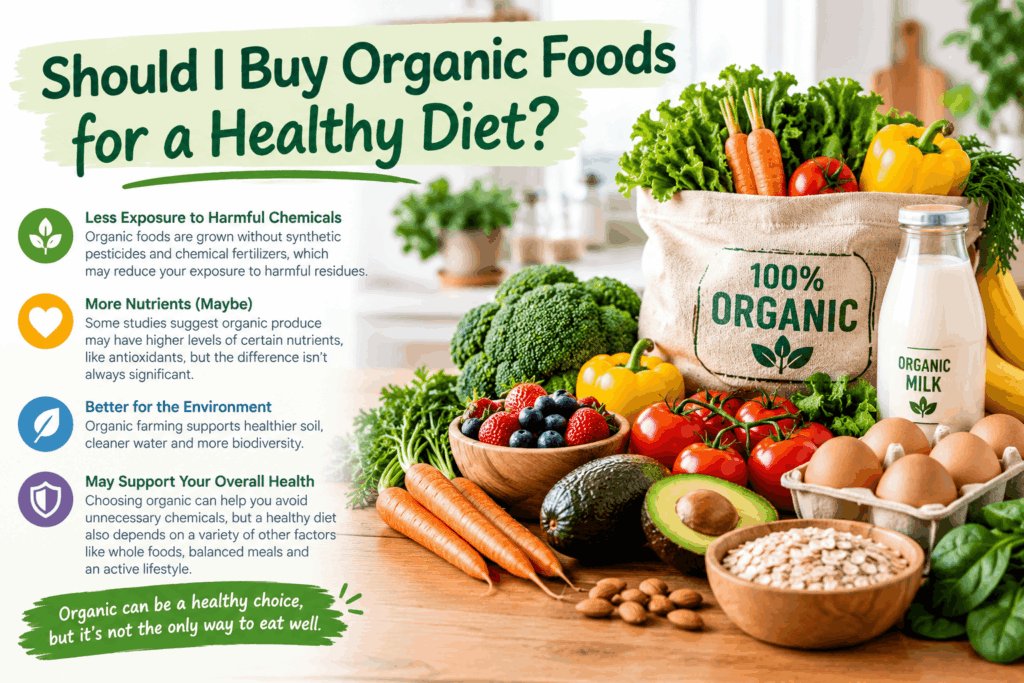
Should I buy organic foods for a healthy diet?
Organic foods can be part of a healthy diet, but you don’t have to buy organic products to eat well. Focus on a variety of foods that fit your budget, preferences, and overall eating habits.
How often should I make a grocery list?
Planning your meals each week can make things easier, but no routine works for everyone. Choose a schedule that fits your meals, storage space, budget, and shopping habits.
Conclusion
A healthy grocery list is less about finding perfect foods and more about creating a practical foundation for everyday meals. Start with a variety of vegetables and fruits, add whole grains and protein foods, and include dairy or suitable fortified alternatives when they fit your eating pattern.
Do not overlook frozen, canned, or shelf-stable foods. They can make nutritious meals more affordable and convenient. Planning, checking labels, and buying realistic quantities can also help you save money and reduce food waste.
The best grocery list is one you can actually use. Keep it simple, choose foods your household enjoys, and build healthy meals from ingredients you are comfortable preparing.
Disclaimer
This article is published solely for educational and informational purposes. The information provided is intended to increase general awareness and understanding of the topic. This information is for general purposes only and should not be considered medical, insurance, financial, legal, or professional advice. Readers should consult qualified professionals before making any healthcare, insurance, financial, or legal decisions.
References
- U.S. Department of Agriculture (USDA) MyPlate
- Dietary Guidelines for Americans
- Health Canada
- Canada’s Food Guide
- National Health Service (NHS)
- U.S. Department of Health & Human Services (HHS)