Best Foods to Eat Every Day for Better Health
Discover the best foods to eat every day, from fruits and vegetables to whole grains, protein, nuts, and healthy fats for a balanced diet.
best-foods-to-eat-every-day
Eating healthy does not have to mean following a complicated diet or giving up the foods you enjoy. In real life, most people just want to know what to put on their plate more often. Maybe breakfast is rushed, lunch comes from a café, or dinner ends up being whatever is quick and convenient. Over time, those everyday choices can make a meaningful difference.
The good news is that healthy eating is less about finding one “perfect” food and more about building a balanced pattern around nutritious foods. Fruits, vegetables, whole grains, beans, lentils, nuts, seeds, fish, eggs, and other protein-rich foods can all have a place in a healthy diet.
In this guide, you will learn which foods are worth eating regularly, why they matter, how to combine them into simple meals, and which common eating habits can make an otherwise healthy diet less balanced.
What Are the Best Foods to Eat Every Day?
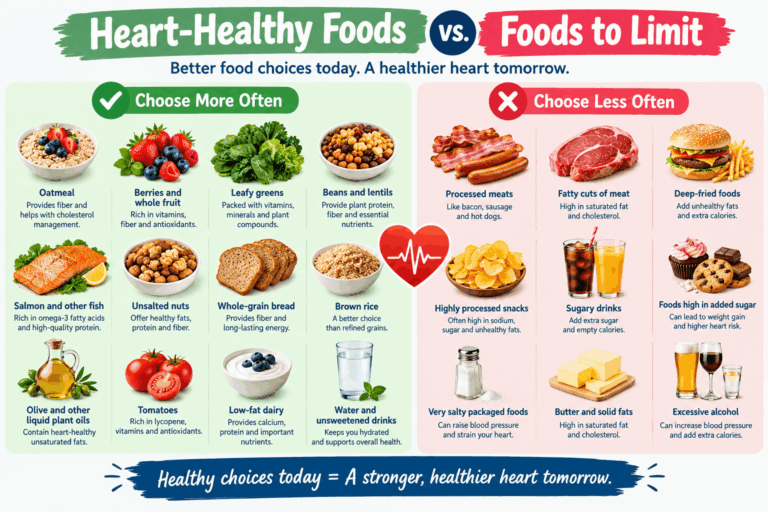
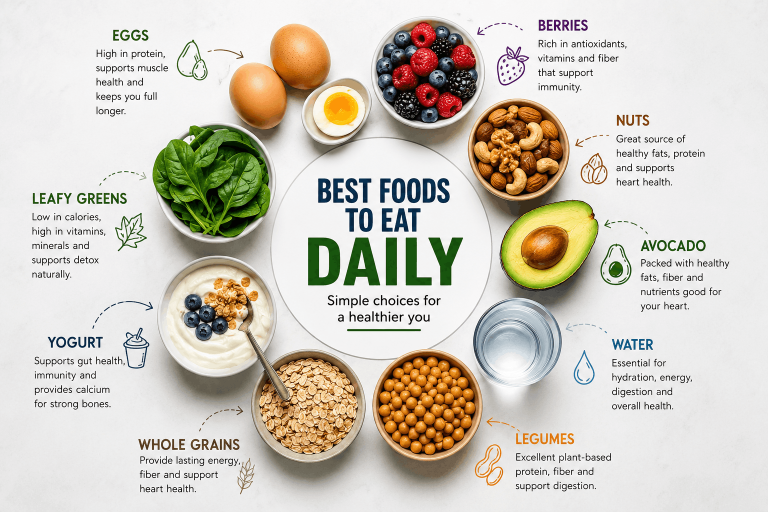
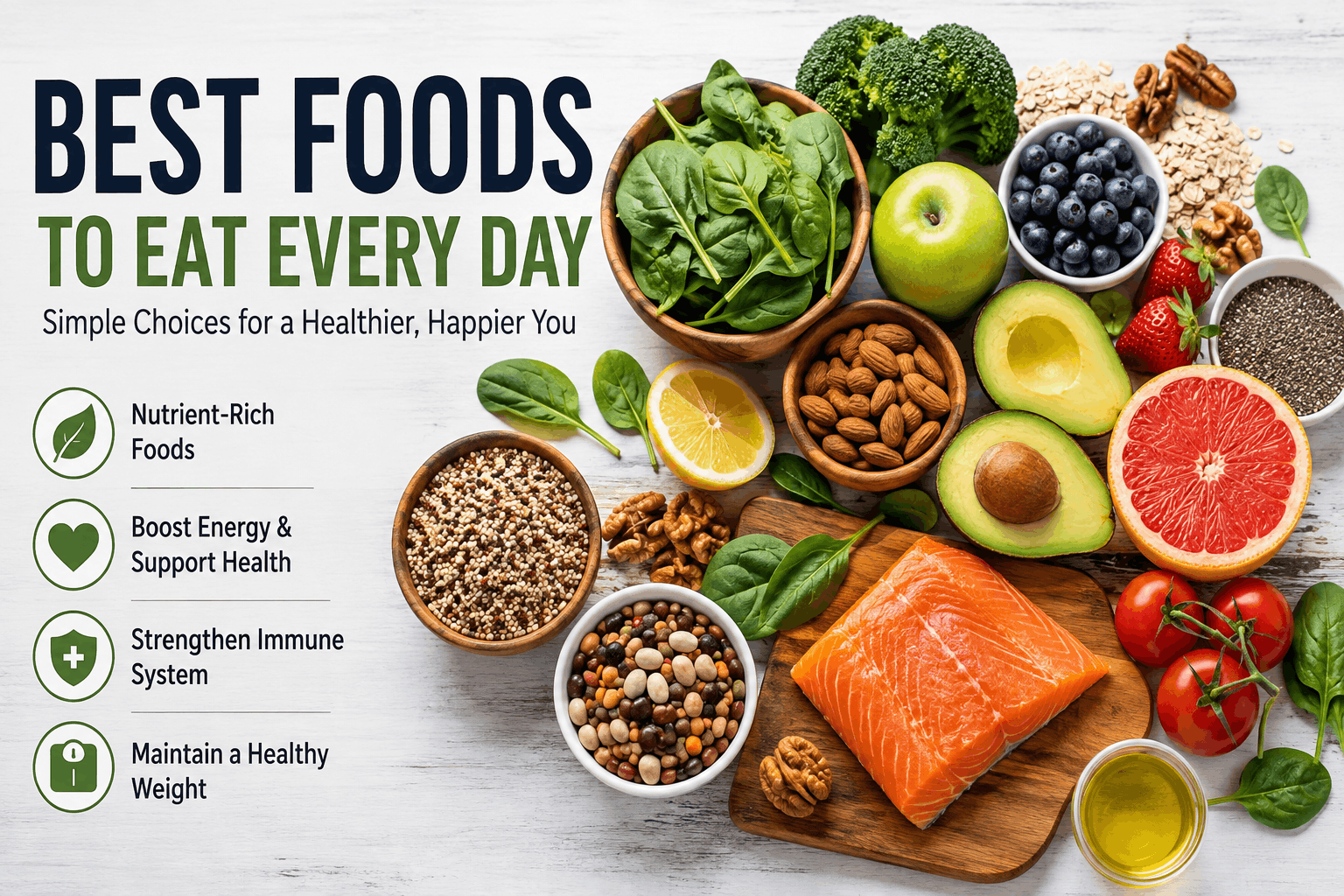
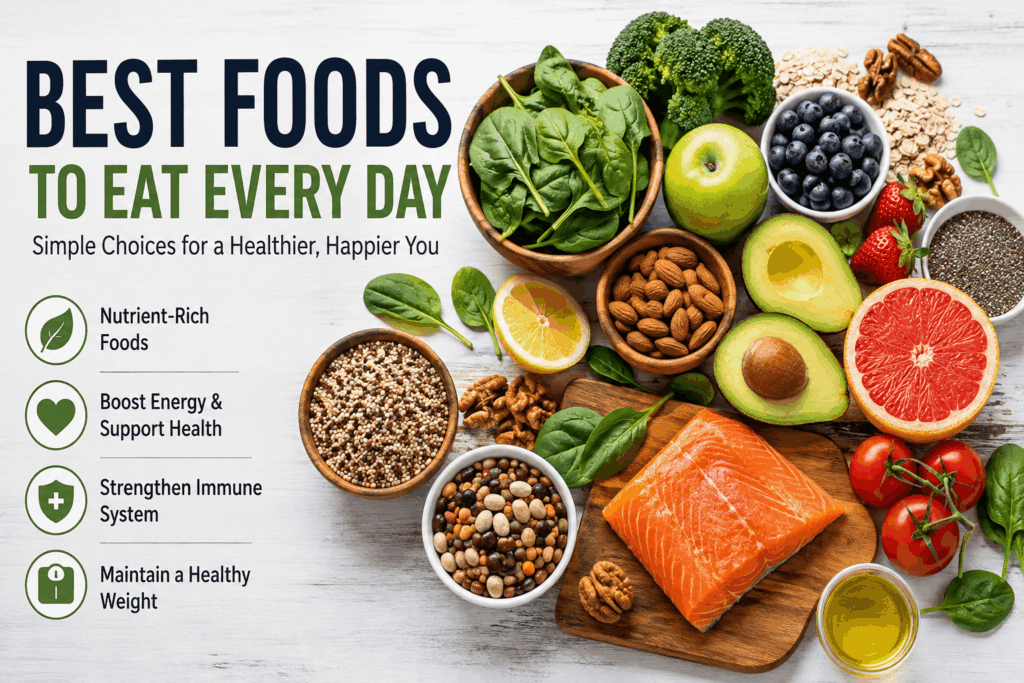
The best foods to eat every day are nutrient-rich foods that provide a useful combination of fiber, protein, vitamins, minerals, and healthy fats. A balanced daily diet generally emphasizes vegetables, fruits, whole grains, legumes, nuts, seeds, and nutritious protein foods while limiting excess added sugar, sodium, saturated fat, and highly processed foods.
1. Vegetables
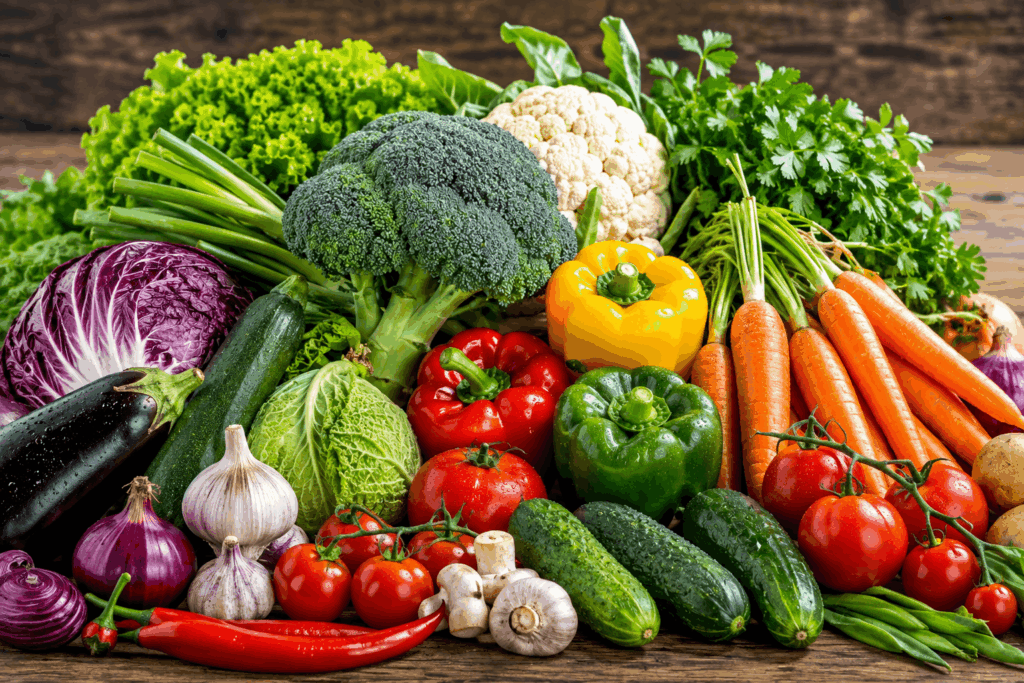
Vegetables should be one of the most consistent parts of your daily diet. They provide fiber and a wide range of vitamins, minerals, and other beneficial plant compounds.
You do not need to eat the same vegetables every day. In fact, variety is better. Try leafy greens such as spinach or kale, cruciferous vegetables such as broccoli and cauliflower, and colorful choices such as carrots, bell peppers, and tomatoes.
A simple approach is to include vegetables at lunch and dinner and add them to breakfast when practical.
For example:
- Eggs with spinach and tomatoes
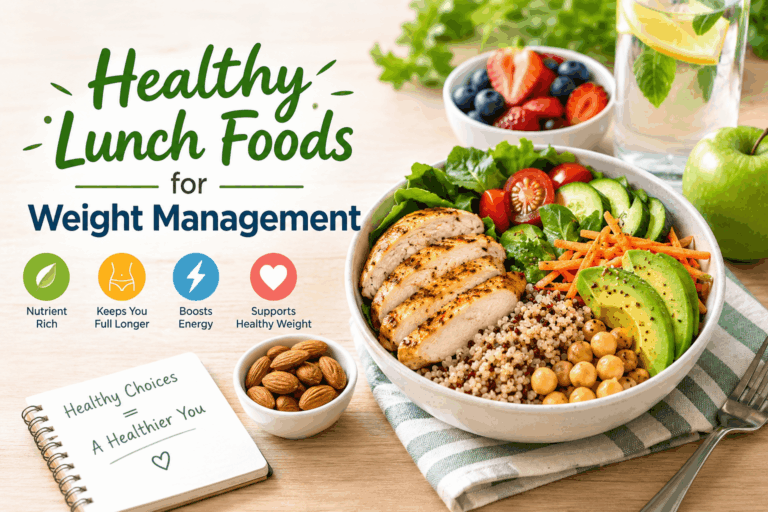
- A chicken or bean salad with mixed vegetables
- Lentil soup with carrots and other vegetables
- Roasted vegetables alongside fish or tofu
Health authorities consistently recommend eating plenty of vegetables as part of a balanced diet.
2. Fruits
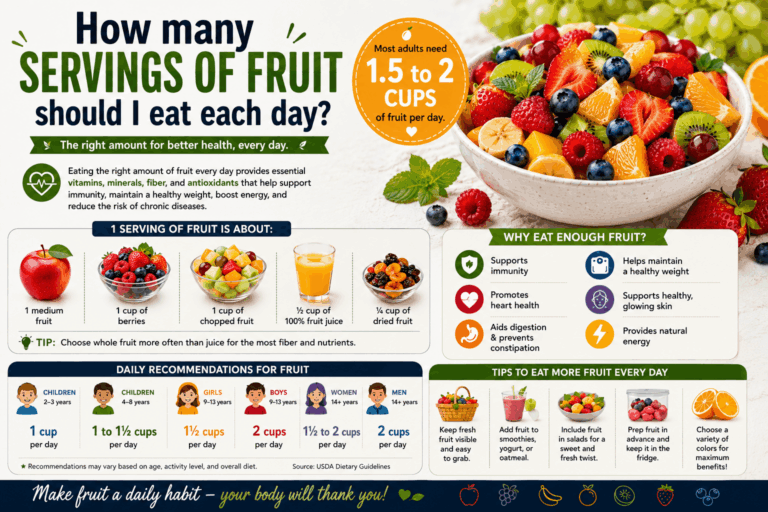
Fruit is an easy way to add natural sweetness, fiber, vitamins and minerals to your diet.
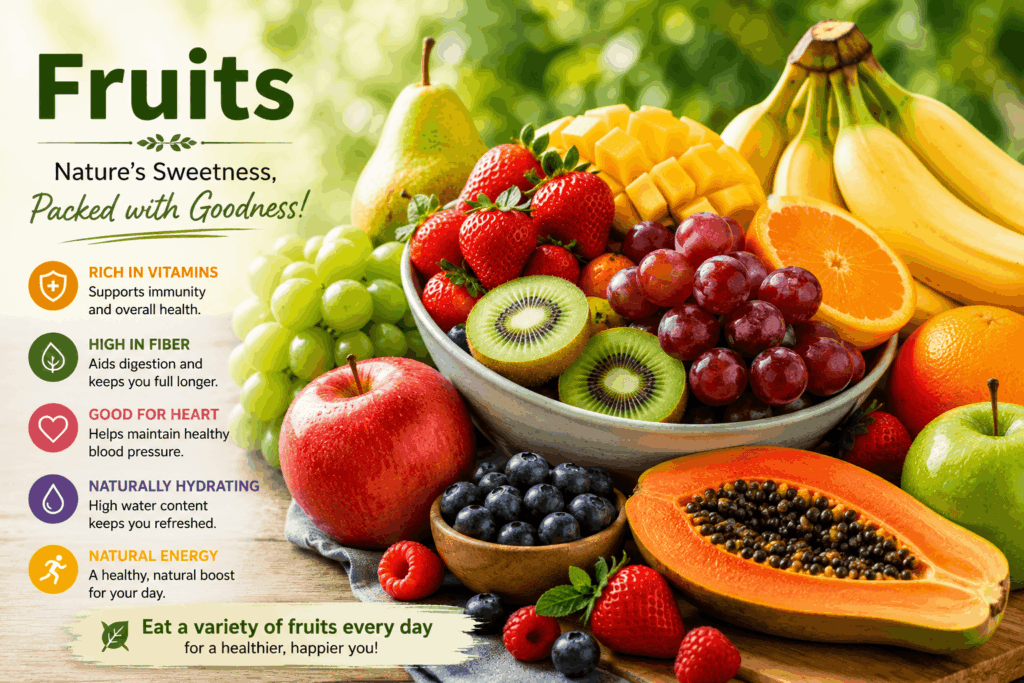
Apples, oranges, berries, bananas, kiwi, pears, grapes and seasonal fruits can all fit into a healthy eating pattern. Fresh fruit is convenient, but frozen and canned fruit can also be useful. When choosing canned options, look for products without unnecessary added sugars.
Whole fruit is generally a better everyday choice than relying heavily on fruit juice because it retains its fiber. The NHS recommends limiting combined fruit juice and smoothie intake to 150 ml per day.
A piece of fruit can also make a practical snack when you are tempted to reach for cookies, candy or other highly processed foods.
3. Whole Grains
Whole grains are another food group worth including regularly. Examples include oats, brown rice, whole-wheat bread, whole-grain pasta, barley, quinoa and other minimally refined grains.
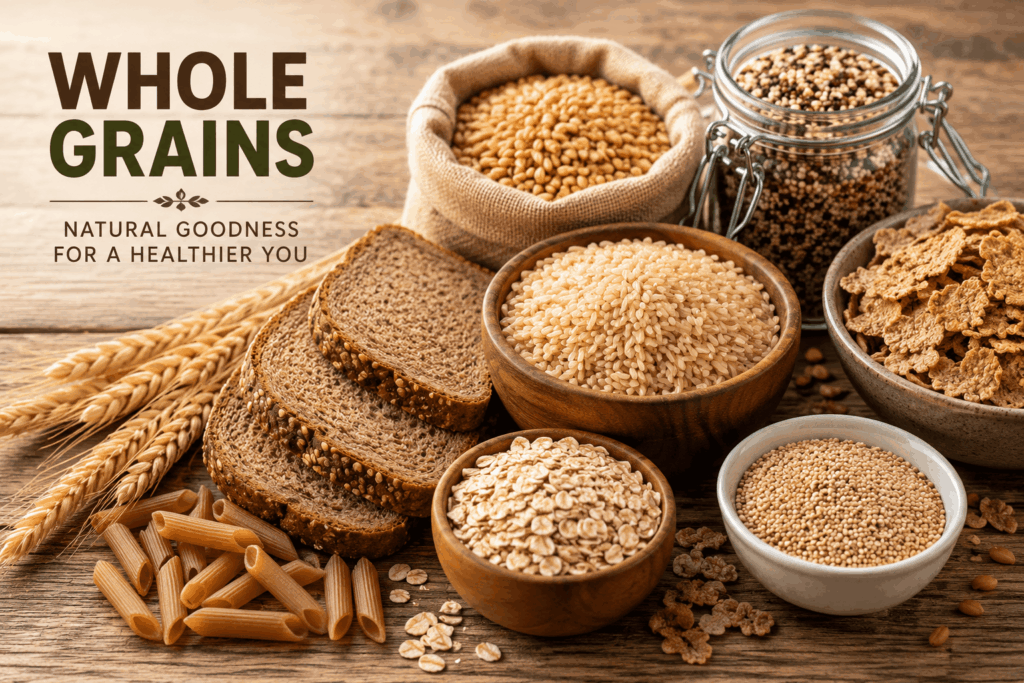
Whole grains provide carbohydrates for energy along with fiber and other nutrients. The NHS recommends choosing higher-fiber or wholegrain versions of common starchy foods where possible.
For breakfast, try oatmeal topped with berries and nuts. At lunch, choose whole-grain bread for a sandwich. At dinner, brown rice, barley or whole-wheat pasta can replace more refined choices.
You do not have to eliminate white rice or white bread. The goal is to make higher-fiber choices more often.
4. Beans, Lentils and Other Legumes
Beans, lentils, chickpeas and other legumes are affordable, versatile sources of plant protein and fiber.
They work particularly well for people who want to eat more plant-based meals. You can add lentils to soups, chickpeas to salads, or beans to chili, tacos, and grain bowls.
Legumes are also easy to store and can make healthy meals more filling without requiring expensive ingredients.
Canada’s dietary guidance specifically recommends legumes among nutritious protein foods and encourages choosing plant-based protein foods more often.
5. Nuts and Seeds
Nuts and seeds can add protein, fiber and unsaturated fats to meals and snacks.
Good choices include almonds, walnuts, pistachios, peanuts, chia seeds, flaxseeds and pumpkin seeds. Because nuts and seeds are energy-dense, a small serving can be enough.
Try adding:
- Walnuts to oatmeal
- Chia seeds to yogurt
- Pumpkin seeds to salads
- Ground flaxseed to smoothies
- Unsalted nuts as a snack
Choose unsalted or minimally processed varieties when possible.
6. Fish and Seafood
Fish can be an excellent source of protein and, depending on the type, important omega-3 fatty acids.
Salmon, sardines, trout and other oily fish are particularly well known for their omega-3 content. White fish and shellfish can also provide useful protein and nutrients.
Instead of thinking about one food as a miracle ingredient, consider fish as one component of a varied eating pattern that also includes vegetables, whole grains, legumes and other nutritious foods.
7. Eggs
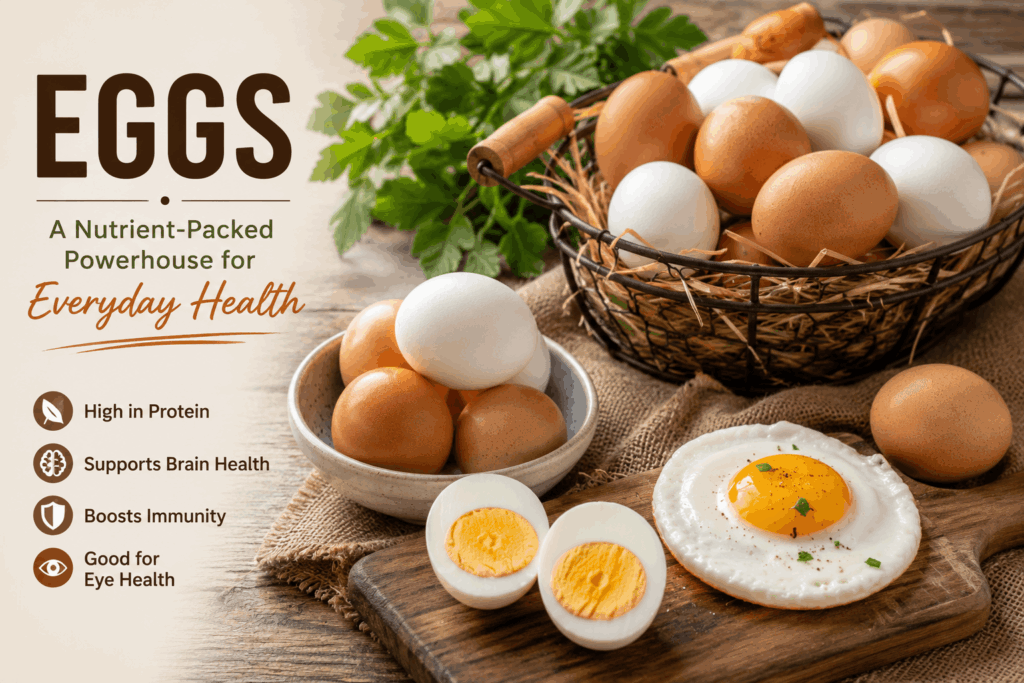
Eggs are a convenient source of high-quality protein and can be prepared in many ways.
A boiled egg can make a quick snack, while scrambled eggs with vegetables can turn into a simple breakfast. Eggs can also be added to salads, grain bowls, or sandwiches.
For most people, the more important question is not whether a single food belongs in a “perfect diet,” but whether the overall eating pattern is varied and balanced.
8. Yogurt and Other Nutritious Dairy or Alternatives
Plain yogurt, milk and other suitable dairy foods can provide protein and nutrients such as calcium. Fortified alternatives can also be useful, depending on the product and individual dietary needs.
Choose options with less added sugar when possible. Plain yogurt can be paired with fruit, nuts and seeds to create a filling breakfast or snack.
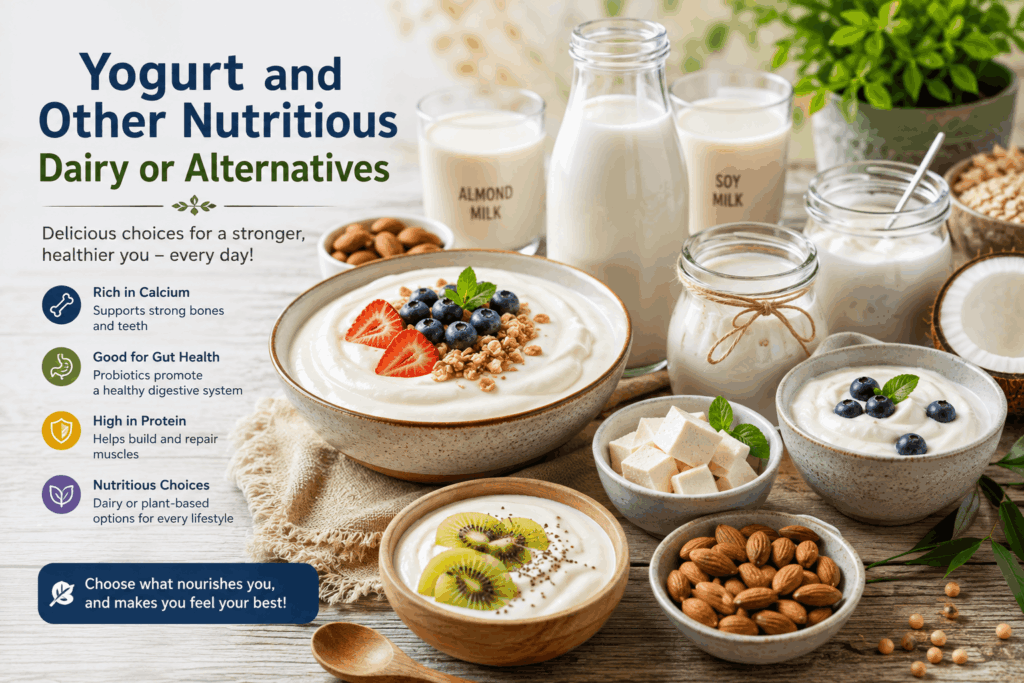
For people who avoid dairy, fortified soy beverages and other appropriate alternatives may help provide nutrients that are commonly obtained from dairy foods. Canada’s dietary guidance includes fortified soy beverages among protein-food options.
9. Healthy Sources of Fat
Fat is not something that needs to be eliminated from a healthy diet. The type of fat matters.
Foods such as avocados, nuts, seeds, olives and certain vegetable oils provide predominantly unsaturated fats. Fish can also provide beneficial unsaturated fats.
The World Health Organization recommends favoring unsaturated fats over saturated and industrially produced trans fats.
A practical approach is to use foods such as nuts, seeds, avocado, and vegetable oils in reasonable portions rather than treating all fats as unhealthy.
10. Water and Healthy Drinks
Food gets most of the attention, but beverages matter too.
Water is a simple everyday choice because it provides hydration without added sugar. Unsweetened tea and coffee can also fit into a healthy diet for many adults.
Sugary sodas, energy drinks, and other sugar-sweetened beverages can add substantial amounts of free sugar without providing much nutritional value. WHO recommends limiting free sugar intake as part of a healthy diet.
If you normally drink several sugary beverages a day, replacing even some of them with water can be a practical change.
Comparison Table
| Vegetables | Broccoli, spinach, carrots, peppers | Fiber, vitamins and minerals | Vegetable omelet |
| Fruits | Apples, berries, oranges, bananas | Fiber and micronutrients | Fruit with yogurt |
| Whole grains | Oats, brown rice, barley | Fiber and energy | Oatmeal or grain bowl |
| Legumes | Lentils, beans, chickpeas | Plant protein and fiber | Lentil soup |
| Nuts and seeds | Walnuts, almonds, chia, flax | Unsaturated fats, protein and fiber | Add to oatmeal |
| Fish | Salmon, sardines, trout | Protein and healthy fats | Fish with vegetables |
| Eggs | Boiled or scrambled eggs | Protein and nutrients | Eggs with whole-grain toast |
| Yogurt | Plain yogurt, kefir | Protein and calcium | Yogurt with fruit |
| Healthy fats | Avocado, olive or canola oil | Unsaturated fats | Salad dressing |
Practical Tips
Build Your Plate Around Whole Foods
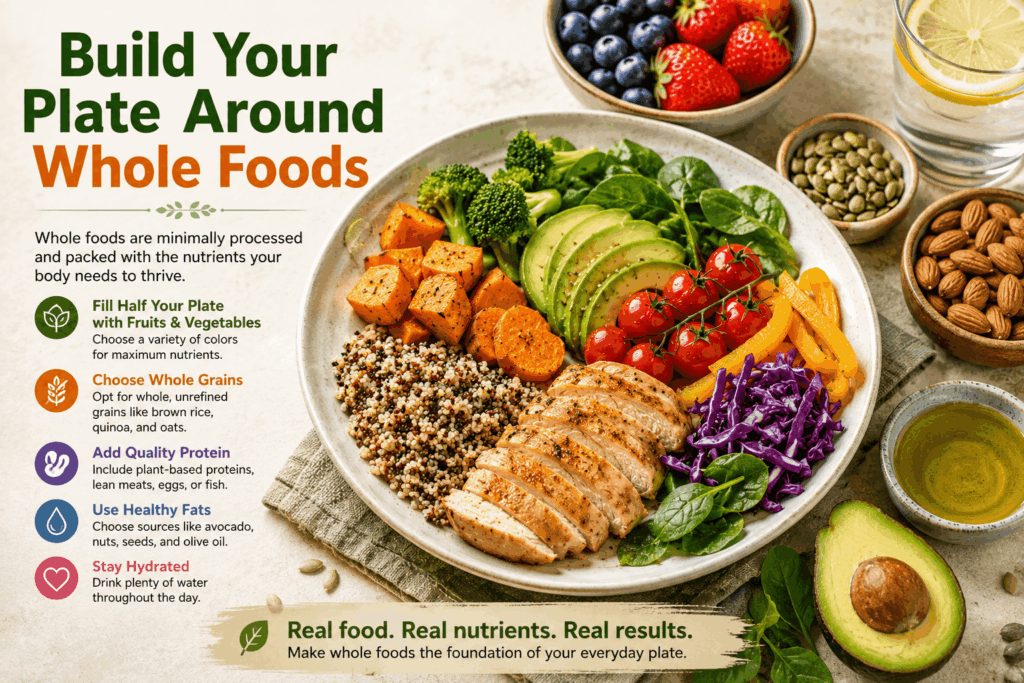
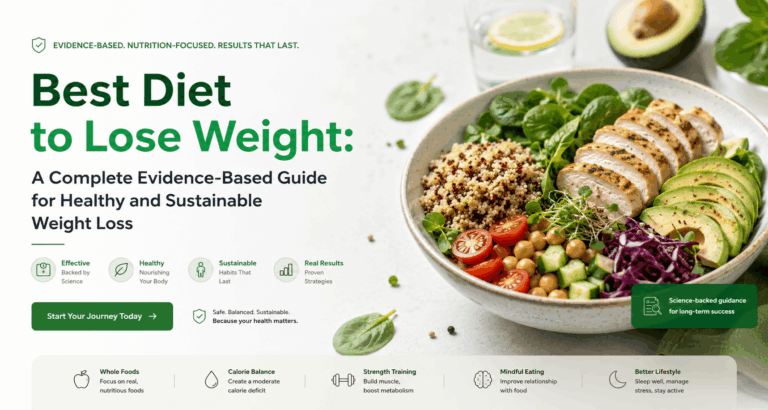
Instead of planning meals around packaged snacks or refined carbohydrates, start with a nutritious protein source, vegetables, and a high-fiber carbohydrate.
For example, grilled fish, roasted vegetables and brown rice can make a simple balanced dinner.
Keep Healthy Foods Visible
Place fruit on the kitchen counter and keep washed vegetables ready in the refrigerator. Convenience strongly influences what people eat.
Make Breakfast More Nutritious
A quick breakfast does not have to be unhealthy. Oatmeal with berries and walnuts, or eggs with whole-grain toast and vegetables, can be prepared with relatively little effort.
Use Frozen and Canned Foods Wisely
Fresh produce is not your only option. Frozen vegetables and fruit can be convenient, while canned beans can save preparation time. Look for canned foods with little or no added salt or sugar when available.
Aim for Variety
Eating healthy does not mean eating the same seven foods every day. Rotate fruits, vegetables, grains and protein sources throughout the week.
WHO emphasizes variety because different foods provide different combinations of nutrients.
Think About the Whole Day
You do not need to create a perfectly balanced plate at every meal. The NHS notes that overall balance can be considered across a day or even a week.
If lunch is lighter in vegetables, you can include more at dinner. What matters most is your overall eating pattern.
Common Mistakes
Eating Only “Healthy” Foods Without Variety
Even nutritious foods should not become a repetitive checklist. A varied diet gives you access to a broader range of nutrients.
Drinking Too Many Calories
Fruit drinks, sweetened coffee drinks, sodas, and other sugary beverages can quietly increase sugar intake. Water and unsweetened drinks are often simpler everyday choices.
Avoiding All Carbohydrates
Whole grains, fruits, vegetables and legumes contain carbohydrates and can be important parts of a balanced diet. WHO recommends that carbohydrate intake primarily come from foods such as whole grains, vegetables, fruits and pulses.
Assuming “Natural” Means Unlimited
Foods such as nuts, dried fruit, honey and certain minimally processed foods can still provide substantial calories or free sugars. Portion size and overall dietary pattern matter.
Relying Too Much on Supplements
Supplements can have a role in certain situations, but they should not replace a varied diet. Most people should focus first on getting nutrients from a range of nutritious foods.
Key Takeaways
- Eat a variety of vegetables and fruits regularly.
- Choose whole grains and other high-fiber carbohydrate sources more often.
- Include beans, lentils, nuts and seeds as nutritious plant-based options.
- Add protein foods such as fish, eggs, yogurt, poultry or suitable plant proteins.
- Favor unsaturated fats from foods such as nuts, seeds, avocado and vegetable oils.
- Choose water and other unsweetened drinks more often.
- Limit foods and drinks high in free sugars, sodium, saturated fat and industrially produced trans fats.
- Focus on your overall eating pattern rather than searching for one “perfect” food.
Frequently Asked Questions
What is the healthiest food to eat every day?
There is no single healthiest food for everyone. A better approach is to eat a variety of vegetables, fruits, whole grains, legumes, nuts, seeds, and nutritious protein foods. Different foods provide different nutrients, so variety is an important part of healthy eating.
Can I eat fruit every day?
Yes. Whole fruit can be part of a healthy diet and provides fiber, vitamins and minerals. Try to eat a variety of fruits rather than relying on only one type.
Are eggs healthy to eat regularly?
Eggs can be part of a balanced diet and provide protein and other nutrients. How often they fit into your diet depends on your overall eating pattern and individual nutritional needs.
Should I eat vegetables at every meal?
You do not have to eat vegetables at every single meal, but including them regularly makes it easier to build a nutrient-rich diet. Try adding vegetables to at least some of your main meals each day.
Are whole grains better than refined grains?
Whole grains generally provide more fiber and retain more of the grain’s natural nutrients than refined grains. Choosing whole-grain versions more often is recommended by major dietary guidance.
What should I drink every day for good health?
Water is a simple everyday choice. Unsweetened tea and coffee can also fit into a healthy diet for many adults. Limit sugar-sweetened beverages because they can contribute significant amounts of free sugar.
Do I need to eat every food on this list every day?
No. This list is a guide to nutritious food groups, not a strict daily menu. Your diet can change from day to day while still following the same basic principles of variety, balance and moderation.
Conclusion
The best foods to eat every day are not necessarily expensive, exotic or difficult to prepare. In most cases, healthy eating comes down to consistently choosing a wide range of nutritious foods.
Make vegetables and fruit regular parts of your meals. Choose whole grains more often, include beans and other protein foods, enjoy nuts and seeds in sensible portions, and select healthier sources of fat. At the same time, keep foods high in added sugar, sodium, saturated fat, and industrially produced trans fat to a minimum.
Most importantly, do not aim for perfection. A healthy diet is a pattern built through everyday choices. Small, sustainable improvements can be more useful than following an overly restrictive diet that is difficult to maintain.
Disclaimer
This article is published solely for educational and informational purposes. The information provided is intended to increase general awareness and understanding of the topic. It should not be considered medical, insurance, financial, legal, or professional advice. Readers should consult qualified professionals before making any healthcare, insurance, financial, or legal decisions.
References
- World Health Organization (WHO)
- Food and Agriculture Organization of the United Nations (FAO)
- National Health Service (NHS)
- Health Canada
- Australian Government Department of Health
- U.S. Department of Agriculture (USDA)
- Dietary Guidelines for Americans