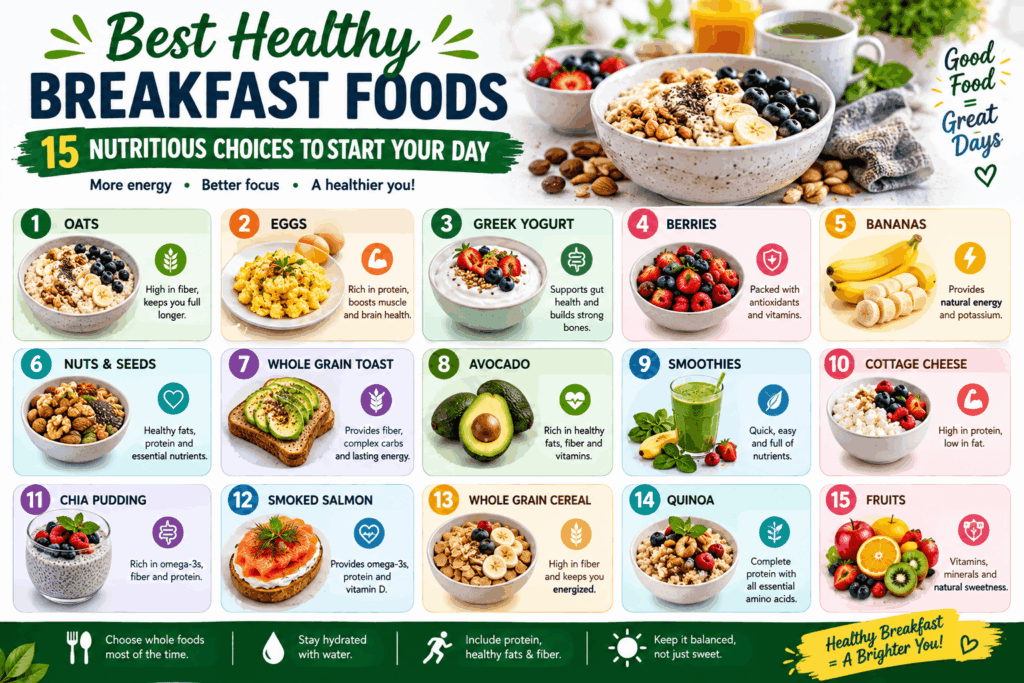
Best Healthy Breakfast Foods: 15 Nutritious Choices to Start Your Day
Best Healthy Breakfast Foods for a Nutritious Start: From eggs and oats to fruit, yogurt, and whole grains, with simple ideas for balanced, satisfying meals.
best-healthy-breakfast-foods
Breakfast can be surprisingly easy to get wrong. You wake up late, grab a sweet cereal bar, pour a sugary coffee, or skip the meal altogether. Then, a few hours later, you may find yourself reaching for snacks because your breakfast didn’t provide lasting nutrition.
The good news is that a healthy breakfast does not need to be complicated, expensive, or time-consuming. A few simple foods can give you a balanced combination of protein, fiber, carbohydrates, healthy fats, vitamins, and minerals.
The best healthy breakfast foods include oatmeal, eggs, Greek yogurt, berries, bananas, whole-grain toast, nuts, seeds, avocado, and beans. The key is not finding one “perfect” breakfast. It is building meals that include a variety of nutritious foods and limiting options high in added sugar, saturated fat, and sodium.
In this guide, you will learn which breakfast foods are worth adding to your routine, how to combine them, what to look for when shopping, and which common breakfast mistakes are worth avoiding.
What Are the Best Healthy Breakfast Foods?
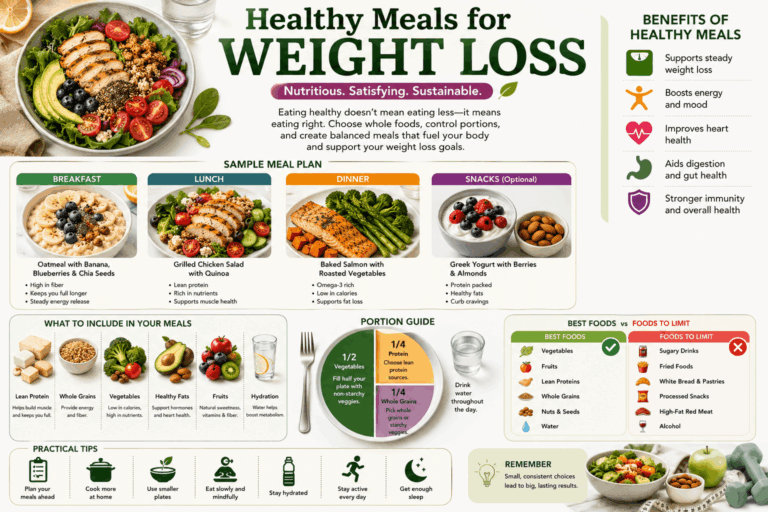
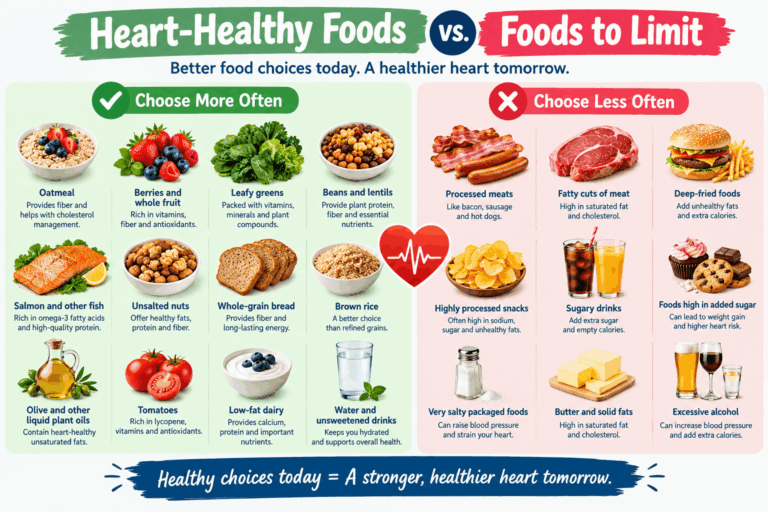
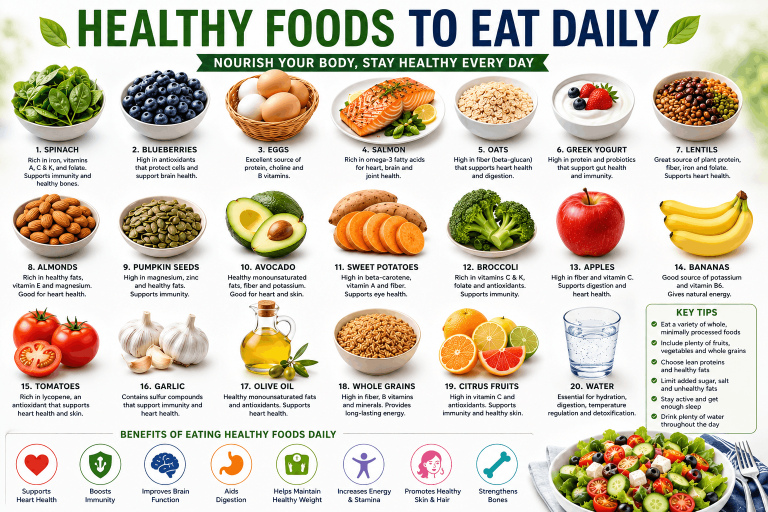
The best healthy breakfast foods are nutrient-dense choices that provide a useful combination of protein, fiber, whole grains, fruits or vegetables, and healthy fats. Good options include oatmeal, eggs, plain yogurt, berries, bananas, whole-grain bread, nuts, seeds, avocado, and beans. A balanced breakfast can help you meet daily nutrient needs while supporting an overall healthy eating pattern.
1. Oatmeal
Oatmeal is one of the simplest healthy breakfast choices. Oats provide carbohydrates and fiber, making them a practical base for a filling morning meal.
Choose plain rolled or steel-cut oats more often than flavored instant oatmeal products that contain large amounts of added sugar.
You can improve a bowl of oatmeal by adding:
- Fresh or frozen berries
- Sliced banana or apple
- Chia or ground flaxseed
- Unsalted nuts
- Plain Greek yogurt
- Milk or an unsweetened fortified milk alternative
For example, oatmeal topped with berries, walnuts, and plain yogurt provides a balanced combination of whole grains, fruit, protein, and healthy fats.
Whole-grain breakfast foods are encouraged as part of balanced dietary patterns, while refined grains and foods high in added sugars are best limited.
2. Eggs
Eggs are a convenient source of high-quality protein and can fit into many different breakfast styles.
Try boiled, poached, scrambled, or lightly cooked eggs with vegetables and whole-grain toast. Adding spinach, tomatoes, mushrooms, or peppers can boost variety and nutrients. Eggs can also be prepared in advance for busy mornings.
If you normally eat eggs with processed meats such as bacon or sausage, consider pairing them with vegetables, beans, avocado, or whole-grain toast instead.
3. Greek Yogurt
Plain Greek yogurt is another convenient breakfast option that provides protein and calcium and can be paired with a variety of nutritious foods.
Choose plain or lower-sugar varieties and add your own flavor with fruit, cinnamon, nuts, or seeds.
A simple breakfast bowl could include:
- Plain Greek yogurt
- Blueberries or strawberries
- Chia seeds
- A small handful of walnuts
- A spoonful of oats
This approach can be more nutritious than choosing a heavily sweetened yogurt topped with sugary granola.
Dairy foods and suitable dairy alternatives can contribute protein and calcium to a balanced diet.
4. Berries
Strawberries, blueberries, raspberries, and blackberries are easy additions to breakfast.
They provide fiber and a variety of vitamins, minerals, and other plant compounds. Fresh or frozen berries can both be useful choices.
Add them to oatmeal, yogurt, whole-grain cereal, or a smoothie.
If fresh berries are expensive or unavailable, frozen berries are a convenient alternative.
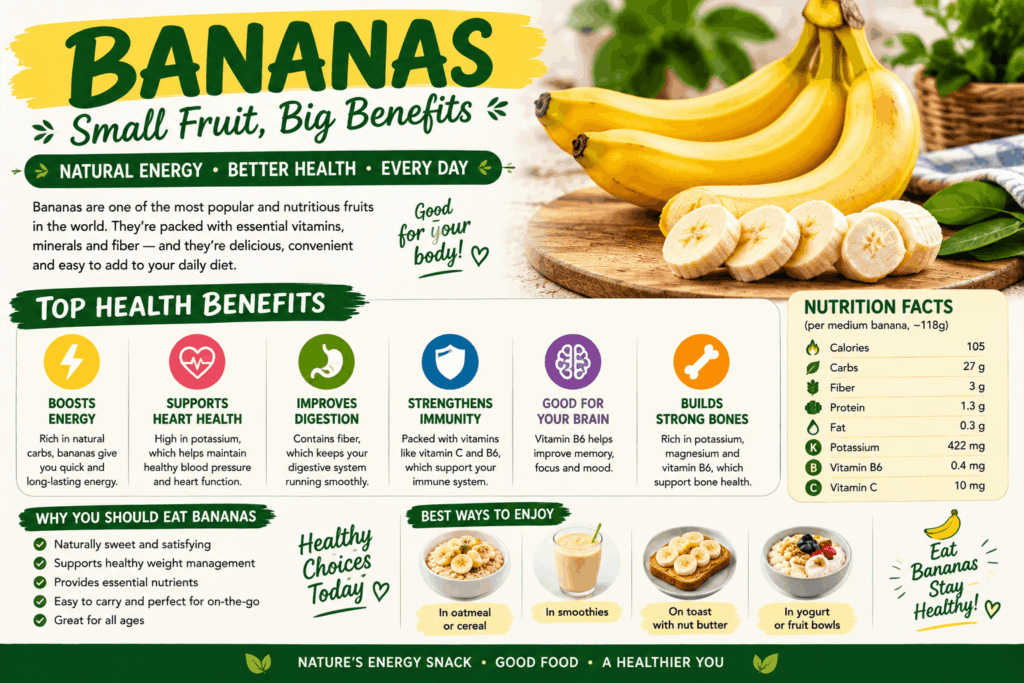
5. Bananas
Bananas are affordable, portable, and naturally sweet.
Slice one over oatmeal or whole-grain cereal, add it to plain yogurt, or pair it with peanut butter for a quick breakfast.
Because bananas are naturally sweet, they can also help reduce the need for added sugar in foods such as porridge.
Whole fruit is generally a better everyday choice than relying heavily on fruit juice because it retains the fruit’s fiber. Dietary guidance encourages choosing whole fruits regularly.
6. Whole-Grain Toast
Whole-grain toast can be a helpful breakfast base when paired with protein or healthy fats.
Try topping it with:
- Avocado and an egg
- Natural peanut butter and banana
- Cottage cheese and berries
- Hummus and sliced tomato
When buying bread, check the ingredient list rather than relying only on words such as “multigrain” or “wheat” on the package. Whole grains should be clearly identified among the main ingredients.
Whole-grain and higher-fiber breads generally provide more fiber than refined white bread.
7. Avocado
Avocado adds a creamy texture and provides mostly unsaturated fat.
It works particularly well with whole-grain toast and eggs. You can also add sliced avocado to a breakfast wrap or grain bowl.
Because fats are high in calories, portion size still matters. Nutritious foods can fit into a balanced diet without being eaten in large amounts.
8. Nuts and Nut Butters
Almonds, walnuts, peanuts, and other nuts can make breakfast more satisfying while providing protein, fiber, and unsaturated fats.
Choose unsalted nuts when possible.
For nut butter, look for products with a short ingredient list and little or no added sugar. Spread it over whole-grain toast or add a small amount to oatmeal with sliced banana.
9. Chia and Flaxseeds
Chia and ground flaxseed are small foods with useful nutritional value.
They can be incorporated into oatmeal, yogurt, smoothies, or overnight oats.
Ground flaxseed is generally easier to incorporate into meals than whole flaxseed. Chia seeds can absorb liquid, so they are commonly used in overnight oats and chia puddings.
A small amount can add texture and fiber without requiring major changes to your breakfast.
10. Cottage Cheese
Cottage cheese is a protein-rich breakfast option that works well in both sweet and savory meals.
For a sweet version, combine it with berries, sliced peaches, or banana. For a savory meal, serve it with tomatoes, cucumber, whole-grain toast, or an egg.
Check nutrition labels because sodium levels can vary between products.
11. Whole-Grain Breakfast Cereal
Breakfast cereal can still be part of a healthy breakfast. The important thing is choosing the right type.
Look for cereals that are:
- Higher in fiber
- Lower in added sugar
- Made primarily with whole grains
- Reasonable in sodium
- Paired with nutritious toppings
Plain shredded whole-grain cereal, unsweetened whole-grain flakes, and plain oat cereals can be better everyday choices than heavily frosted or candy-like cereals.
Adding fresh fruit and milk or plain yogurt can make a simple cereal breakfast more balanced.
Health authorities recommend choosing whole-grain cereals and limiting cereals that are high in added sugar.
12. Beans
Beans are not traditionally considered a breakfast food in some countries, but they can be an excellent savory option.
Black beans, kidney beans, chickpeas, or low-sodium baked beans pair well with eggs, whole-grain toast, or vegetables.
Beans also provide plant protein and fiber, making them a useful way to add variety to breakfast.
13. Vegetables
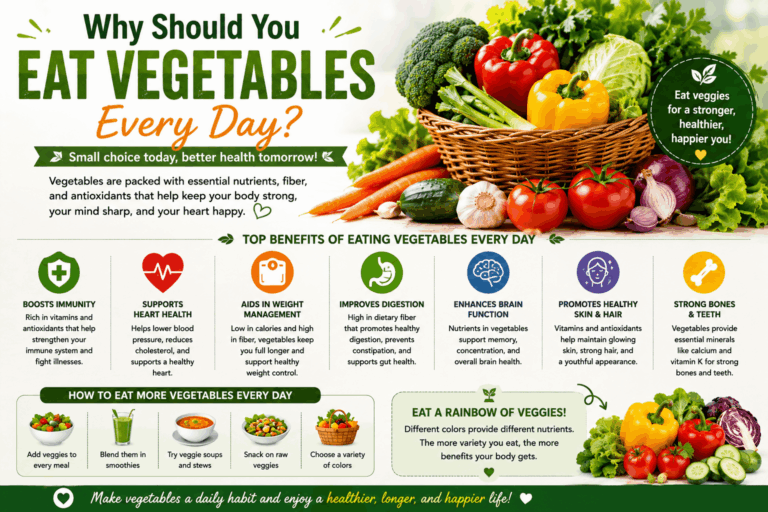
Breakfast is an easy opportunity to eat more vegetables.
Try adding spinach and mushrooms to scrambled eggs, tomatoes to whole-grain toast, or peppers and onions to a breakfast wrap.
You do not need a complicated recipe. Even a handful of spinach can add variety to your breakfast.
A balanced diet should include a variety of vegetables and fruits throughout the day.
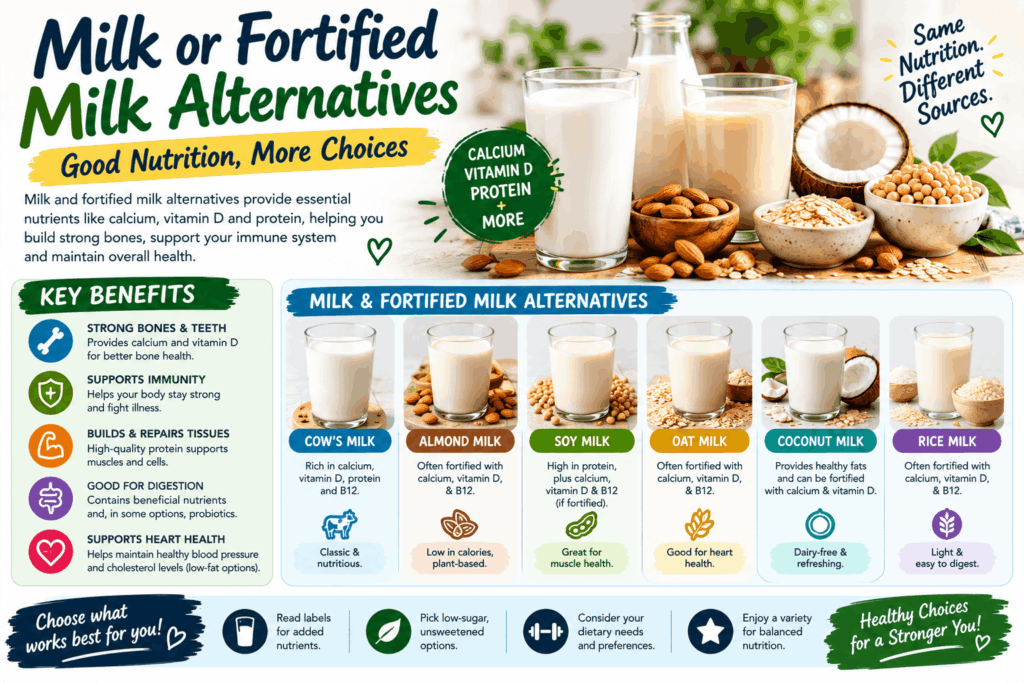
14. Milk or Fortified Milk Alternatives
Milk can supply protein and calcium, while certain fortified dairy alternatives can also provide key nutrients.
Choose an option that fits your dietary needs and check the nutrition label for added sugars.
Unsweetened versions are often a practical choice if you are trying to reduce added sugar.
Use milk in oatmeal, smoothies, cereal, or coffee rather than relying on heavily sweetened breakfast drinks.
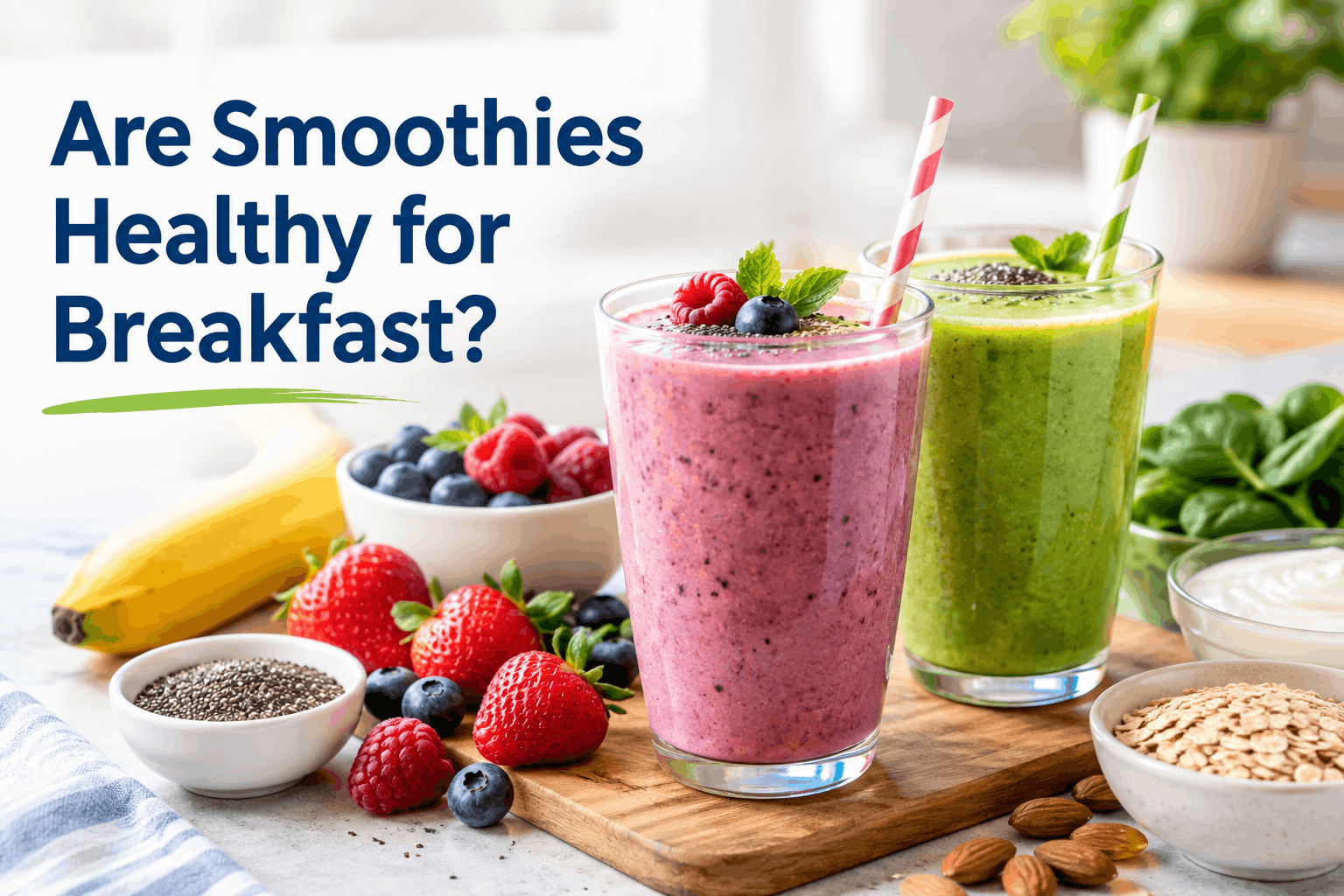
15. Fruit and Nut Smoothies
A smoothie can be a convenient breakfast when you are short on time.
However, a smoothie made only from fruit may not be as balanced as one that includes protein and healthy fats.
Try combining:
- Berries or banana
- Plain Greek yogurt
- Milk or an unsweetened fortified alternative
- Spinach
- Chia or ground flaxseed
You can also add oats for extra texture and fiber.
Whole fruit should still make up an important part of your diet. Smoothies and juices can make it easier to consume a large amount quickly, so portion size and ingredients matter.
How to Build a Balanced Breakfast
You do not need to calculate every nutrient in your breakfast.
A simple approach is to combine three or four components:
1. Choose a protein: eggs, Greek yogurt, cottage cheese, milk, beans, or nuts.
2. Add a high-fiber carbohydrate: oatmeal, whole-grain toast, or a whole-grain cereal.
3. Include fruit or vegetables: berries, banana, apple, tomatoes, spinach, or peppers.
4. Add a source of healthy fat when appropriate: avocado, nuts, seeds, or nut butter.
For example, eggs with whole-grain toast, avocado, and tomatoes offer a balanced, convenient breakfast without a complicated recipe.
Comparison Table
| Oatmeal | Fiber and whole grains | Berries, nuts, yogurt | Quick hot breakfast |
| Eggs | Protein | Vegetables, whole-grain toast | Savory breakfasts |
| Greek yogurt | Protein and calcium | Fruit, seeds, oats | No-cook meals |
| Berries | Fiber and micronutrients | Yogurt, oats | Naturally sweet topping |
| Banana | Carbohydrates and fiber | Nut butter, oats | Portable breakfasts |
| Whole-grain toast | Fiber and carbohydrates | Eggs, avocado | Fast meals |
| Avocado | Unsaturated fat | Eggs, toast | Savory breakfasts |
| Nuts | Protein, fiber, unsaturated fats | Oatmeal, yogurt | Added texture and satiety |
| Beans | Protein and fiber | Eggs, toast, vegetables | Plant-forward meals |
| Chia seeds | Fiber and healthy fats | Yogurt, oats | Easy nutrition boost |
Practical Tips for a Healthier Breakfast
Prepare Breakfast the Night Before
Overnight oats, boiled eggs, chopped fruit, and yogurt bowls can reduce the temptation to grab highly processed foods when you are rushing.
Keep Healthy Staples Available
A practical shopping list might include oats, eggs, plain yogurt, whole-grain bread, bananas, frozen berries, nuts, seeds, and vegetables.
Having these foods ready makes healthy choices easier.
Read Breakfast Food Labels
Do not judge a product by its packaging alone. Compare serving size, added sugar, fiber, sodium, and ingredient lists.
A product marketed as “healthy,” “natural,” or “multigrain” can still contain substantial amounts of added sugar or refined ingredients.
Limit Added Sugar
Sweetened cereals, pastries, flavored yogurts, syrups, and some coffee drinks can add a significant amount of sugar to breakfast.
Try using fruit, cinnamon, or unsweetened ingredients for flavor instead.
Health guidance recommends choosing lower-sugar breakfast cereals and using fruit to add natural sweetness.
Do Not Forget Hydration
Water is a simple choice alongside breakfast. Tea and coffee can also contribute to fluid intake, although heavily sweetened drinks can add unnecessary sugar.
Common Mistakes
Choosing a Sugary Breakfast Every Day
Pastries, donuts, sweetened cereals, and sugary coffee drinks may be convenient, but making them your everyday breakfast can leave little room for more nutrient-dense foods.
Eating Too Little Protein
A breakfast based only on toast or fruit may be less balanced than one that also includes eggs, yogurt, milk, beans, nuts, or seeds.
Assuming “Healthy” Means Unlimited
Foods such as nuts, nut butter, avocado, and granola can be nutritious but calorie-dense. Portion awareness still matters.
Drinking Fruit Juice Instead of Eating Whole Fruit
Juice can provide nutrients, but whole fruit generally provides more fiber and takes longer to consume. Dietary guidance recommends emphasizing whole fruit.
Skipping Breakfast Because It Is Busy
Not everyone needs breakfast right after waking, and preferences vary. However, if skipping breakfast leads to unhealthy choices later, a quick nutritious meal can help.
Making Breakfast Too Complicated
A healthy breakfast does not need ten ingredients.
Oatmeal with fruit and nuts, or eggs with whole-grain toast and vegetables, can be enough.
Key Takeaways
- Healthy breakfast options are packed with essential nutrients and kept minimally processed whenever possible.
- Include a combination of protein, fiber-rich carbohydrates, fruits or vegetables, and healthy fats.
- Oatmeal, eggs, Greek yogurt, berries, bananas, whole-grain toast, nuts, seeds, avocado, and beans are versatile choices.
- Choose whole grains more often than refined grains.
- Look for lower-sugar breakfast cereals and yogurts.
- Whole fruit is generally a better everyday choice than relying heavily on juice.
- Check food labels instead of trusting health claims on the front of packages.
- Healthy breakfasts can be simple, affordable, and quick to prepare.
Frequently Asked Questions
What is the healthiest food to eat for breakfast?
There is no single healthiest breakfast food for everyone. Good choices include oatmeal, eggs, plain Greek yogurt, whole-grain toast, fruit, nuts, seeds, and vegetables. Combining several of these foods creates a more balanced meal.
Is oatmeal a healthy breakfast?
Yes. Plain oatmeal is a whole-grain food and provides fiber. It becomes a more complete breakfast when paired with protein-rich foods, fruit, nuts, or seeds.
Are eggs healthy for breakfast?
Eggs can be part of a healthy breakfast and provide protein along with several vitamins and minerals. Pairing them with vegetables and whole grains can create a balanced meal.
What should I eat for breakfast to stay full longer?
A breakfast containing protein and fiber can be more satisfying than one based mainly on refined carbohydrates or added sugars. Examples include Greek yogurt with berries and nuts, or eggs with whole-grain toast and vegetables.
Is cereal healthy for breakfast?
Some cereals can be healthy choices, particularly those made with whole grains and lower amounts of added sugar. Check the nutrition facts panel and ingredient list before choosing.
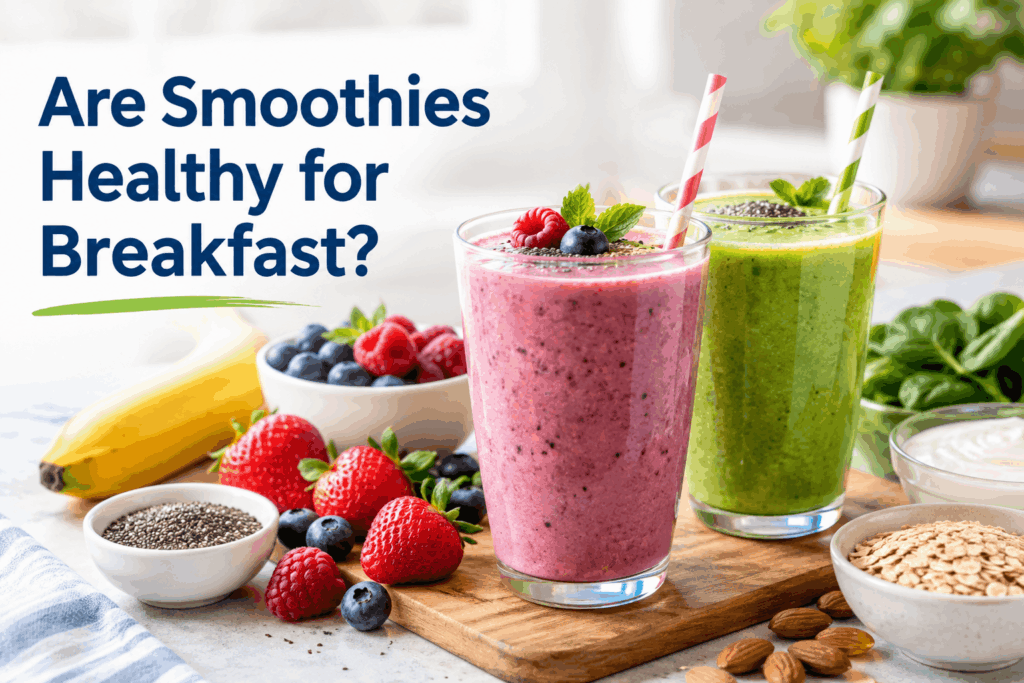
Are smoothies healthy for breakfast?
Smoothies can be nutritious when they contain a balanced mix of ingredients. Consider combining fruit with Greek yogurt or another protein source, vegetables, and seeds instead of using fruit juice and added sugar as the main ingredients.
What is a quick healthy breakfast for busy mornings?
Overnight oats, Greek yogurt with fruit and nuts, a boiled egg with whole-grain toast, or a banana with natural nut butter can be prepared quickly and require little cooking.
Conclusion
The best healthy breakfast foods are not necessarily expensive or complicated. In most cases, the goal is simple: to build a meal around nutritious basics such as whole grains, protein-rich foods, fruit or vegetables, and healthy fats.
Oatmeal with berries and nuts, eggs with whole-grain toast and vegetables, or plain Greek yogurt with fruit and seeds are all examples of breakfasts that can fit into a balanced eating pattern.
Rather than looking for one perfect breakfast, focus on variety and consistency. Keep nutritious foods on hand, limit heavily sweetened choices, and select meals that fit realistically into your daily schedule.
A healthy breakfast should work in real life. When nutritious choices are simple enough to repeat, they are much easier to turn into lasting habits.
Disclaimer
This article is published solely for educational and informational purposes. The information provided is intended to increase general awareness and understanding of the topic. It should not be considered medical, insurance, financial, legal, or professional advice. Readers should consult qualified professionals before making any healthcare, insurance, financial, or legal decisions.
References
- U.S. Department of Agriculture (USDA)
- Dietary Guidelines for Americans
- U.S. Department of Health and Human Services (HHS)
- National Health Service (NHS)
- National Institutes of Health (NIH)
- Mayo Clinic
- Cleveland Clinic
- Government of Canada
- Australian Government Department of Health and Aged Care