Best Vegetables to Eat Every Day for Better Health
Best Vegetables to Eat Every Day for Health
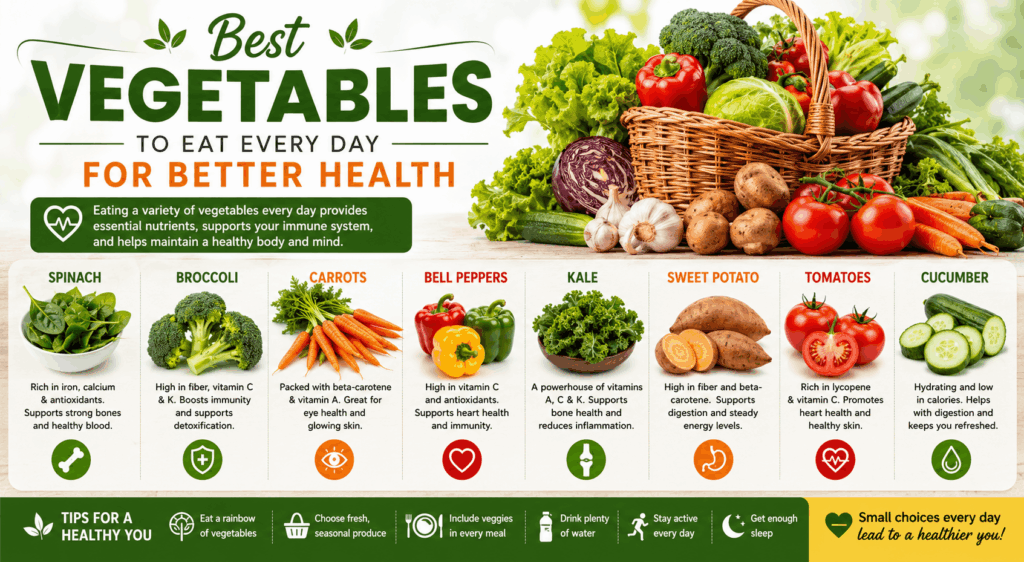
Discover the best vegetables to eat every day, their key nutrients, health benefits, and easy ways to add more variety to your meals.
best-vegetables-to-eat-every-day
You know vegetables are good for you, but choosing which ones to eat every day can be surprisingly difficult. Should you focus on leafy greens, broccoli, carrots, tomatoes, or something else? And does it really matter if you eat the same vegetables every day?
The good news is that healthy eating does not require an expensive shopping list or complicated recipes. A simple mix of colorful, nutrient-dense vegetables can provide fiber, vitamins, minerals, and other beneficial plant compounds while making everyday meals more satisfying.
This matters because many people still do not eat enough vegetables. Current U.S. dietary guidance emphasizes eating a variety of vegetables, including dark green, red and orange, starchy, and other vegetables.
In this guide, you will learn which vegetables are worth including regularly, what makes each one useful, how to prepare them, and how to build a practical vegetable routine that works with real life.
What Are the Best Vegetables to Eat Every Day?
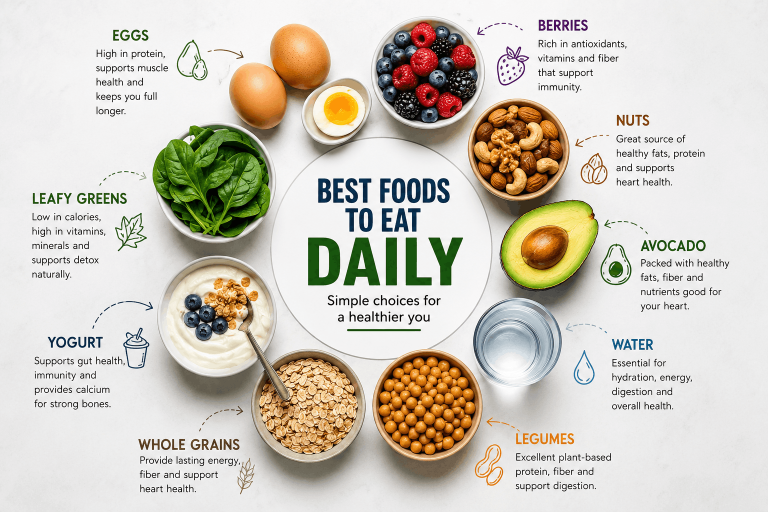
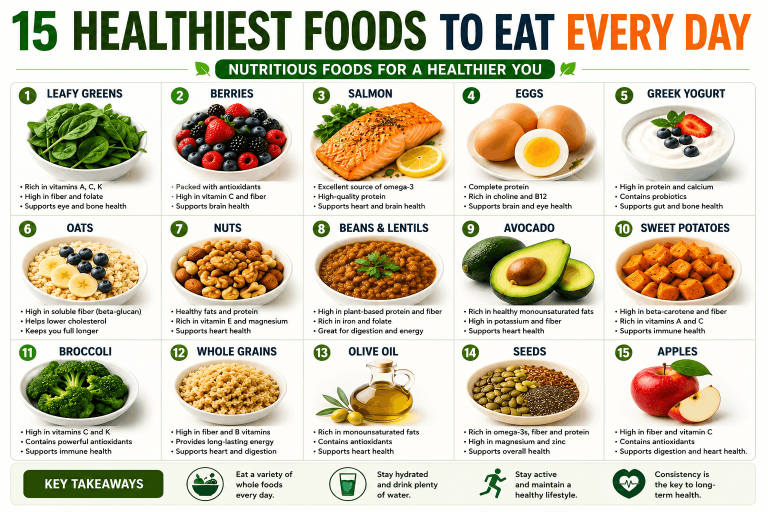
The best vegetables to eat every day are nutrient-dense options such as leafy greens, broccoli, carrots, bell peppers, tomatoes, Brussels sprouts, cauliflower, sweet potatoes, and beans or lentils. Rather than relying on one “super vegetable,” aim for variety because different vegetables provide different combinations of vitamins, minerals, fiber, and plant compounds.
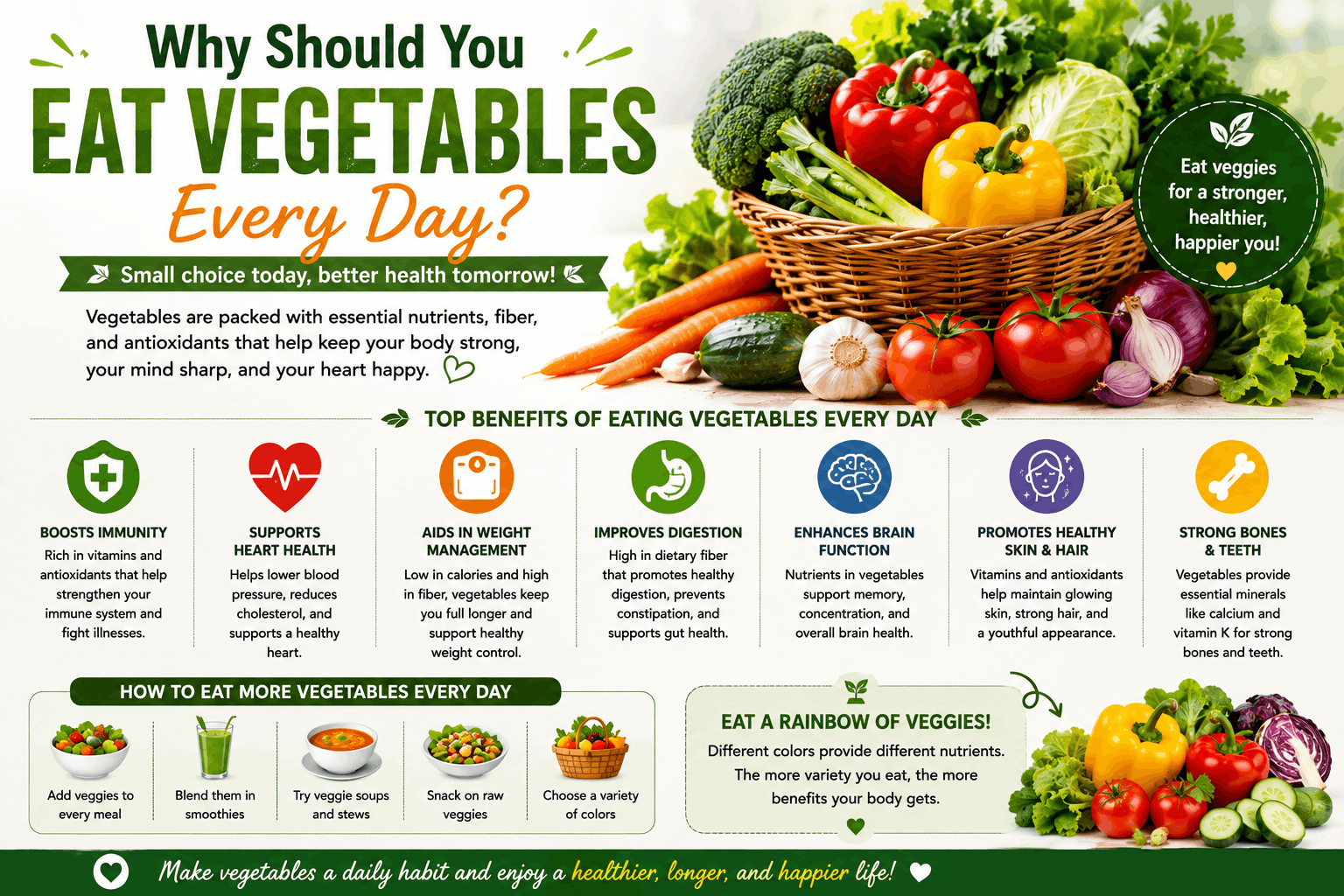
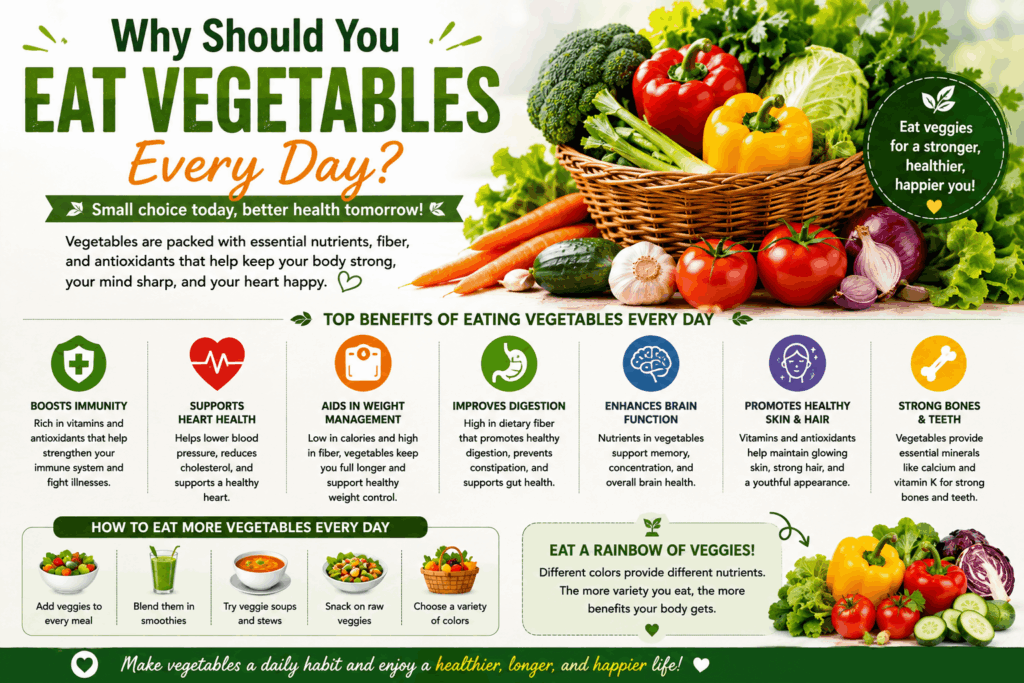
Why Should You Eat Vegetables Every Day?
Vegetables are an important part of a balanced eating pattern. They provide nutrients such as vitamin C, vitamin K, folate, potassium, and fiber, along with numerous naturally occurring plant compounds.
Fiber is especially useful because it supports digestive health and can help you feel fuller after meals. Vegetables can also add volume, color, texture, and flavor without relying heavily on highly processed ingredients.
Eating a variety of vegetables is also more useful than focusing on one particular food. Dietary guidance groups vegetables into several categories, including dark green vegetables, red and orange vegetables, beans, peas and lentils, starchy vegetables, and other vegetables.
12 Best Vegetables to Eat Every Day
1. Spinach and Other Leafy Greens
Spinach, kale, collard greens, Swiss chard, and similar leafy vegetables are excellent choices for regular meals.
They can contribute vitamin K, folate, vitamin C, and other nutrients while adding very few calories to a meal. Leafy greens also make it easy to increase your vegetable intake without completely changing what you normally eat.
Try adding spinach to eggs, soups, pasta, sandwiches, or smoothies. Kale and other sturdy greens work well in salads and cooked dishes.
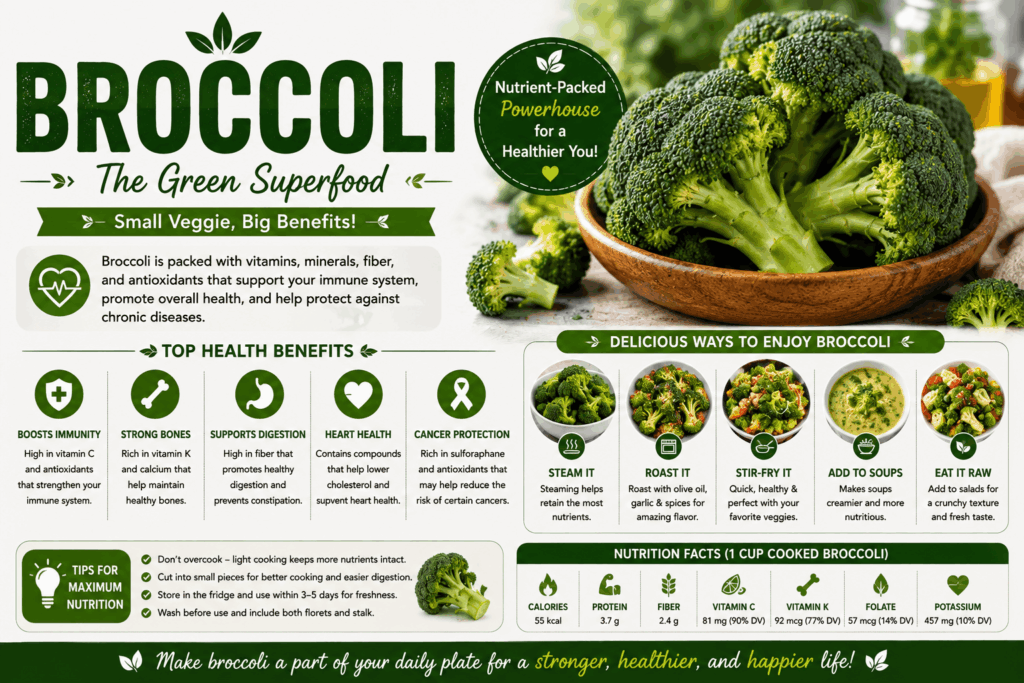
2. Broccoli
Broccoli is one of the easiest vegetables to build into a healthy routine.
It provides fiber, several vitamins and minerals, and naturally occurring plant compounds. Broccoli works well steamed, roasted, stir-fried, or added to soups.
For a quick weeknight meal, combine roasted broccoli with whole grains and a protein source such as beans, eggs, fish, chicken, tofu, or lentils.
3. Carrots
Carrots are an easy everyday vegetable because they require little preparation and can be eaten raw or cooked.
They are particularly well known for beta-carotene, which the body can convert into vitamin A. Vitamin A is important for normal vision, immune function, and other body processes.
Keep baby carrots or sliced carrots available for snacks, or add chopped carrots to soups, stews, salads, and stir-fries.
4. Bell Peppers
Red, yellow, orange, and green bell peppers can make ordinary meals much more interesting.
They provide vitamin C and other nutrients while adding sweetness and crunch. Their bright colors also make it easier to create a more varied plate.
Slice them into salads, add them to omelets, roast them with other vegetables, or use them in wraps and grain bowls.
5. Tomatoes
Tomatoes are botanically a fruit, but people commonly use them as a vegetable in meals, and U.S. dietary guidance includes them in the vegetable group.
They can be enjoyed fresh, cooked, canned, or incorporated into sauces and soups. Tomatoes are a good source of vitamin C, potassium, and beneficial carotenoids like lycopene.
Canned tomatoes can be particularly convenient for sauces, chili, and soups. When choosing canned products, check the label for sodium.
6. Brussels Sprouts
Brussels sprouts belong to the cruciferous vegetable family along with broccoli and cauliflower.
Roasting can bring out a crisp texture and gentle sweetness. They can also be steamed, lightly sautéed, or sliced into fresh salads.
If you have disliked Brussels sprouts in the past, try roasting them with a small amount of olive oil, herbs, and spices instead of boiling them until soft.
7. Cauliflower
Cauliflower is one of the most versatile vegetables.
You can roast it, steam it, add it to curries and soups, or combine it with other vegetables in a stir-fry. It can also replace part of the starch in certain recipes when you want more vegetables.
Cauliflower is part of the broader group of vegetables that can contribute fiber and important micronutrients to a balanced diet.
8. Sweet Potatoes
Sweet potatoes are a nutrient-dense starchy vegetable and a useful source of carbohydrates.
Their orange color comes largely from carotenoids, including beta-carotene. They also provide fiber and potassium.
Try baked sweet potatoes with beans and vegetables, roasted cubes in a grain bowl, or mashed sweet potatoes as a side dish.
9. Green Beans
Green beans are easy to prepare and work well with many different cuisines.
They can be steamed, roasted, sautéed, or added to casseroles and stir-fries. Fresh and frozen green beans are both convenient options.
Pair them with a protein source and a whole grain for a simple, balanced meal.
10. Cabbage
Cabbage is affordable, versatile, and surprisingly useful for everyday meals.
Green, red, and napa cabbage can be eaten raw or cooked. Add shredded cabbage to salads, tacos, soups, stir-fries, or sandwiches.
Because cabbage stores relatively well compared with many delicate vegetables, it can also be a practical choice for reducing food waste.
11. Mushrooms
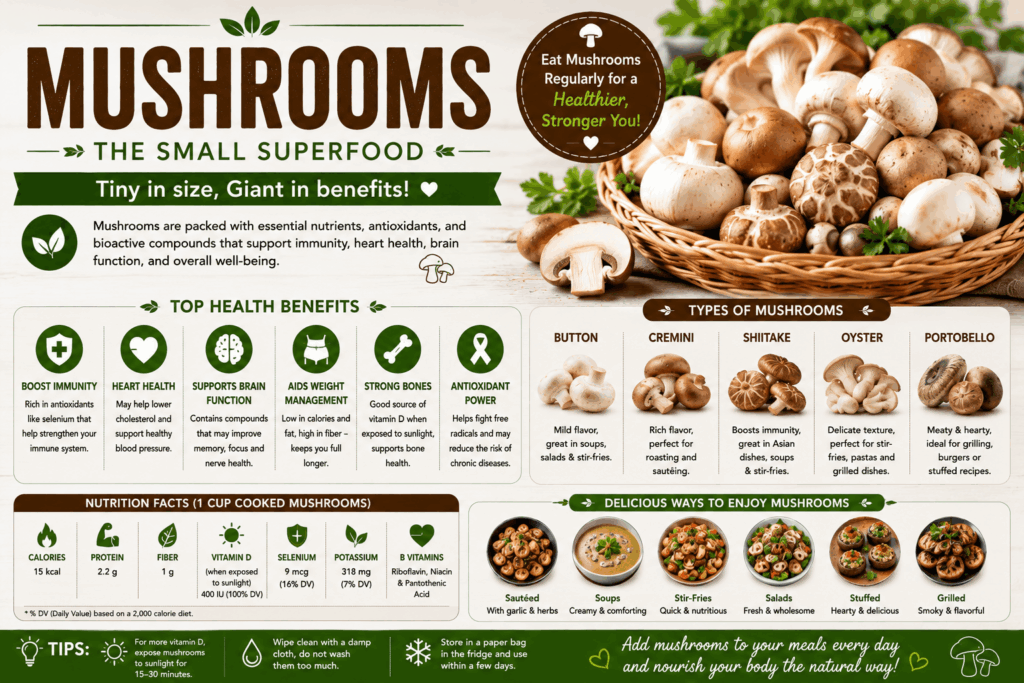
Mushrooms add a savory flavor and satisfying texture to meals.
They can be sautéed with vegetables, added to omelets, pasta dishes, soups, grain bowls, or stir-fries.
Mushrooms are not a substitute for every other vegetable, but they are a useful way to increase variety and make plant-forward meals more appealing.
12. Broccoli
Beans, peas, and lentils occupy an interesting place in nutrition. In the Dietary Guidelines for Americans, beans, peas, and lentils are included in the vegetable subgroup, while they can also serve as protein foods because of their nutrient profile.
They provide fiber and plant-based protein and can make meals more filling.
Add lentils to soups, chickpeas to salads, black beans to tacos, or edamame to rice bowls.
Comparison Table
| Spinach | Folate, vitamin K, fiber | Eggs, salads, soups |
| Broccoli | Fiber, vitamin C, vitamin K | Steamed, roasted, stir-fried |
| Carrots | Beta-carotene, fiber | Raw snacks, soups, roasted |
| Bell peppers | Vitamin C, colorful plant compounds | Salads, omelets, wraps |
| Tomatoes | Vitamin C, potassium, lycopene | Salads, sauces, soups |
| Brussels sprouts | Fiber, vitamin K | Roasted or sautéed |
| Cauliflower | Fiber, vitamin C, versatility | Roasted, soups, curries |
| Sweet potatoes | Beta-carotene, potassium, fiber | Baked, roasted, mashed |
| Green beans | Fiber and micronutrients | Steamed, roasted, stir-fried |
| Cabbage | Fiber and vitamin C | Slaws, stir-fries, soups |
| Mushrooms | B vitamins and minerals | Omelets, pasta, stir-fries |
| Beans and lentils | Fiber and plant protein | Soups, salads, bowls |
How Many Vegetables Should You Eat Each Day?
There is no single vegetable amount that works for every person. Recommended amounts depend on factors such as age, sex, and calorie needs.
As a practical approach, make vegetables a regular part of your meals rather than trying to hit an arbitrary number with one food.
For example:
- Add spinach or peppers to breakfast.
- Include a large serving of vegetables with lunch.
- Make vegetables a major part of dinner.
- Keep raw carrots, cucumber, or bell peppers available for snacks.
Current U.S. dietary guidance uses vegetable recommendations that vary according to calorie level and includes several vegetable subgroups rather than focusing on one specific vegetable.
Fresh, Frozen, or Canned: Which Is Best?
Fresh vegetables are excellent, but they are not your only option.
Frozen vegetables can be convenient and nutritious, especially when fresh produce is expensive or unavailable. Canned vegetables can also fit into a healthy eating pattern. CDC guidance recommends looking for canned vegetables with little or no added sodium when possible.
The most useful option is often the one you will actually prepare and eat.
If fresh broccoli regularly goes bad in your refrigerator, frozen broccoli may be a better choice for your household.
What Is the Healthiest Way to Cook Vegetables?
There is no single cooking method that makes every vegetable healthiest.
Steaming, roasting, sautéing, microwaving, and eating vegetables raw can all fit into a healthy diet.
The bigger issue is what you add during preparation. Large amounts of butter, creamy sauces, salt, or deep-frying can substantially change the nutritional profile of a vegetable-based meal.
CDC guidance suggests steaming or using an air fryer and limiting breading and frying when possible.
How to Build a Balanced Vegetable Plate
Instead of eating the same vegetables every day, rotate colors and types.
A simple plate might include:
- Dark green vegetables such as spinach or broccoli
- Red or orange vegetables such as tomatoes, carrots, or peppers
- Another vegetable such as cabbage, cauliflower, or mushrooms
- A protein source such as beans, fish, eggs, poultry, tofu, or lentils
- A whole grain or other carbohydrate source
This approach provides variety without requiring complicated meal planning.
Practical Tips
Make Vegetables Convenient
Wash and cut vegetables when you bring them home. Store ready-to-use portions in the refrigerator so they are easy to grab.
Keep Frozen Vegetables on Hand
Frozen broccoli, spinach, peas, mixed vegetables, and other options can save time on busy days.
Add Vegetables to Foods You Already Eat
You do not need to completely change your diet. Add spinach to eggs, peppers to sandwiches, broccoli to pasta, or mushrooms to stir-fries.
Use Herbs and Spices
Garlic, black pepper, paprika, cumin, ginger, lemon juice, vinegar, and fresh herbs can add flavor without relying heavily on creamy sauces or excess salt.
Rotate Your Choices
Try choosing vegetables from different color groups throughout the week. Dietary guidance specifically emphasizes variety across vegetable subgroups.
Plan Around Your Budget
Seasonal produce, frozen vegetables, cabbage, carrots, onions, potatoes, beans, and lentils can be practical choices when food costs are a concern.
Common Mistakes
Eating Only One Type of Vegetable
Eating broccoli every day is better than eating no vegetables, but relying on one vegetable limits variety.
Assuming Fresh Is Always Better
Fresh produce is excellent, but frozen and appropriately selected canned vegetables can also be nutritious and convenient.
Turning Vegetables Into High-Calorie Side Dishes
Deep-frying vegetables or covering them with heavy sauces can add substantial calories, sodium, and saturated fat.
Forgetting About Portion Balance
A healthy diet is about the overall eating pattern. Vegetables are important, but meals should also include appropriate sources of protein, whole grains or other nutrient-dense carbohydrates, and healthy fats.
Not Washing Produce
Fresh vegetables should be washed thoroughly before eating or preparing them. CDC food-safety guidance specifically identifies unwashed fresh produce, including leafy greens, as a food-safety concern.
Key Takeaways
- The best vegetables to eat every day are a variety of nutrient-dense choices rather than one “perfect” vegetable.
- Leafy greens, broccoli, carrots, bell peppers, tomatoes, cabbage, cauliflower, and sweet potatoes are practical options.
- Beans, peas, and lentils can provide both vegetable-group nutrients and plant-based protein.
- Fresh, frozen, and properly selected canned vegetables can all fit into a healthy diet.
- Variety is important because different vegetables provide different nutrients and plant compounds.
- Steaming, roasting, sautéing, microwaving, and eating vegetables raw can all be healthy preparation methods.
- Limit excessive salt, creamy sauces, breading, and deep-frying.
- Making vegetables convenient is often more effective than relying on willpower.
Frequently Asked Questions
What are the best vegetables to eat every day?
Leafy greens, broccoli, carrots, bell peppers, tomatoes, cauliflower, cabbage, Brussels sprouts, sweet potatoes, green beans, mushrooms, and beans or lentils are excellent choices. The key is variety rather than eating one vegetable exclusively.
Is it okay to eat vegetables every day?
Yes. Vegetables are an important part of a balanced eating pattern and can be eaten daily. A varied selection helps provide a broader range of nutrients.
What is the healthiest vegetable?
There is no single healthiest vegetable. Different vegetables provide different nutrients, so eating a variety of dark green, red and orange, starchy, and other vegetables is a better strategy.
Are frozen vegetables healthy?
Yes. Frozen vegetables can be a convenient and nutritious option. When buying canned vegetables, look for products with little or no added sodium.
Are canned vegetables good for you?
They can be. Choose options with little or no added salt when possible, and check the nutrition label. Canned vegetables can make healthy eating more affordable and convenient.
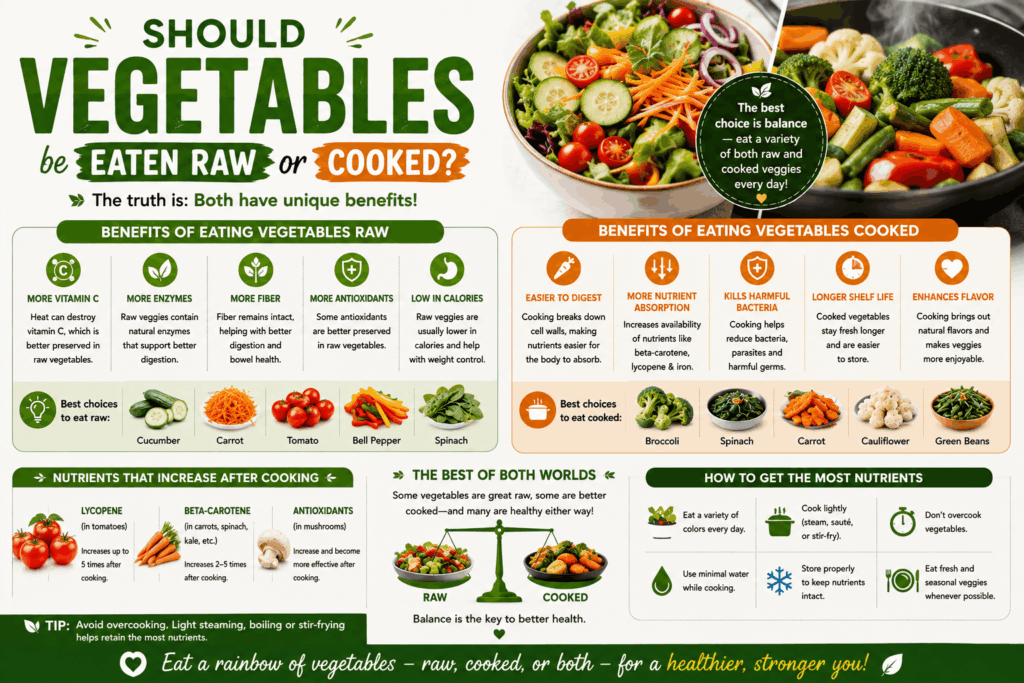
Should vegetables be eaten raw or cooked?
Both can be part of a healthy diet. Some vegetables are enjoyable raw, while others may be easier to eat and digest when cooked. Use different preparation methods to keep meals interesting.
Can vegetables help with weight management?
Vegetables can support a healthy eating pattern because many are relatively low in calories and provide water and fiber, which can contribute to fullness. However, overall food intake and dietary pattern also matter.
Conclusion
The best vegetables to eat every day are not necessarily the most expensive or exotic ones. Spinach, broccoli, carrots, peppers, tomatoes, cabbage, cauliflower, sweet potatoes, beans, and other familiar vegetables can form the foundation of a nutritious eating pattern.
The most important habit is variety. Mix different colors, textures, and vegetable groups throughout the week. Keep frozen and canned options available when fresh produce is inconvenient, and use simple cooking methods that make vegetables taste good without loading them with excess salt, sugar, or heavy sauces.
If eating more vegetables feels difficult, start small. Add one extra serving to a meal you already enjoy, then build from there. Consistent everyday choices are more useful than trying to create a perfect diet overnight.
Disclaimer
This article is published solely for educational and informational purposes. The information provided is intended to increase general awareness and understanding of the topic. It should not be considered medical, insurance, financial, legal, or professional advice. Readers should consult qualified professionals before making any healthcare, insurance, financial, or legal decisions.
References
- U.S. Department of Agriculture (USDA)
- Dietary Guidelines for Americans
- Centers for Disease Control and Prevention (CDC)
- National Institutes of Health (NIH)
- National Center for Complementary and Integrative Health (NCCIH)
- U.S. Department of Health & Human Services (HHS)