What Are Healthy Fats? Best Foods and Their Benefits
What Are Healthy Fats? Best Food Sources
Learn what healthy fats are, which foods provide them, how unsaturated fats support your health, and simple ways to include them in your daily meals.
what-are-healthy-fats
Fat has a complicated reputation. For years, many people tried to avoid it altogether, choosing low-fat products and removing oils from their meals whenever possible. But fat is an essential nutrient, and eliminating it isn’t healthy or practical.
Think about a typical breakfast. You might have eggs with whole-grain toast, a little avocado, or a handful of nuts alongside your oatmeal. These foods contain fat, but they also provide nutrients that help make a balanced diet more satisfying.
The real question isn’t whether you should eat fat. It’s which types of fat to choose, how much you need, and which foods offer the most nutritional value.
Knowing how different fats work can make it easier to choose suitable foods, plan well-balanced meals, and understand which fats can be eaten more regularly and which ones are better to limit.
In this guide, you’ll learn what healthy fats are, the best food sources, how different fats compare, common mistakes to avoid, and simple ways to add them to everyday meals.
What Are Healthy Fats?
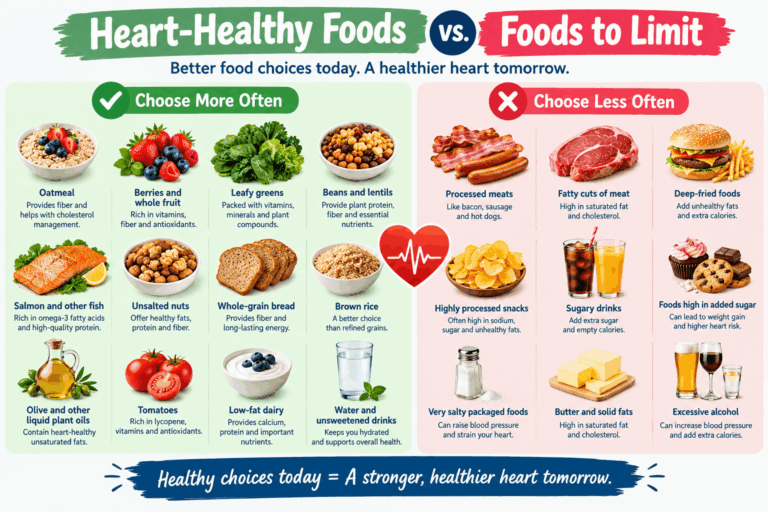
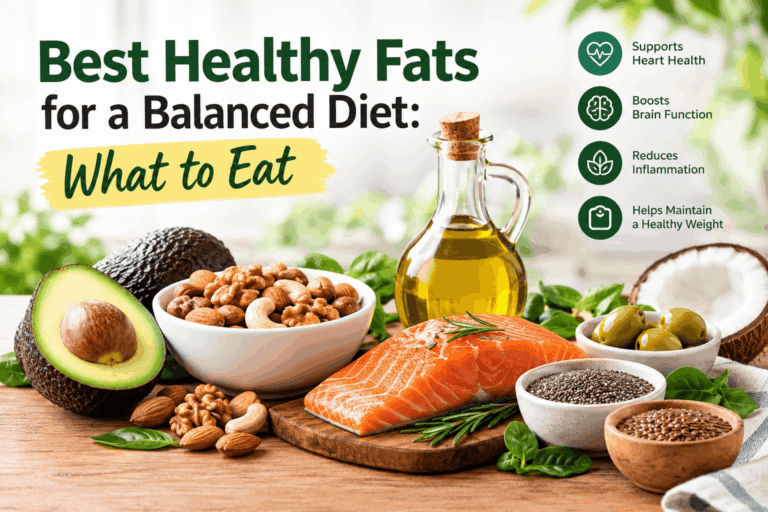
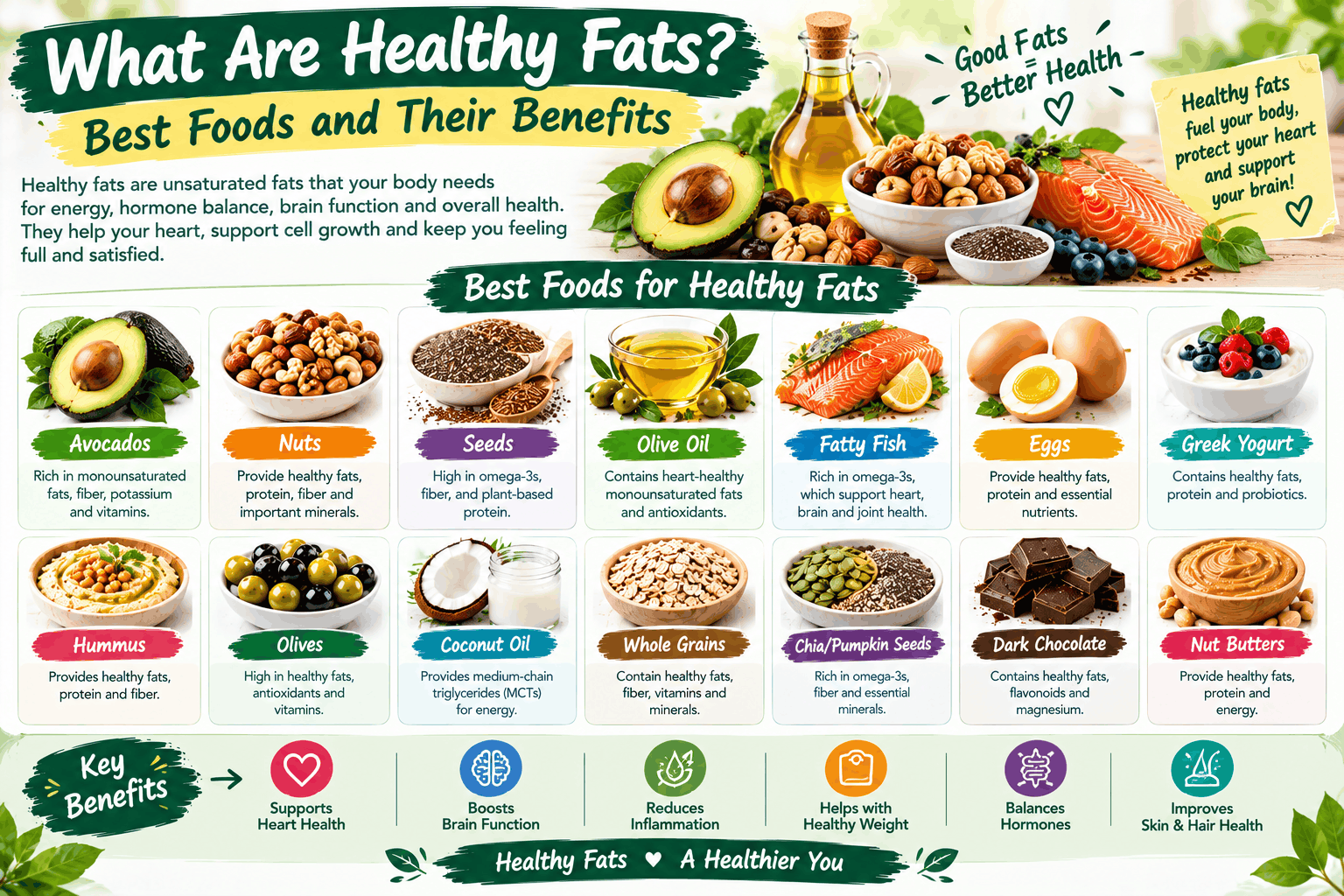
Healthy fats are dietary fats that support normal body functions and can contribute to long-term health when they replace less beneficial fats in a balanced eating pattern. They are found in foods such as olive oil, avocados, nuts, seeds, and oily fish. Most are unsaturated fats, including monounsaturated and polyunsaturated fats, which are generally preferred over trans fats and excessive saturated fat.
Why Does Your Body Need Healthy Fats?
Fat does much more than add flavor to food. Your body relies on dietary fat for several essential functions, which is why a balanced diet should include appropriate amounts.
1. They Help Your Body Absorb Vitamins
Vitamins A, D, E, and K are fat-soluble, meaning your body absorbs them more effectively when some fat is present in your meals.
For example, adding olive oil to a salad containing spinach, carrots, and other vegetables can help your body absorb certain vitamins. You don’t need a large amount. A modest serving can be enough to make a difference.
2. They Provide Energy
Fat provides about nine calories per gram, compared with four calories per gram from carbohydrates and protein. This makes it a concentrated source of energy.
Your body uses dietary fat for energy and can store excess energy for later use. However, because fat is calorie-dense, portion sizes still matter, particularly if you’re trying to manage your weight
3. They Support Cells and Normal Body Functions
Fat is part of the structure of your body’s cells. Essential fatty acids also contribute to normal growth, brain function, and other processes.
Your body cannot make certain essential fatty acids on its own, so you must obtain them through food. Omega-3 and omega-6 fatty acids are two important types of polyunsaturated fats.
4. They Help You Enjoy Satisfying Meals
Fat adds flavor and texture to food. It can also help meals feel more satisfying, especially when combined with protein, fiber-rich carbohydrates, and vegetables.
For example, oatmeal topped with walnuts and berries provides a mix of fiber, carbohydrates, and fat. This can make breakfast more substantial than a meal consisting of refined carbohydrates alone.
What Are the Different Types of Dietary Fat?
Not all fats affect health in the same way. Understanding the main categories makes choosing foods much easier.
Monounsaturated Fats
Monounsaturated fats are unsaturated fats found in foods such as avocados, olive oil, peanuts, almonds, and cashews.
Replacing some saturated fats with monounsaturated fats from plant foods can help improve blood cholesterol levels. These fats are easy to incorporate into everyday meals without changing your entire diet.
Good sources include:
- Olive oil
- Avocados
- Almonds and peanuts
- Cashews
- Peanut butter without excessive added sugar
Polyunsaturated Fats
Polyunsaturated fats include omega-3 and omega-6 fatty acids. Both are essential nutrients that your body needs.
Omega-3 fats are found in oily fish, walnuts, flaxseeds, chia seeds, and certain plant oils. Omega-6 fats are available in foods such as sunflower seeds, walnuts, and soybean and sunflower oils.
Rather than trying to eliminate one type, focus on getting a variety of these fats from nutritious foods.
Saturated Fats
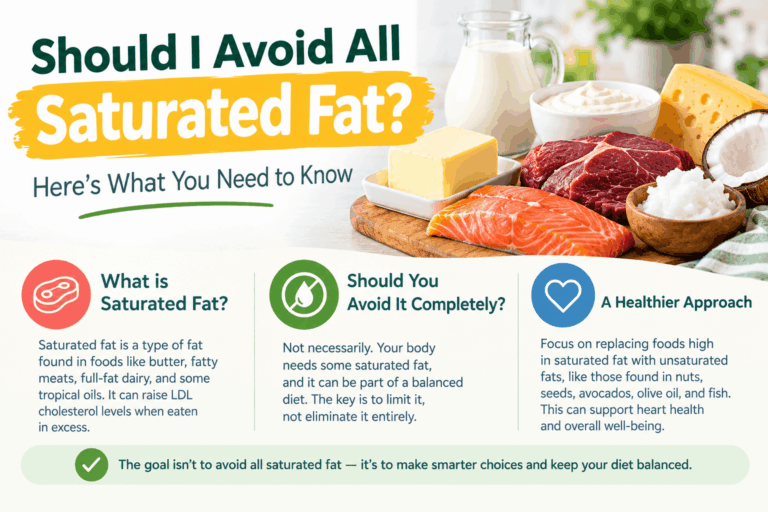
Saturated fats occur naturally in foods such as butter, cheese, fatty meats, cream, coconut oil, and palm oil.
These fats aren’t all found in the same types of foods, and their effects can vary depending on the overall diet. However, consuming too much saturated fat can raise LDL cholesterol, often called “bad” cholesterol.
Most dietary guidance recommends limiting saturated fat and replacing some of it with unsaturated fats or fiber-rich foods.
Trans Fats
Trans fats are the type of fat you should be particularly careful about. Industrially produced trans fats have been used in some processed foods to improve texture and shelf life.
They can raise LDL cholesterol and increase cardiovascular risk. The World Health Organization recommends keeping trans fat intake very low and avoiding industrially produced trans fats as part of a healthy diet.
Check ingredient lists for partially hydrogenated oils, and choose alternatives when available. Food regulations differ across countries, so packaged foods may not contain the same ingredients everywhere.
What Are the Best Foods for Healthy Fats?
You don’t need expensive supplements or specialty products to get healthy fats. Many affordable, everyday foods provide them alongside protein, fiber, vitamins, minerals, or other beneficial nutrients.

1. Avocados
Avocados provide mostly monounsaturated fat, along with fiber and potassium. Add slices to toast, salads, sandwiches, or grain bowls.
Easy serving idea: Add a quarter or half of an avocado to a meal, depending on your needs.

2. Olive Oil
Olive oil is rich in monounsaturated fats and works well in salad dressings, roasted vegetables, and many everyday dishes.
Easy serving idea: Whisk olive oil with lemon juice and herbs for a simple dressing.

3. Nuts
Almonds, walnuts, pistachios, and cashews provide unsaturated fats. They also contain varying amounts of protein, fiber, and minerals.
Easy serving idea: Keep a small handful of unsalted nuts available for a snack.

4. Oily Fish
Salmon, sardines, herring, and trout provide omega-3 fatty acids. Fish also supplies protein, and some varieties provide vitamin D.
Easy serving idea: Serve baked salmon with vegetables and whole grains for dinner.

5. Chia and Flaxseeds
These seeds provide plant-based omega-3 fat called alpha-linolenic acid (ALA), as well as fiber. Ground flaxseed is often easier to use than whole flaxseed.
Easy serving idea: Stir a spoonful into oatmeal, yogurt, or a smoothie.

6. Peanut Butter and Other Nut Butters
Nut butters provide unsaturated fats and some protein. Check the ingredient list for added sugars, salt, and oils, especially if you’re comparing products.
Easy serving idea: Spread peanut butter on whole-grain toast or pair it with apple slices.

7. Seeds
Sunflower, pumpkin, and sesame seeds contain unsaturated fats and other nutrients. Their nutritional profiles vary, but they can all add variety to meals.
Easy serving idea: Sprinkle seeds over salads, soups, or roasted vegetables.

8. Canola Oil
Canola oil contains mostly unsaturated fats, including monounsaturated fat and some ALA omega-3. Its mild flavor makes it useful for baking, sautéing, and roasting.
Easy serving idea: Use a measured amount in place of butter or another solid cooking fat.
These foods are useful starting points, not a checklist you must complete every day. Choose the options that fit your budget, food preferences, cooking habits, and nutritional needs.
Healthy Fats Comparison Table
The following table summarizes common fat sources and how they can fit into a balanced diet.
| Food or fat source | Main type of fat | Practical use |
| Olive oil | Monounsaturated | Salad dressings and cooking |
| Avocado | Monounsaturated | Toast, salads, and sandwiches |
| Almonds | Mostly unsaturated | Snacks and oatmeal toppings |
| Walnuts | Polyunsaturated, including omega-3 | Snacks and salads |
| Salmon | Polyunsaturated, including omega-3 | Lunch or dinner |
| Chia seeds | Polyunsaturated, including omega-3 | Yogurt and smoothies |
| Sunflower oil | Mostly unsaturated, including omega-6 | Cooking and baking |
| Butter | Mostly saturated | Use in moderation |
| Coconut oil | Mostly saturated | Limit as an everyday fat source |
| Partially hydrogenated oils | Industrial trans fats | Avoid where present |
The type of fat listed is the predominant category, not the only type present. Most fat-containing foods contain a mixture of fatty acids.
How Much Healthy Fat Should You Eat Daily?
There isn’t one ideal amount of fat that suits everyone. Your needs depend on your total energy requirements, age, activity level, health status, and overall eating pattern.
The World Health Organization advises adults to obtain at least 15% of their daily energy from fat and generally recommends limiting total fat to 30% of energy intake or less to help prevent unhealthy weight gain. It also recommends keeping saturated fat to 10% or less of total energy and trans fat to 1% or less. These are population-level guidelines, not individualized prescriptions.
For a practical example, consider someone who eats approximately 2,000 calories daily. Under the WHO guidance, 15% of energy from fat equals 300 calories, or about 33 grams of fat. Thirty percent equals 600 calories, or about 67 grams.
These figures illustrate the calculation rather than establish a personal target. A person’s appropriate intake may differ.
Instead of counting every gram, start with manageable habits:
- Use olive or canola oil in place of some butter or other solid fats.
- Include nuts or seeds in meals and snacks.
- Eat fish regularly if it fits your dietary preferences.
- Choose a variety of whole or minimally processed foods.
- Pay attention to portion sizes because fats are calorie-dense.
The overall pattern matters more than any single food.
Practical Tips for Adding Healthy Fats to Your Diet
You don’t need to redesign your entire meal plan. A few simple changes can help you include more unsaturated fats throughout the week.
At Breakfast
Add walnuts, chia seeds, or ground flaxseed to oatmeal. You can also spread natural peanut butter on whole-grain toast or serve eggs with avocado.
At Lunch
Prepare a salad with olive oil and lemon juice. Add chickpeas, vegetables, and a small portion of nuts or seeds to make the meal more substantial.
At Dinner
Try baked salmon, trout, or sardines with vegetables and brown rice. If you prefer plant-based meals, use tofu, beans, seeds, or a dressing made with unsaturated oil.
When Snacking
Choose a small handful of nuts, apple slices with peanut butter, or plain yogurt topped with seeds. These options provide more nutritional variety than snacks that rely mainly on refined carbohydrates.
When Shopping
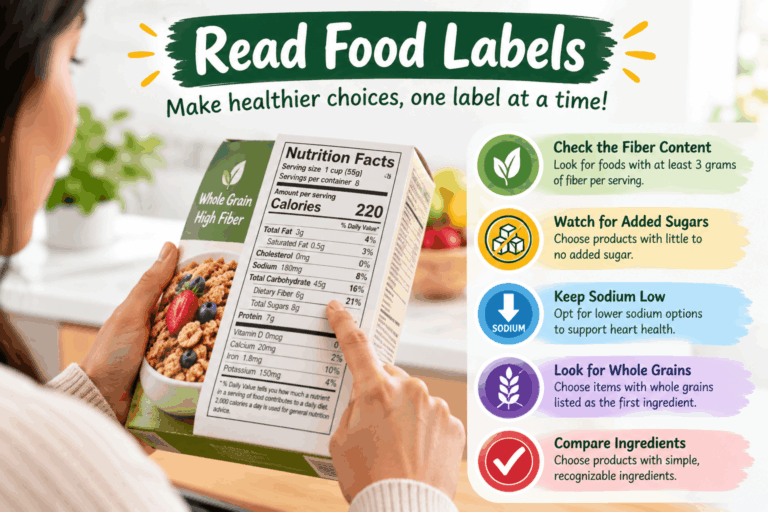
Compare ingredient lists and nutrition labels. Look at saturated fat, serving sizes, sodium, and added sugars rather than relying entirely on packaging claims such as “natural” or “heart healthy.”
A product can contain healthy fats and still be high in calories, sugar, or salt.
Common Mistakes to Avoid
1. Avoiding All Dietary Fat
Cutting out all fat can make it harder to obtain essential fatty acids and absorb fat-soluble vitamins. The goal is to choose appropriate sources and amounts, not eliminate fat.
2. Assuming Every Plant-Based Fat Is Healthy
Olive oil, nuts, and avocados are useful sources of unsaturated fat. However, coconut oil and palm oil contain substantial amounts of saturated fat.
Plant-based doesn’t automatically mean a food is the best choice for everyday use.
3. Eating Unlimited Amounts of Healthy Fats
Even nutritious foods contain calories. Large portions of nuts, oils, nut butters, and avocados can increase your overall energy intake considerably.
Use portions that fit your needs rather than assuming healthy foods can be eaten without limits.
4. Confusing Omega-3 Supplements With Whole Foods
Fish oil supplements can provide omega-3 fatty acids, but they aren’t automatically necessary for everyone. Whole fish also provides protein and other nutrients.
Before using any supplement, consult a qualified healthcare professional to determine whether it suits your individual needs, especially if you have an existing medical condition or take medication.
5. Ignoring What Replaces Saturated Fat
Simply removing saturated fat isn’t enough if you replace it with foods high in refined carbohydrates and added sugars.
A practical way to improve your diet is to choose unsaturated fat sources more often and add fiber-rich foods, including fruits, vegetables, whole grains, and legumes, in place of some foods high in saturated fat.
6. Trusting Marketing Claims Without Reading Labels
Words such as “keto,” “natural,” and “plant-based” don’t tell you everything about a food’s nutritional quality.
Check the actual ingredients and nutrition information. This is especially helpful when choosing packaged snacks, spreads, and cooking products.
7. Key Takeaways
- Healthy fats are an important part of a balanced diet.
- Monounsaturated and polyunsaturated fats are generally preferred over saturated and trans fats.
- Olive oil, avocados, nuts, seeds, and oily fish are useful sources of unsaturated fat.
- Omega-3 and omega-6 fatty acids are essential fats that your body needs from food.
- Fat helps your body absorb vitamins A, D, E, and K and provides concentrated energy.
- Portion sizes matter because fat contains more calories per gram than protein or carbohydrates.
- Replacing some saturated fats with unsaturated fats is generally more beneficial than simply removing fat from your diet.
- A varied, balanced eating pattern is more useful than focusing on one supposedly perfect food.
8. Frequently Asked Questions
1. What are the healthiest fats to eat?
Monounsaturated and polyunsaturated fats are generally considered healthier options. Good sources include olive oil, avocados, walnuts, almonds, chia seeds, flaxseeds, and oily fish such as salmon and sardines.
Choose a variety of foods rather than relying on just one source.
2. Are eggs a source of healthy fat?
Yes. Eggs contain a mixture of fats, including monounsaturated and saturated fats. They also provide protein and several vitamins and minerals.
Whether eggs fit your diet depends on your overall eating pattern and individual health needs. People managing high cholesterol may benefit from discussing their dietary choices with a healthcare professional.
3. Is olive oil healthier than butter?
Olive oil is generally a better everyday choice when replacing butter because it contains predominantly unsaturated fat, while butter contains more saturated fat.
Replacing some saturated fat with unsaturated fat can help improve blood cholesterol levels. The amount used still matters because both foods provide calories.
4. Are healthy fats good for weight management?
Healthy fats can fit into a weight-management plan because they add flavor and can make meals more satisfying. However, they are calorie-dense, so portion sizes matter.
Weight management depends on several factors, including total energy intake, activity, sleep, and individual circumstances. Eating healthy fats alone doesn’t guarantee weight loss.
5. Which foods contain omega-3 fatty acids?
Oily fish such as salmon, sardines, trout, and herring provide omega-3 fatty acids. Plant sources include walnuts, chia seeds, flaxseeds, and certain oils.
Plant foods mainly provide ALA, while oily fish provide the omega-3 fatty acids EPA and DHA. The body can convert some ALA into EPA and DHA, but the conversion is limited.
6. Should I avoid saturated fat completely?
Not necessarily. Saturated fat occurs naturally in many foods, including dairy products and some meats. Current public health guidelines recommend limiting it rather than eliminating it.
Replacing some saturated fat with unsaturated fat or fiber-rich foods is a practical approach to improving overall dietary quality.
7. Can I get enough healthy fats on a vegetarian or vegan diet?
Yes. Plant-based foods such as nuts, seeds, avocados, olive oil, canola oil, and soybean oil can supply unsaturated fats.
For omega-3 ALA, choose foods such as chia seeds, ground flaxseed, and walnuts. People following vegan diets who want direct sources of EPA and DHA can discuss algae-derived products with a qualified healthcare professional or registered dietitian.
9. Conclusion
Healthy fats deserve a regular place in your diet, but choosing the right sources makes a difference. Foods such as olive oil, avocados, nuts, seeds, and oily fish provide unsaturated fats that support normal body functions and can contribute to a heart-healthy eating pattern.
You don’t need a complicated diet or expensive products to benefit. Start with simple substitutions, such as using olive oil instead of some butter, adding nuts to breakfast, or including fish in your weekly meals.
Keep portions sensible, limit trans fats, and avoid relying too heavily on foods high in saturated fat. Most importantly, look at your overall eating pattern rather than judging your diet by one ingredient.
A balanced approach to dietary fat is easier to maintain and more useful than trying to eliminate fat.
10. Disclaimer
This article is published solely for educational and informational purposes. The information provided is intended to increase general awareness and understanding of the topic. It should not be considered medical, insurance, financial, legal, or professional advice. Readers should consult qualified professionals before making any healthcare, insurance, financial, or legal decisions.
11. References
- World Health Organization (WHO)
- National Institutes of Health (NIH)
- MedlinePlus, U.S. National Library of Medicine
- National Heart, Lung, and Blood Institute (NHLBI)
- U.S. Department of Health and Human Services (HHS)