Healthy Fats vs. Unhealthy Fats: What’s the Difference?
Healthy Fats vs. Unhealthy Fats: A Complete Guide
Learn the key differences between healthy and unhealthy fats, where to find them, and how simple dietary tweaks can boost your overall heart health today.
healthy-fats-vs-unhealthy-fats-difference
Picture this: You’re standing in the middle of the grocery store aisle, holding two bottles of cooking oil or staring at a wall of salad dressings. One label proudly boasts “zero fat,” while another highlights “heart-healthy omega-3s.” For decades, standard nutritional advice pushed a simple message: fat makes you gain weight and harms your heart, so avoid it at all costs.
However, modern nutritional science tells a completely different story.
Fat is not the enemy. In fact, your body relies on fat to survive, absorb essential vitamins, protect vital organs, and produce critical hormones. The real challenge isn’t eliminating fat from your diet altogether; it’s learning how to tell the difference between the dietary fats that protect your health and those that quietly work against it.
In this guide, we will break down the science behind healthy fats and unhealthy fats in plain, straightforward language. You’ll learn where these fats hide, how they affect your cholesterol and energy levels, and how to make practical, delicious swaps in your daily meals without feeling restricted.
What Are Healthy Fats and Unhealthy Fats?
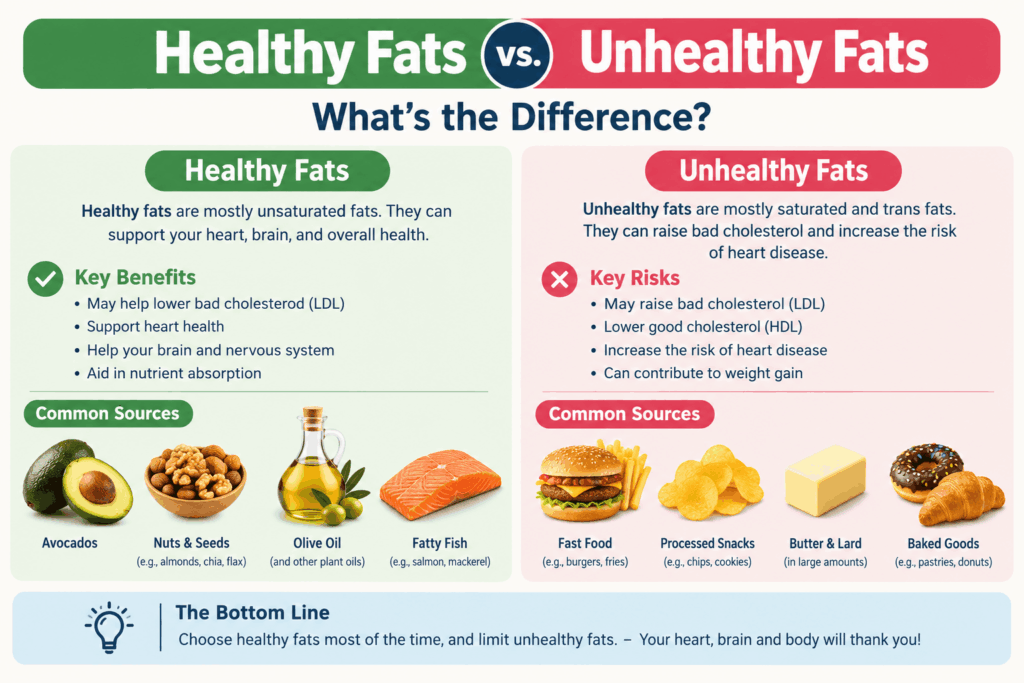
Healthy fats, primarily monounsaturated and polyunsaturated fats, support heart health, help manage blood cholesterol, and reduce overall inflammation. Unhealthy fats, specifically artificial trans fats and excessive saturated fats, raise harmful LDL cholesterol, increase heart disease risks, and promote inflammation throughout the body when consumed in large amounts.
The Role of Dietary Fat in the Human Body
Before diving into the specific types of fat, it helps to understand why your body needs fat in the first place. Dietary fat is one of three primary macronutrients your body requires to function daily, alongside carbohydrates and protein.
When you eat fat, your body uses it as a major energy reserve. Gram for gram, fat provides more than double the energy of protein or carbohydrates. But its job goes far beyond just providing calories:
- Nutrient Absorption: Essential vitamins like A, D, E, and K are fat-soluble. Without adequate dietary fat, your digestive system cannot absorb these nutrients efficiently, no matter how many veggies you eat.
- Cell Membrane Structure: Every single cell membrane in your body is built from lipids (fats). Healthy fats keep cell membranes flexible and responsive.
- Brain and Nerve Function: Your brain is composed of nearly 60% fat. Fatty acids are essential for maintaining cognitive function, focus, and neural communication.
- Hormone Production: Dietary fat plays a key role in synthesizing vital hormones, including estrogen, testosterone, and cortisol.
The goal isn’t to remove fat from your plate—it’s to feed your body the right kind of fuel.
Healthy Fats: The Nutrients Your Body Needs
Healthy fats are predominantly unsaturated fats. At a molecular level, these fats contain one or more double bonds in their chemical structure, which keeps them liquid at room temperature. These fats actively support your cardiovascular system and help regulate metabolic health.
Monounsaturated Fats (MUFAs)
Monounsaturated fats feature a single double bond in their chemical structure. They are widely considered among the most beneficial fats you can eat.
Research consistently shows that replacing refined carbohydrates and saturated fats with monounsaturated fats helps lower “bad” LDL (low-density lipoprotein) cholesterol while maintaining or even raising “good” HDL (high-density lipoprotein) cholesterol. Additionally, they support insulin sensitivity, helping maintain steady post-meal blood sugar levels.
Best Sources of Monounsaturated Fats:
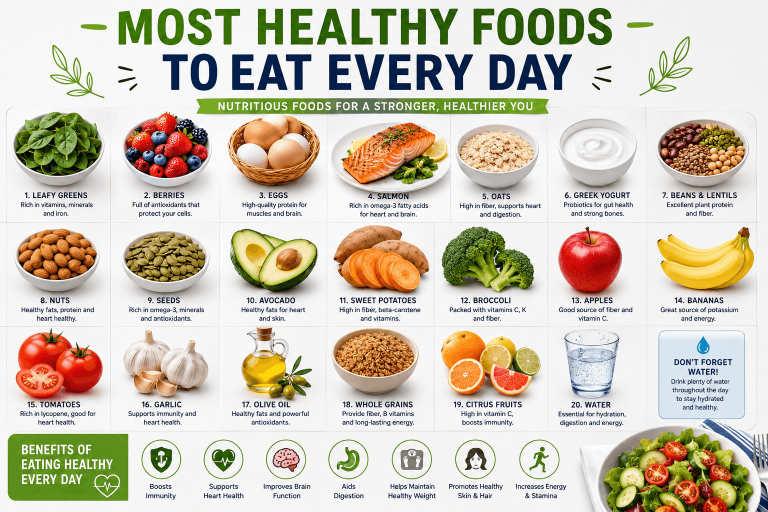
- Extra virgin olive oil and avocado oil
- Avocados
- Almonds, cashews, pecans, and pistachios
- Natural peanut butter and almond butter
- Olives
Polyunsaturated Fats (PUFAs)
Polyunsaturated fats contain two or more double bonds in their chemical chain. Because the body cannot produce these fats on its own, they are classified as “essential fatty acids”—meaning you must get them directly from food.
Polyunsaturated fats fall into two main families:
- Omega-3 Fatty Acids: These fats are famous for their powerful anti-inflammatory properties. They help lower triglycerides, slightly reduce blood pressure, and cut down the risk of blood clots—all while supporting long-term brain health.
- Omega-6 Fatty Acids: Omega-6s support skin health, bone density, and metabolic function. While necessary for health, they work best when balanced naturally with omega-3 intake.
Best Sources of Polyunsaturated Fats:
- Fatty fish (salmon, mackerel, sardines, trout, and tuna)
- Walnuts
- Flaxseeds, chia seeds, and hemp seeds
- Sunflower seeds and pumpkin seeds
Unhealthy Fats: What You Should Limit or Avoid
Not all dietary fats serve your health. Some types of fat can increase systemic inflammation, disrupt your blood lipid levels, and raise your risk for long-term chronic conditions like heart disease and type 2 diabetes.
Artificial Trans Fats
If there is one category of fat that health experts universally agree you should eliminate, it is artificial trans fat.
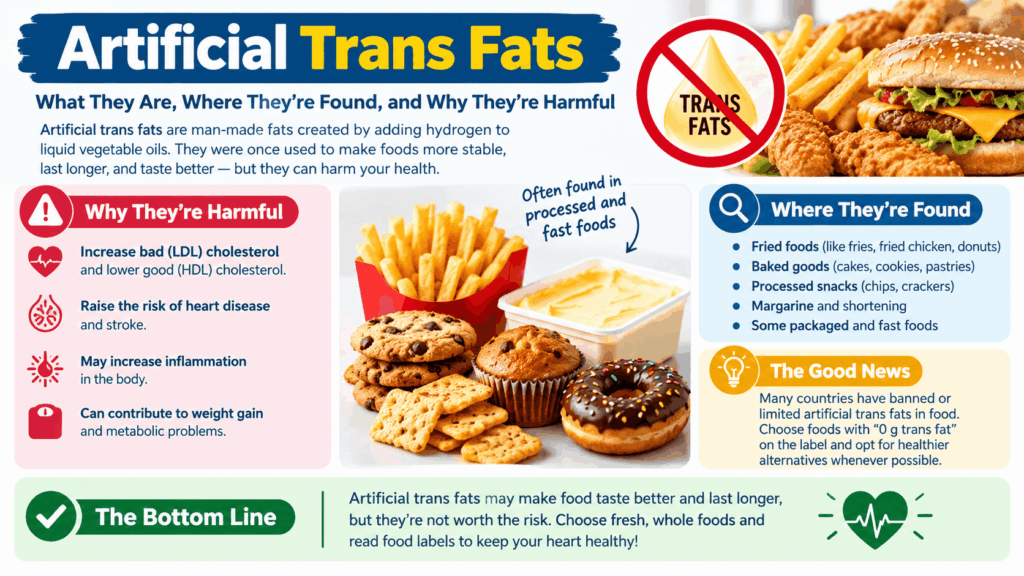
Artificial trans fats are created through an industrial process called hydrogenation. Manufacturers pump hydrogen gas into liquid vegetable oils to turn them into solid fats. This process extends the shelf life of packaged foods and gives baked goods a desirable texture, but it comes at a severe cost to human health.
Trans fats work double-duty against your cardiovascular system: they significantly raise your LDL (“bad”) cholesterol while actively lowering your HDL (“good”) cholesterol. They also trigger systemic inflammation and damage the inner lining of your blood vessels.
While many countries, including the United States and Canada, have banned added industrial trans fats in processed foods, they can still occasionally linger in imported baked goods, fried items, and commercial shortenings.
Pro Tip: Always check ingredient lists for “partially hydrogenated oils.” If you see that term, leave the product on the shelf.
Saturated Fats
Saturated fats have no double bonds in their chemical chain, making them fully “saturated” with hydrogen atoms. As a result, they remain solid or semi-solid at room temperature (think butter, coconut oil, or lard).
The debate around saturated fat has evolved over the years. Modern health guidelines do not treat saturated fat as strictly toxic, but excessive intake is still clearly linked to elevated LDL cholesterol levels. When LDL cholesterol accumulates in the bloodstream, it can build up inside artery walls, increasing the risk of heart attacks and strokes.
The key with saturated fat is balance and context. A small amount of saturated fat from whole foods isn’t a disaster, but high consumption—especially alongside refined sugars and processed carbs—poses real health risks.
Common Sources of Saturated Fats:
- Fatty cuts of beef, pork, and lamb
- High-fat dairy products (butter, full-fat cheese, heavy cream)
- Lard and tallow
- Coconut oil and palm oil
- Commercially baked goods, pastries, and fried foods
Side-by-Side Comparison: Healthy vs. Unhealthy Fats
To help you visualize the differences quickly, here is a breakdown of how these four major types of fat compare:
| Fat Type | Physical State | Impact on LDL (“Bad”) Cholesterol | Impact on HDL (“Good”) Cholesterol | Primary Food Sources | Health Recommendation |
| Monounsaturated | Liquid at room temp | Lowers | Raises or maintains | Olive oil, avocados, almonds, cashews | Include daily |
| Polyunsaturated | Liquid at room temp | Lowers | Raises or maintains | Salmon, walnuts, flaxseeds, chia seeds | Include daily |
| Saturated | Solid at room temp | Raises | Variable | Butter, fatty meats, full-fat cheese, coconut oil | Limit intake |
| Trans Fats | Solid/Semi-solid | Significantly raises | Lowers | Partially hydrogenated oils, some fried foods | Avoid completely |
Practical Ways to Swap Fats in Your Daily Diet
You don’t need to overhaul your entire pantry overnight to see real improvements in your health markers. Small, consistent swaps make a noticeable difference over time without sacrificing flavor.
Here are simple, realistic ways to replace saturated and processed fats with nourishing choices:
- Ditch the Creamy Dressings: Swap commercial ranch or blue cheese dressings for a homemade vinaigrette made with extra virgin olive oil, fresh lemon juice, and Dijon mustard.
- Upgrade Your Cooking Oil: Use extra virgin olive oil or avocado oil for everyday pan-searing and roasting instead of butter or margarine.
- Rethink Snack Time: Replace processed potato chips or cheese crackers with a handful of raw walnuts, almonds, or pumpkin seeds.
- Top Meals with Avocado: Instead of adding extra shredded cheese or sour cream to tacos, chili, or grain bowls, use fresh sliced avocado or homemade guacamole.
- Eat Seafood Twice a Week: Swap out red meat for dinner twice a week in favor of wild salmon, mackerel, or baked trout to boost your omega-3 intake naturally.
- Bake with Seed Butters or Applesauce: When baking at home, try reducing butter by half and replacing it with unsweetened applesauce, mashed banana, or almond butter.
Common Mistakes to Avoid When Managing Dietary Fats
Even well-meaning health enthusiasts can stumble into common traps when trying to navigate fats. Here are a few mistakes to keep on your radar:
1. Buying “Low-Fat” Processed Foods
When food manufacturers strip fat out of items like yogurt, salad dressings, or cookies, the food usually loses its flavor and satisfying texture. To fix this, manufacturers often load the product with refined sugars, high-fructose corn syrup, and artificial thickeners. You end up eating fewer healthy fats and far more hidden sugars.
2. Overheating Healthy Oils Past Their Smoke Point
Every cooking oil has a “smoke point”—the temperature at which it starts to break down and smoke. When an oil breaks down, its beneficial fatty acids degrade, releasing harmful free radicals and acrid smoke. Use extra virgin olive oil for low-to-medium heat cooking and salad dressings, but choose avocado oil or light olive oil for high-heat roasting and searing.
3. Assuming “Plant-Based” Always Means Healthy
Coconut oil and palm oil are 100% plant-based, yet both are extremely dense in saturated fat. Similarly, many processed vegan snacks use hydrogenated oils to replicate the texture of dairy butter. Always read the nutrition facts label rather than relying on claims on the front of the box.
Key Takeaways
- Fat is an essential macronutrient. Your body relies on dietary fat for brain health, vitamin absorption, hormone balance, and cellular protection.
- Prioritize unsaturated fats. Monounsaturated and polyunsaturated fats (like omega-3s) actively support cardiovascular health and reduce inflammation.
- Watch saturated fat intake. Limit red meat, butter, full-fat dairy, and tropical oils to keep blood cholesterol levels in a healthy range.
- Avoid trans fats completely. Check labels for “partially hydrogenated oils” and steer clear of industrial trans fats.
- Focus on whole foods. Choose natural fat sources like nuts, seeds, avocados, olive oil, and oily fish rather than low-fat processed diet foods.
Frequently Asked Questions (FAQs)
1. Is coconut oil actually good for you, or is it an unhealthy fat?
Coconut oil contains about 80% to 90% saturated fat, which is higher than butter or lard. While it contains medium-chain triglycerides (MCTs) that the body metabolizes somewhat differently, research shows it can still raise LDL cholesterol levels. It’s best used sparingly for flavor rather than as your primary everyday cooking fat.
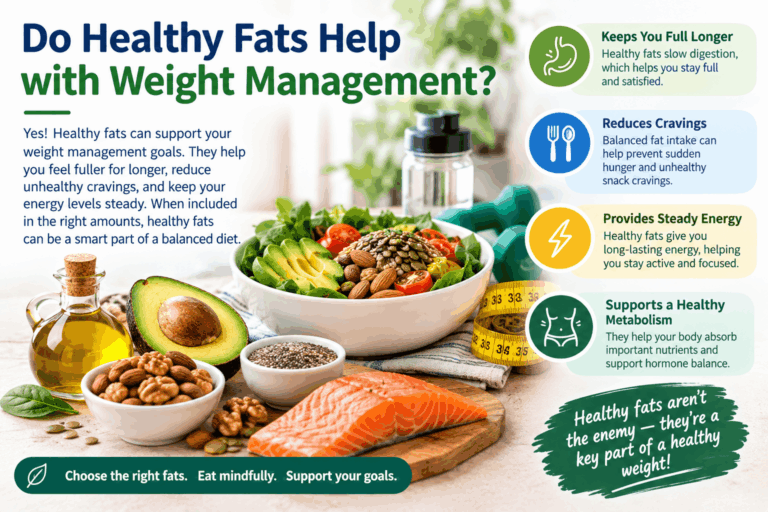
2. Will eating healthy fats make me gain weight?
Fat contains 9 calories per gram, compared to 4 calories per gram for protein and carbohydrates. Because fat is calorie-dense, eating large amounts can lead to a caloric surplus and weight gain. However, healthy fats are incredibly satiating—they help you feel full longer, which actually aids in appetite control and weight management when eaten in moderate portions.
3. How much healthy fat should I eat each day?
General health guidelines recommend that total dietary fat make up 20% to 35% of your daily calories. For a standard 2,000-calorie diet, that equals roughly 44 to 78 grams of fat daily. The majority of this should come from monounsaturated and polyunsaturated sources, with saturated fat capped at less than 10% of total daily calories.
4. Are eggs bad for heart health because of the fat in yolks?
Egg yolks contain dietary fat and cholesterol, but they are also rich in choline, vitamin D, and protein. Modern research demonstrates that for most healthy people, the dietary cholesterol in eggs has a minimal impact on blood cholesterol levels compared to saturated and trans fats. Eating eggs in moderation as part of a balanced diet is completely fine for most people.
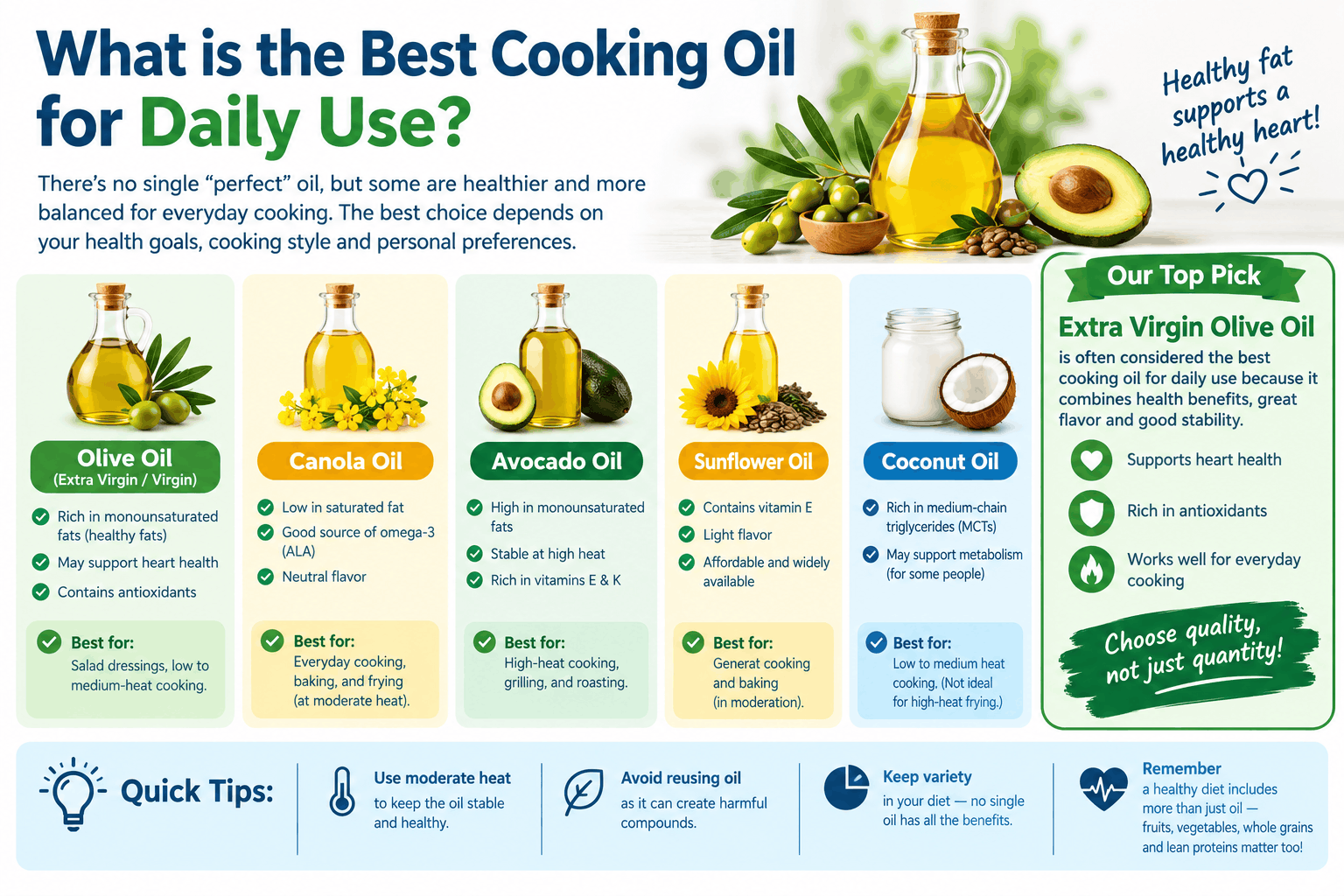
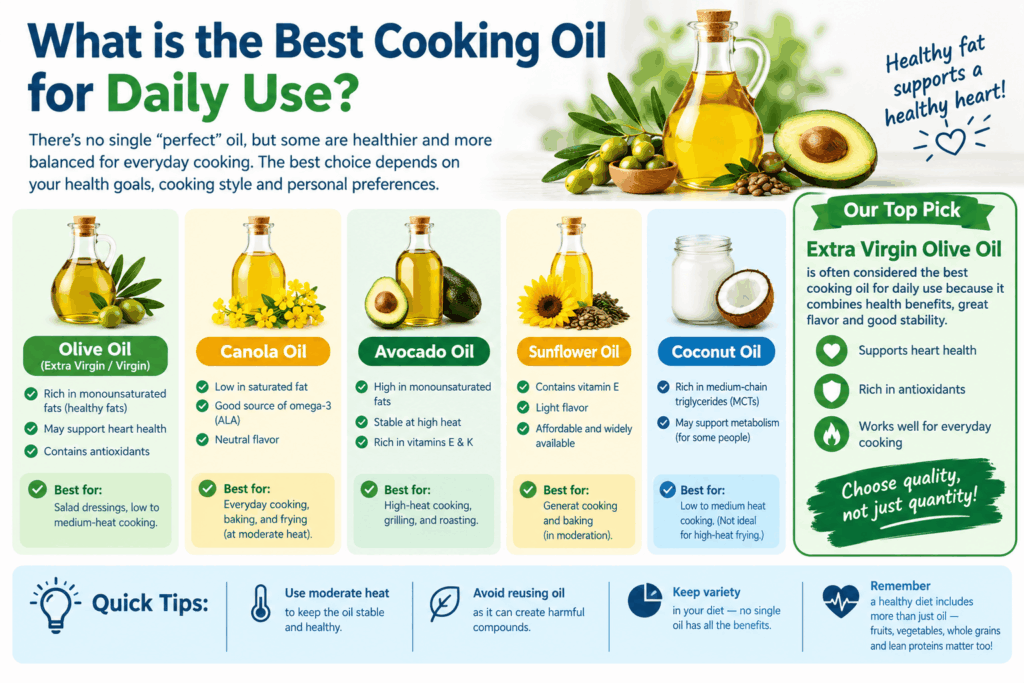
5. What is the best cooking oil for daily use?
Extra virgin olive oil is widely considered the best overall choice for everyday cold preparation, drizzling, and low-to-medium heat cooking due to its high concentration of monounsaturated fats and antioxidants. For high-heat cooking like searing or roasting at high temperatures, avocado oil is an excellent alternative because of its high smoke point and healthy fat profile.
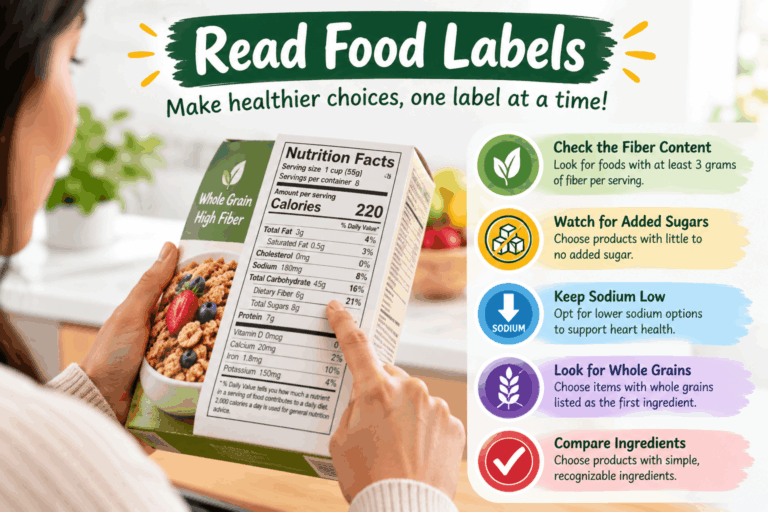
Conclusion
Understanding the difference between healthy fats and unhealthy fats is one of the most effective tools you have for protecting your cardiovascular health, maintaining clear energy levels, and enjoying delicious meals.
You don’t need to fear fat or banish it from your kitchen. By simply reducing your intake of processed foods, limiting saturated fats, completely avoiding trans fats, and embracing whole sources of monounsaturated and polyunsaturated fats, you can give your body the exact nutrients it needs to thrive. Next time you head to the grocery store, skip the “low-fat” gimmicks and reach for real, nourishing foods like avocados, walnuts, wild salmon, and cold-pressed extra virgin olive oil.
Disclaimer
This article is published solely for educational and informational purposes. The information provided is intended to increase general awareness and understanding of the topic. It should not be considered medical, insurance, financial, legal, or professional advice. Readers should consult qualified professionals before making any healthcare, insurance, financial, or legal decisions.
References
- American Heart Association
- National Institutes of Health (NIH)
- Centers for Disease Control and Prevention (CDC)
- World Health Organization (WHO)
- Harvard T.H. Chan School of Public Health
- Mayo Clinic
- Cleveland Clinic