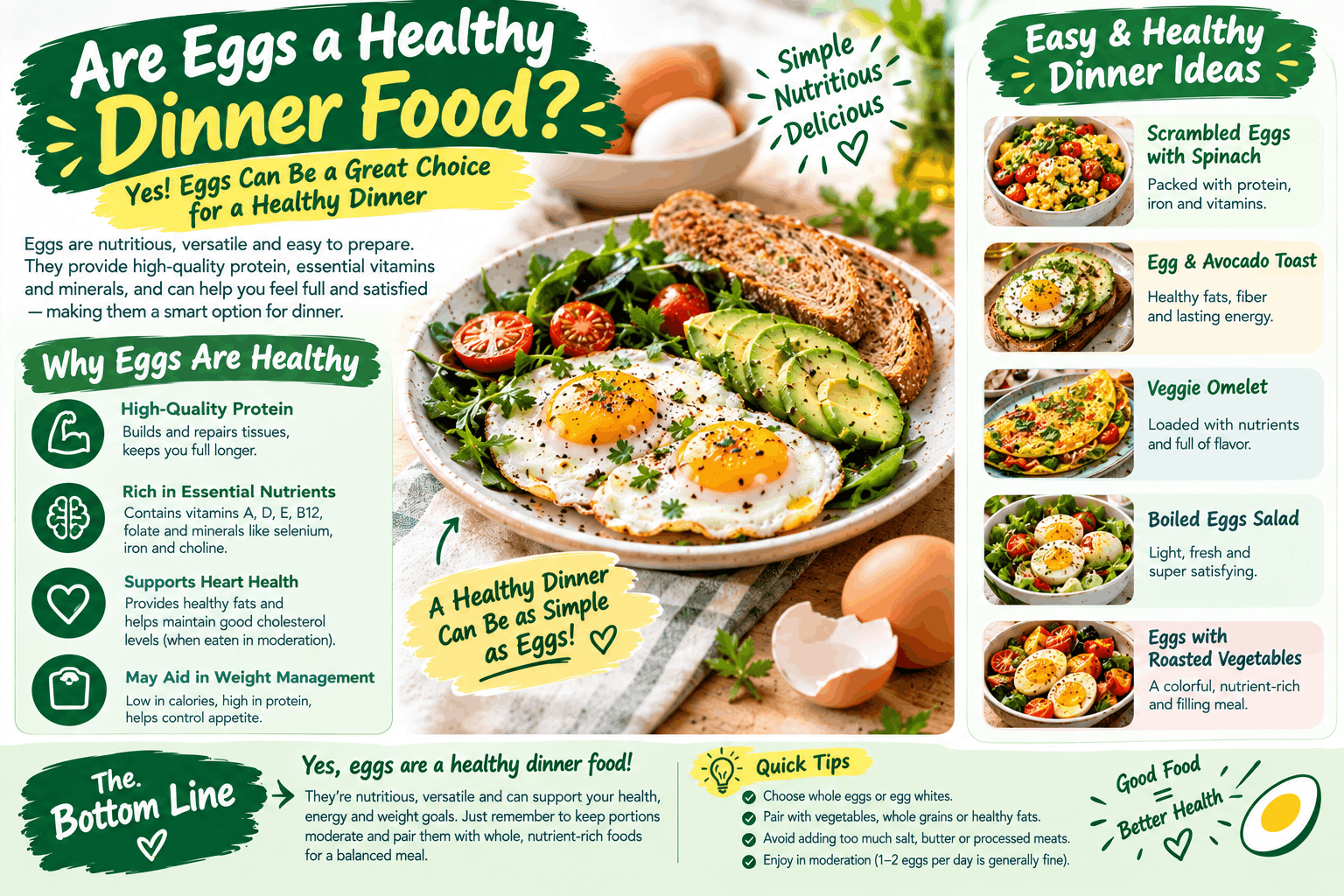
Best Healthy Dinner Foods: Easy, Balanced Meals for Better Health
Best Healthy Dinner Foods for a Balanced Diet
Discover the best healthy dinner foods, from lean protein and vegetables to whole grains, with simple meal ideas for balanced, satisfying dinners.
best-healthy-dinner-foods
Dinner can easily become the meal we think about the least. After a long workday, it is tempting to order takeout, grab something packaged, or eat whatever is quickest. The problem is that convenient dinner isn’t always balanced.
A healthy dinner does not need to be complicated, expensive, or bland. With the right combination of protein, vegetables, whole grains or other high-fiber carbohydrates, and healthy fats, you can build a meal that is both satisfying and nutritious.
In this guide, you will learn about the best healthy dinner foods, how to combine them into balanced meals, what to choose when you are short on time, and which common dinner habits may be worth changing. The goal is not perfection. It is to make everyday dinners easier, more nutritious, and realistic to maintain.
What Are the Best Healthy Dinner Foods?
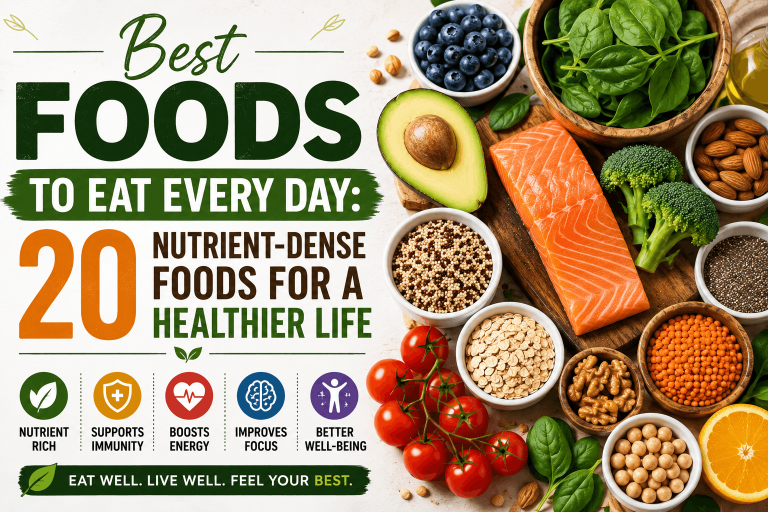
The best healthy dinner foods are nutrient-dense choices such as vegetables, fruits, beans, lentils, whole grains, fish, lean poultry, eggs, nuts, seeds, and lower-fat dairy or fortified alternatives. A balanced dinner usually combines protein, plenty of vegetables, and a high-fiber carbohydrate while limiting added sugar, excess sodium, and unhealthy fats. There’s no single “perfect” dinner, as healthy choices vary by culture, budget, preferences, and individual nutritional needs.
Why a Healthy Dinner Matters
Dinner is an opportunity to add important nutrients that may have been missing earlier in the day.
A well-balanced meal can provide protein, fiber, vitamins, minerals, and healthy fats while helping you avoid relying heavily on foods high in sodium, added sugars, and saturated fat.
Health organizations consistently emphasize dietary patterns built around vegetables, fruits, whole grains, legumes, nuts, seeds, and nutritious protein sources.
Best Healthy Dinner Foods to Add to Your Plate
1. Leafy Green Vegetables
Spinach, kale, Swiss chard, collard greens, and other leafy greens are easy ways to add vegetables to dinner.
You can sauté them, steam them, add them to soups, mix them into pasta, or serve them in salads.
Try pairing sautéed spinach with grilled chicken and brown rice for a simple weeknight meal.
2. Broccoli and Other Cruciferous Vegetables
Broccoli, cauliflower, Brussels sprouts, and cabbage are versatile dinner vegetables.
Roasting them with a small amount of olive or canola oil and herbs can make them much more appealing than simply boiling them.
Frozen versions can also be useful when fresh vegetables are not available. WHO notes that frozen and canned vegetables can be nutritious options when they do not contain excess sodium or added sugars.
3. Salmon and Other Fatty Fish
Salmon, sardines, trout, and similar fish can provide protein along with beneficial unsaturated fats.
A simple dinner could include baked salmon, roasted vegetables, and a serving of brown rice or another whole grain.
For variety, rotate fish with plant-based proteins and lean poultry rather than relying on one protein source every night.
4. Chicken and Other Lean Poultry
Skinless chicken and turkey can be practical sources of protein.
Grilling, baking, roasting, or air-frying can keep meal preparation simple without using heavy breading or too much added fat.
Chicken also works well in salads, grain bowls, soups, wraps, and vegetable stir-fries.
5. Beans and Lentils
Beans, chickpeas, peas, and lentils are especially useful for plant-forward dinners.
They provide protein and dietary fiber and can be used in chili, soups, curries, salads, tacos, or grain bowls.
For example, a lentil curry with vegetables and brown rice can make a filling dinner without requiring meat.
WHO recommends pulses such as beans, chickpeas, lentils, and dried peas as important sources of carbohydrates and nutrients in a healthy eating pattern.
6. Eggs
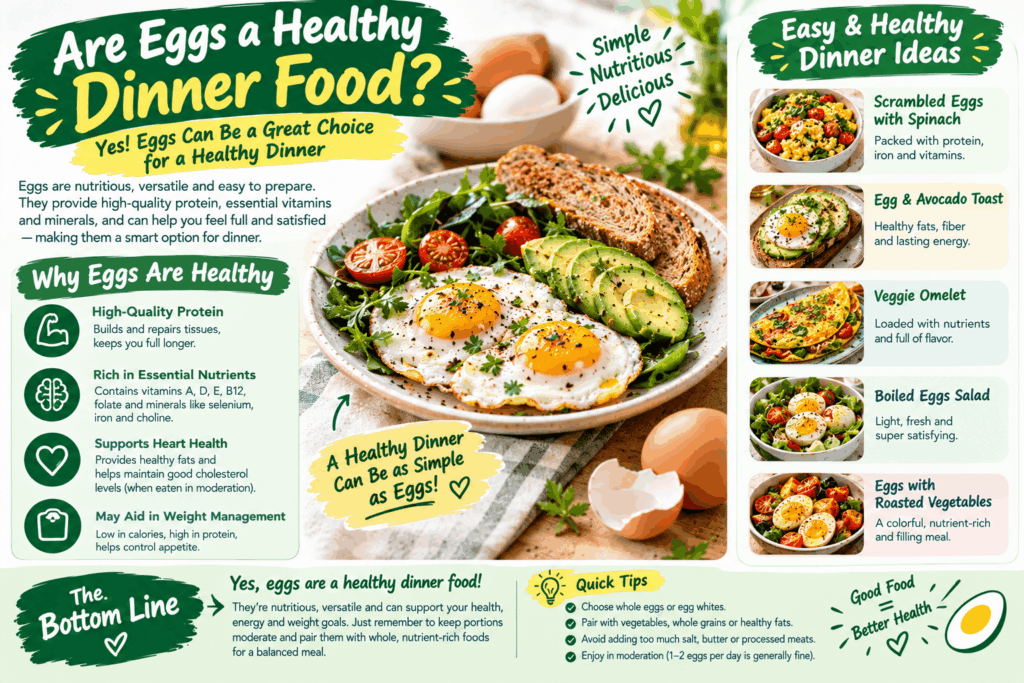
Eggs are a convenient choice for a quick dinner. A vegetable omelet with whole-grain toast and a side salad makes a simple, balanced meal. Eggs can also be added to vegetable fried rice, grain bowls, or soups.
7. Whole Grains
Whole grains can make dinner more satisfying while providing dietary fiber.
Good options include:
- Brown rice
- Oat-based savory dishes
- Quinoa
- Barley
- Whole-wheat pasta
- Whole-grain bread
- Whole-grain tortillas
WHO recommends getting carbohydrates primarily from whole grains, vegetables, fruits, and pulses.
8. Sweet Potatoes
Sweet potatoes are a convenient carbohydrate source that can be prepared in several ways.
Bake one and serve it with black beans, vegetables, and plain yogurt. You can also cut sweet potatoes into cubes and roast them alongside chicken or fish.
9. Greek Yogurt and Other Nutritious Dairy Options
Plain Greek yogurt can add protein to a meal and works particularly well with savory foods when combined with herbs, cucumber, garlic, or lemon.
Lower-fat dairy foods and fortified alternatives can also contribute nutrients such as calcium and protein. USDA MyPlate recommends including dairy or fortified soy alternatives as part of a varied eating pattern.
10. Nuts and Seeds
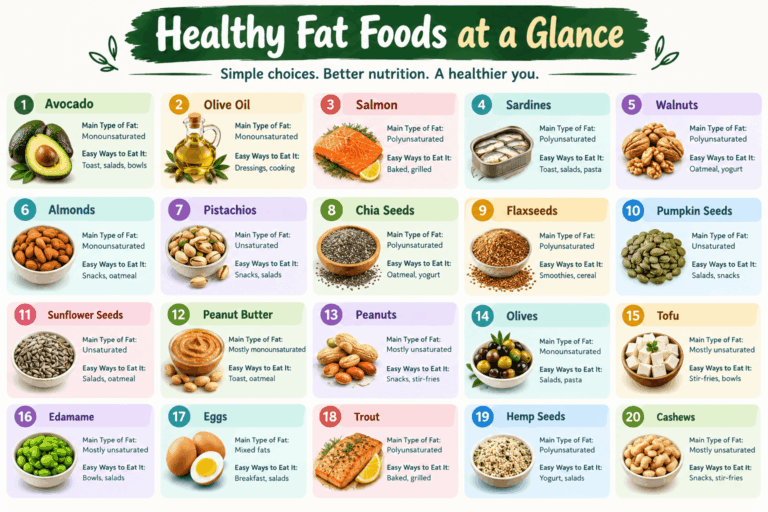
Almonds, walnuts, pumpkin seeds, chia seeds, and other nuts and seeds can add texture and unsaturated fats.
You do not need a large amount. A small portion can be added to salads, roasted vegetables, grain bowls, or yogurt-based side dishes.
How to Build a Balanced Healthy Dinner
A simple approach is to think about your plate rather than counting every nutrient.
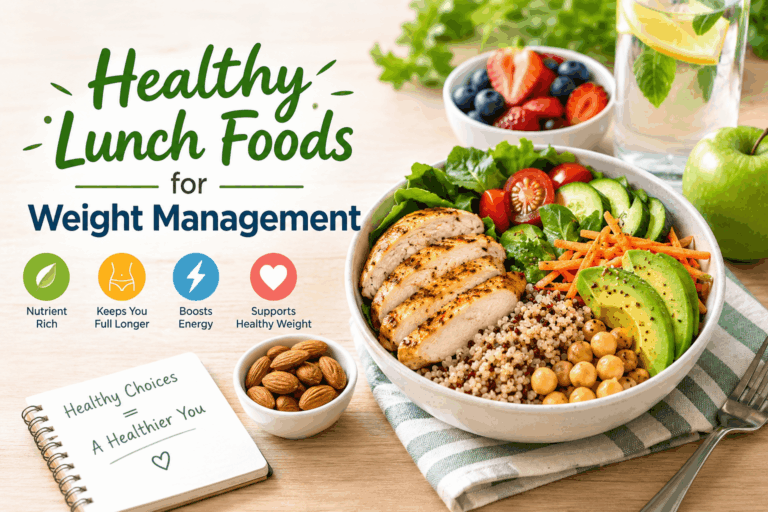
Start with plenty of vegetables. Add a protein source such as fish, chicken, eggs, tofu, beans, or lentils. Then include a high-fiber carbohydrate such as brown rice, quinoa, potatoes, or whole-grain pasta.
Finish with a modest amount of healthy fat from foods such as nuts, seeds, avocado, or plant-based oils.
This approach is consistent with general healthy-eating guidance that emphasizes variety and nutrient-dense foods while limiting foods high in added sugars, saturated fat, and sodium.
Healthy Dinner Ideas for Busy Weeknights
Healthy food does not have to mean spending an hour in the kitchen.
Try these simple combinations:
- Baked salmon + broccoli + brown rice
- Chicken + roasted vegetables + quinoa
- Lentil soup + whole-grain bread + side salad
- Black bean tacos + lettuce + tomato + avocado
- Vegetable omelet + whole-grain toast + fruit
- Chickpea bowl + cucumber + tomatoes + brown rice
- Whole-wheat pasta + vegetables + grilled chicken
- Baked sweet potato + black beans + Greek yogurt
The key is to create combinations rather than searching for one “superfood.”
Comparison Table
| Dinner Food | Main Benefit | Easy Pairing |
| Salmon | Protein and unsaturated fats | Broccoli + brown rice |
| Chicken | Convenient lean protein | Vegetables + quinoa |
| Lentils | Protein and fiber | Whole grains + vegetables |
| Beans | Protein and fiber | Brown rice + salad |
| Eggs | Convenient protein | Vegetables + whole-grain toast |
| Broccoli | Fiber and micronutrients | Chicken + potatoes |
| Sweet potatoes | High-fiber carbohydrate | Beans + leafy greens |
| Quinoa | Whole-grain-style high-fiber option | Vegetables + fish |
| Greek yogurt | Protein and calcium | Vegetable bowl or savory dip |
| Nuts and seeds | Healthy fats and nutrients | Salad + roasted vegetables |
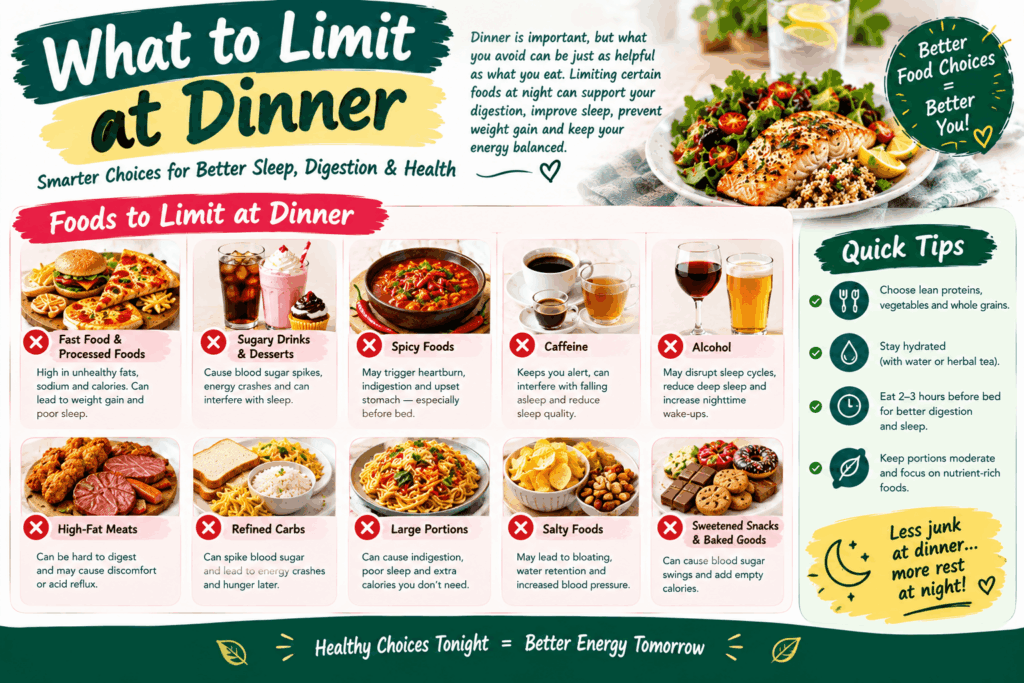
What to Limit at Dinner
Healthy eating does not mean completely avoiding favorite foods. However, meals that regularly contain large amounts of added sugar, sodium, saturated fat, or highly processed ingredients may make it harder to maintain a balanced eating pattern.
The Dietary Guidelines for Americans recommend limiting added sugars and saturated fat and keeping sodium below 2,300 mg per day for most adults.
Common foods to watch include:
- Deep-fried meals
- Processed meats
- Sugary sauces
- Highly salted packaged meals
- Large portions of refined carbohydrates
- Heavy cream-based sauces
- Sugary drinks with dinner
7. Practical Tips
Plan Two or Three Dinner Options Ahead
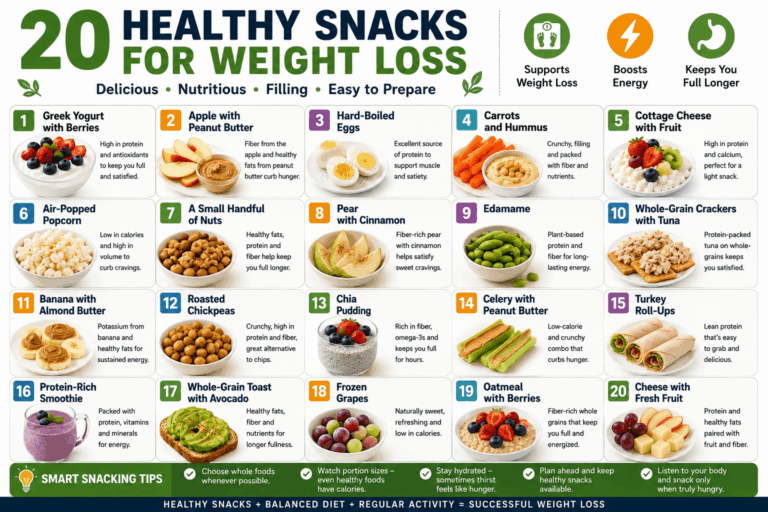
You do not need a detailed meal plan for every day. Simply deciding on two or three meals before the week gets busy can reduce last-minute takeout decisions.
Keep Healthy Shortcuts Available
Frozen vegetables, canned beans, pre-washed greens, canned tuna, cooked whole grains, and plain yogurt can save significant preparation time.
If buying canned vegetables or beans, check the label and consider lower-sodium options.
Cook Extra Portions
Prepare extra chicken, vegetables, beans, or grains and use them in another meal.
For example, leftover roasted vegetables can become part of an omelet, grain bowl, soup, or wrap the following day.
Use Herbs and Spices
A healthy meal does not have to taste boring.
Garlic, ginger, black pepper, paprika, cumin, coriander, herbs, lemon, lime, and vinegar can add plenty of flavor without relying entirely on salty sauces.
Read Nutrition Labels
When choosing packaged foods, compare sodium, saturated fat, added sugars, and serving sizes.
MyPlate also recommends reading ingredient lists and Nutrition Facts labels when comparing foods.
8. Common Mistakes
Making Dinner Too Small
Trying to eat as little as possible at dinner can leave you hungry later. A balanced meal with protein, vegetables, and fiber-rich carbohydrates may be more satisfying.
Forgetting Vegetables
A plate built mainly around meat and refined carbohydrates can lack variety. Make vegetables a regular part of dinner rather than an afterthought.
Relying Too Much on Processed Foods
Packaged meals can be convenient, but many are high in sodium or other ingredients that are best limited. Use them selectively and balance them with whole or minimally processed foods.
Assuming Healthy Means Expensive
Beans, lentils, eggs, oats, frozen vegetables, seasonal produce, and whole grains can all be practical choices. Healthy eating does not require expensive specialty products.
Eating the Same Foods Every Night
Variety matters. Rotating between fish, poultry, eggs, beans, lentils, tofu, and other protein sources can make meals more interesting and help broaden nutrient intake.
9. Key Takeaways
- The best healthy dinner foods include vegetables, whole grains, legumes, fish, lean poultry, eggs, nuts, seeds, and nutritious dairy or fortified alternatives.
- A balanced dinner combines protein, vegetables, and a high-fiber carbohydrate.
- Beans and lentils are excellent options for plant-based dinners.
- Frozen and canned vegetables can be useful when fresh produce is unavailable, provided you choose options without excess sodium or added sugars.
- Limit frequent reliance on foods high in sodium, added sugars, saturated fat, and highly processed ingredients.
- Healthy dinners do not need to be complicated or expensive.
- Variety and overall eating patterns matter more than making every individual meal perfect.
10. Frequently Asked Questions
What is the healthiest food to eat for dinner?
There is no single healthiest dinner food for everyone. A balanced meal that combines vegetables, a nutritious protein source, and a high-fiber carbohydrate is generally a better approach than focusing on one food.
What are some healthy dinner foods for weight management?
Vegetables, beans, lentils, fish, lean poultry, whole grains, and other minimally processed foods can all fit into a balanced diet. Portion needs vary, so weight management shouldn’t depend on any single food.
Is it healthy to eat rice for dinner?
Yes. Rice can be part of a healthy dinner. Choosing brown rice or another whole-grain option more often can increase fiber, while pairing rice with vegetables and a protein source creates a more balanced meal.
Are eggs a healthy dinner food?
Eggs can be a convenient source of protein and can fit into many healthy dinner patterns. Try combining them with vegetables and a whole-grain food for a more complete meal.
What is a healthy dinner when you are short on time?
A quick meal can be as simple as canned beans with microwaveable brown rice and frozen vegetables, or a vegetable omelet with whole-grain toast. Convenience does not automatically mean unhealthy.
Should I avoid carbohydrates at dinner?
Not necessarily. Whole grains, potatoes, vegetables, fruits, and pulses can all provide nutritious carbohydrates. WHO recommends that carbohydrate intake primarily come from whole grains, vegetables, fruits, and pulses.
Can I eat dinner late at night?
Dinner timing can vary based on individual schedules and needs. Instead of focusing only on the clock, consider overall diet quality, portion sizes, and your daily routine.
11. Conclusion
The best healthy dinner foods are not complicated ingredients that require a special diet. They are everyday foods such as vegetables, beans, lentils, whole grains, fish, lean poultry, eggs, nuts, seeds, and nutritious dairy or fortified alternatives.
A practical dinner starts with variety. Include vegetables, a satisfying protein, a high-fiber carbohydrate, and healthy fats in moderate amounts. Try not to rely too much on highly processed foods, excess sodium, added sugars, or saturated fats.
Most importantly, focus on consistency rather than perfection. A healthy dinner can look different each night. Small, realistic choices made regularly can create a more sustainable eating pattern.
Most importantly, aim for consistency rather than perfection. A healthy dinner does not have to look the same every night. Small, realistic choices made repeatedly can become a much more sustainable way to eat.
12. Disclaimer
This article is published solely for educational and informational purposes. The information provided is intended to increase general awareness and understanding of the topic. It should not be considered medical, insurance, financial, legal, or professional advice. Readers should consult qualified professionals before making any healthcare, insurance, financial, or legal decisions.
13. References
- World Health Organization (WHO)
- Food and Agriculture Organization of the United Nations (FAO)
- U.S. Department of Agriculture (USDA)
- MyPlate
- Dietary Guidelines for Americans
- U.S. Department of Health & Human Services (HHS)