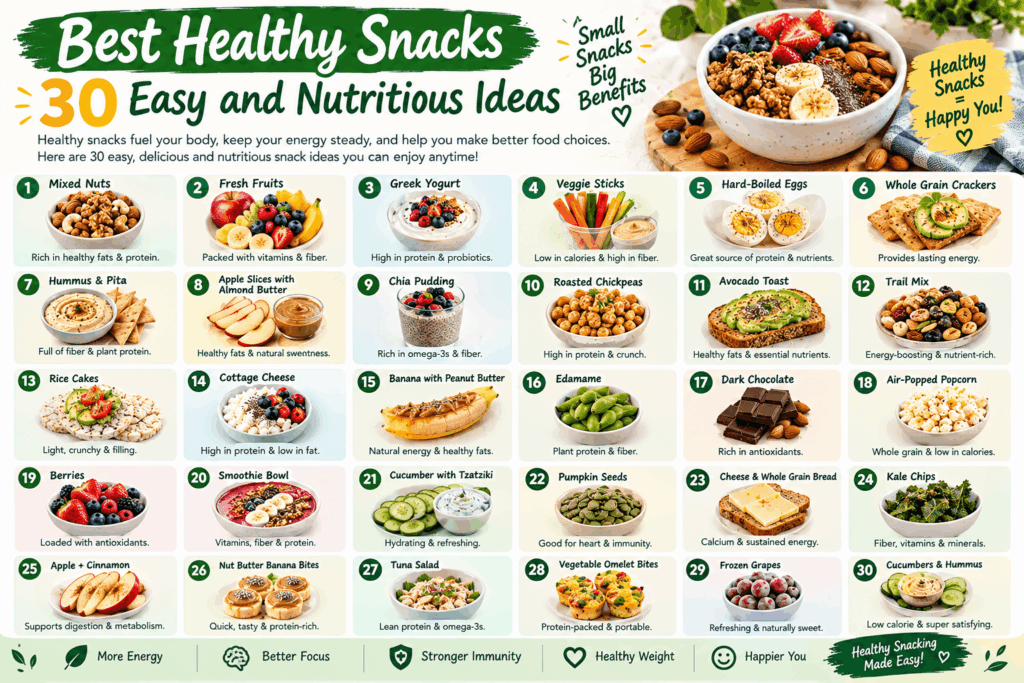
Best Healthy Snacks: 30 Easy and Nutritious Ideas
Discover the best healthy snacks for work, home, and on the go, including protein-rich, high-fiber, low-sugar, and easy everyday options.
best-healthy-snacks
It is 3 p.m., lunch was hours ago, and suddenly you are starving. The easiest option is often whatever is closest: a bag of chips, a candy bar, or a sugary drink. An occasional treat can fit into a balanced diet, but relying on highly processed snacks every day can make it harder to build healthy eating habits.
The good news is that healthy snacking does not have to mean eating plain vegetables or spending an hour preparing food. A few simple ingredients can make satisfying snacks that are convenient, affordable, and genuinely enjoyable.
The best healthy snacks usually combine nutrient-rich foods such as fruit, vegetables, whole grains, nuts, seeds, yogurt, eggs, beans, or other protein foods. Choosing foods with fiber and protein can also make a snack more satisfying than options made mostly of refined carbohydrates or added sugars.
In this guide, you will find some of the best healthy snacks for everyday eating, including options for work, school, travel, busy mornings, afternoon cravings, and after exercise.
What Are Healthy Snacks?
Healthy snacks are generally nutrient-dense foods or combinations of foods that provide useful nutrients such as protein, fiber, vitamins, minerals, and healthy fats without relying heavily on added sugars, saturated fat, or sodium.
Good choices can include fresh fruit, vegetables with hummus, plain yogurt with berries, unsalted nuts, whole-grain crackers, boiled eggs, roasted chickpeas, or whole-grain toast with nut butter.
Why Healthy Snacks Matter
Snacks can support healthy eating by providing nutritious choices and helping manage hunger between meals. Keeping options like vegetables, fruit, nuts, seeds, unsweetened yogurt, and whole-grain crackers available can make healthier choices easier. However, portions, ingredients, preparation, and overall eating habits still matter.
Best Healthy Snacks to Try
1. Fresh Fruit
Fruit is one of the simplest healthy snacks. Apples, oranges, bananas, pears, berries, grapes, kiwi, and melon require little preparation and provide nutrients such as fiber, vitamins, and minerals.
For a more satisfying option, pair fruit with a source of protein or healthy fat.
Try:
- Apple slices with unsalted peanut butter
- Banana with natural almond butter
- Berries with plain yogurt
- Pear with cottage cheese
- Orange slices with a small handful of nuts
Whole fruit is generally a better everyday choice than sugary fruit-flavored snacks or drinks.
2. Greek Yogurt With Berries
Plain Greek yogurt can be a convenient source of protein. Add fresh or frozen berries for natural sweetness and extra fiber.
If you prefer a sweeter taste, cinnamon or a small amount of fruit can add flavor without turning the snack into a dessert.
When buying packaged yogurt, check the Nutrition Facts label for added sugars.
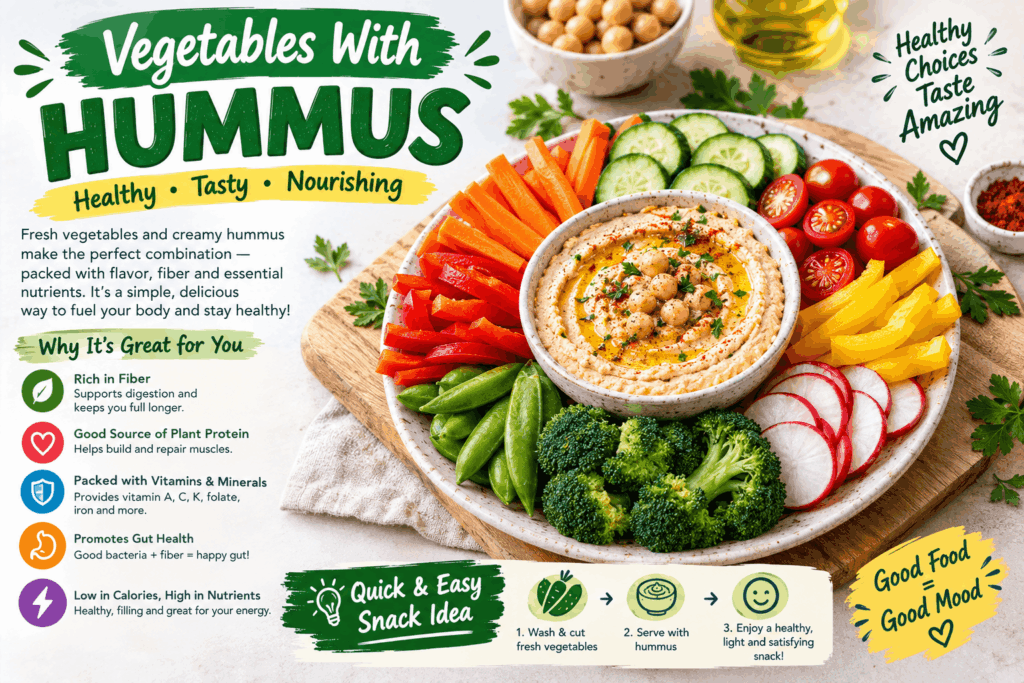
3. Vegetables With Hummus
Carrots, cucumbers, bell peppers, celery, broccoli, and cherry tomatoes make excellent crunchy snacks.
Pairing them with hummus creates a more substantial snack while adding protein and other nutrients from chickpeas and tahini.
The CDC and American Heart Association both recommend vegetables with dips such as hummus as practical snack choices.
4. Unsalted Nuts and Seeds
Almonds, walnuts, pistachios, peanuts, pumpkin seeds, and sunflower seeds are convenient and require almost no preparation.
They contain protein, fiber, and unsaturated fats. Because nuts and seeds are energy-dense, portion awareness is useful, especially when eating directly from a large container.
A small serving alongside fruit can make an easy office or travel snack.
5. Hard-Boiled Eggs
Hard-boiled eggs are an easy, protein-rich snack you can prepare ahead of time.
Keep them refrigerated and combine one with fruit, vegetables, or whole-grain toast for a more balanced mini-meal.
6. Air-Popped Popcorn
Popcorn can be a healthy snack when prepared. Air-popped popcorn is a whole-grain food and can provide fiber.
Instead of loading it with large amounts of butter or salt, try adding herbs, spices, or other seasonings for flavor.
The American Heart Association considers air-popped popcorn a healthier snack choice.
7. Whole-Grain Crackers With Cottage Cheese
Whole-grain crackers paired with cottage cheese provide a combination of carbohydrates and protein.
Look for crackers made primarily with whole grains and compare labels for sodium and added sugars.
8. Apple With Nut Butter
This classic combination is easy for a reason. The apple provides natural sweetness and fiber, while nut butter adds protein and unsaturated fat.
Choose nut butter with little or no added sugar and lower sodium when possible.
9. Roasted Chickpeas
Roasted chickpeas can satisfy the desire for something crunchy while providing plant-based protein and fiber.
You can make them at home with chickpeas, a small amount of oil, and seasonings such as paprika, garlic, or black pepper.
10. Whole-Grain Toast With Avocado
Whole-grain toast topped with avocado makes a filling snack when you need something more substantial.
Avocado provides unsaturated fat, while whole-grain bread adds carbohydrates and fiber.
For additional protein, top it with a boiled egg or serve it with plain yogurt.
11. Edamame
Edamame is a convenient plant-based snack that provides protein and fiber.
Frozen shelled edamame can be heated quickly and seasoned with herbs, spices, or a small amount of low-sodium seasoning.
12. Homemade Trail Mix
Trail mix can be healthy, but the ingredients matter.
A simple homemade mix can combine unsalted nuts, seeds, and a small amount of unsweetened dried fruit. Keep portions moderate since nuts and dried fruit are energy-dense.
The USDA’s MyPlate guidance specifically suggests making your own trail mix with unsalted nuts, seeds, dried fruit, and other ingredients.
13. Cottage Cheese With Fruit
Cottage cheese paired with berries, peaches, pears, or pineapple creates a simple sweet-and-savory snack.
Choose a lower-sodium variety if sodium is a concern.
14. Chia Pudding
Chia seeds can be mixed with milk or an unsweetened fortified plant-based alternative and chilled until thickened.
Add berries, sliced fruit, or cinnamon for flavor.
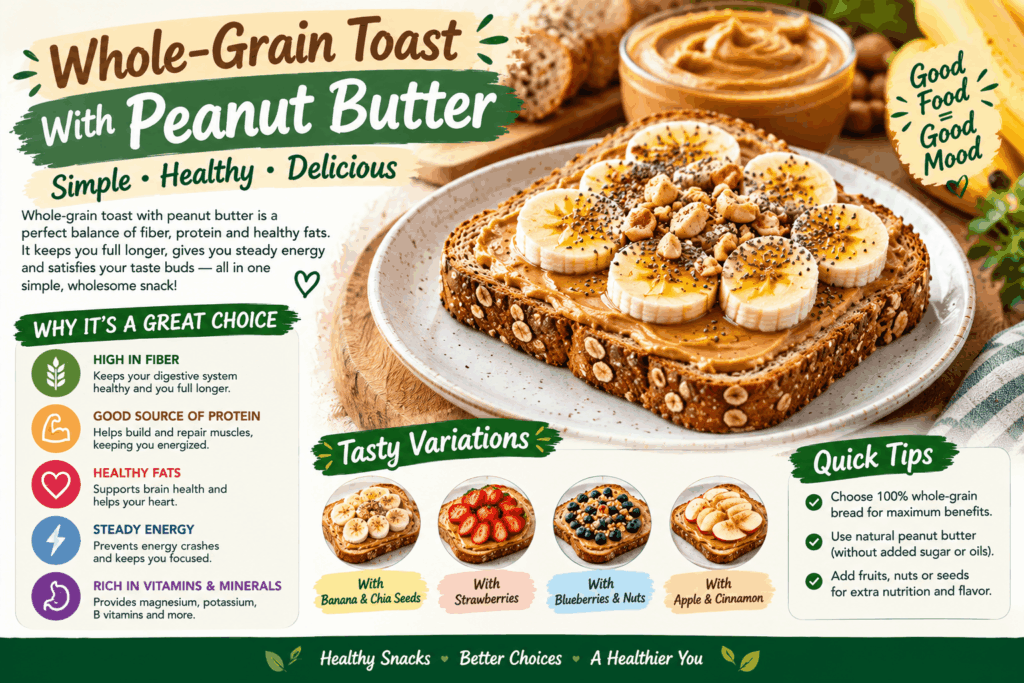
15. Whole-Grain Toast With Peanut Butter
Whole-grain toast with unsalted peanut butter is an easy choice for busy mornings or afternoons.
Choose peanut butter without added sugar when possible, and check the ingredient list rather than relying only on front-of-package marketing.
Best Healthy Snacks for Different Situations
Not every snack needs to look the same. The best choice depends on when and where you are eating.
| At work | Apple with peanut butter, yogurt with berries, nuts, whole-grain crackers |
| On the go | Banana, unsalted nuts, roasted chickpeas, whole fruit |
| After exercise | Yogurt with fruit, whole-grain toast with egg, milk with banana |
| Afternoon hunger | Vegetables with hummus, cottage cheese with fruit, popcorn |
| Sweet cravings | Berries with yogurt, banana with nut butter, frozen grapes |
| Crunchy cravings | Air-popped popcorn, roasted chickpeas, carrots, cucumber |
| Quick breakfast-style snack | Whole-grain toast with avocado, boiled egg with fruit |
| Family snack | Fruit, vegetable sticks with hummus, plain yogurt, whole-grain crackers |
How to Build a Balanced Snack
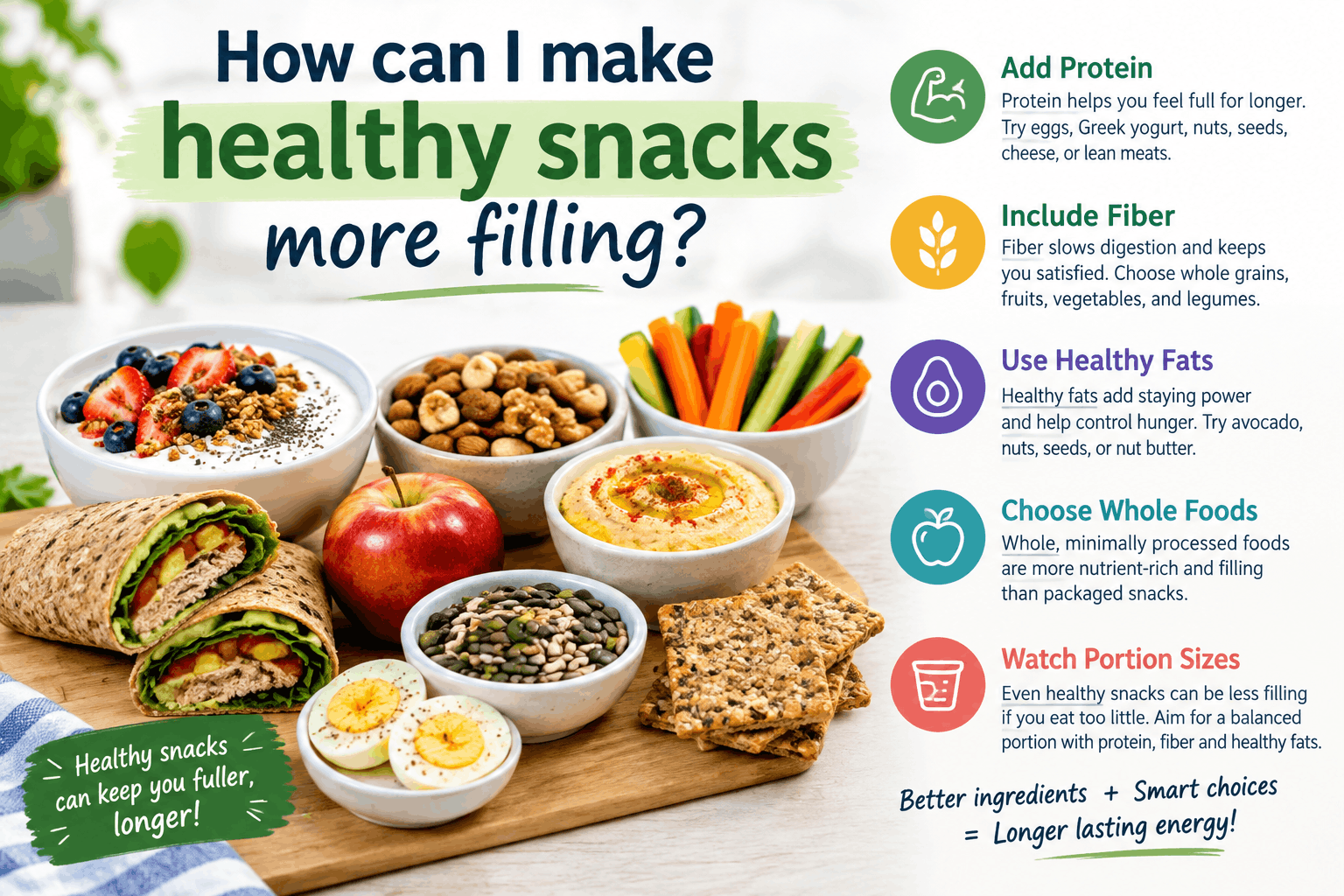
One useful approach is to combine foods from different categories instead of relying on one ingredient.
Try this simple formula:
Protein + fiber-rich carbohydrate or produce + optional healthy fat
For example:
- Apple + peanut butter
- Yogurt + berries + seeds
- Carrots + hummus
- Whole-grain crackers + cottage cheese
- Banana + unsalted nuts
- Whole-grain toast + avocado + egg
This approach can make snacks more satisfying while adding variety to your overall diet. USDA MyPlate and CDC guidance both emphasize combining nutrient-rich foods from different food groups.
Healthy Snacks for Weight Management
No single snack automatically causes or prevents weight gain. Overall eating patterns, portions, physical activity, and individual needs all matter.
If you are trying to manage your weight, focus on nutrient-dense foods and be mindful of portion sizes. Fruit, vegetables, whole grains, lean or plant-based proteins, nuts, seeds, and unsweetened dairy or fortified alternatives can all fit into a balanced eating pattern.
A practical strategy is to portion snacks before eating rather than eating directly from a large package.
Best Low-Sugar Healthy Snacks
If you want to cut back on added sugar, start with foods that naturally contain little or no added sugar.
Good choices include:
- Fresh berries
- Apples
- Pears
- Carrots
- Cucumbers
- Unsalted nuts
- Seeds
- Plain yogurt
- Hard-boiled eggs
- Hummus with vegetables
- Air-popped popcorn
Remember that natural sugar in whole fruit differs from added sugar found in processed foods.
Best High-Protein Healthy Snack
Protein can be added to snacks through both animal-based and plant-based foods.
- Greek yogurt
- Cottage cheese
- Eggs
- Edamame
- Roasted chickpeas
- Nuts and seeds
- Peanut or almond butter
- Tuna with whole-grain crackers
- Plain milk or fortified soy milk
The CDC recommends including a variety of protein foods, including eggs, seafood, beans, lentils, nuts, seeds, and soy foods.
Best Healthy Snacks for Work
Work snacks should be convenient, easy to store, and simple to eat.
Keep a few options available before hunger becomes urgent. For example, store unsalted nuts, whole-grain crackers, shelf-stable fruit, or roasted chickpeas at your desk when appropriate. Refrigerated options such as yogurt, fruit, chopped vegetables, or cottage cheese can work well if you have access to a refrigerator.
Planning can make healthy choices much easier.
Best Healthy Snacks for Kids
Children have different nutritional needs than adults, so snack portions and food choices should be appropriate for their age.
Fruit and vegetables are practical choices, while yogurt, whole-grain crackers, cheese, eggs, and nut or seed products can provide additional nutrients.
For young children, choking risks need special attention. The NHS recommends avoiding whole nuts for children under 5.
Parents and caregivers should also consider allergies, developmental stage, and any dietary guidance provided by a child’s healthcare professional.
Practical Tips
Keep Healthy Foods Visible
Place washed fruit, prepared vegetables, and other nutritious snacks where they are easy to see and reach.
The CDC recommends keeping healthier options available and visible, making them easier to choose when hunger hits.
Portion Snacks Before Eating
Instead of eating directly from a large bag or box, place the amount you plan to eat into a bowl or container.
This simple habit can make portion awareness easier.
Read Nutrition Labels
When buying packaged snacks, check:
- Serving size
- Added sugars
- Sodium
- Saturated fat
- Fiber
- Protein
- Ingredient list
A product marketed as “healthy” can still contain substantial amounts of added sugar or sodium.
Prepare Snacks in Advance
Wash fruit, cut vegetables, boil eggs, or portion nuts ahead of time.
A few minutes of preparation can save you from reaching for convenience foods when you are hungry.
Drink Water With Your Snack
Sometimes thirst can be mistaken for hunger. Water is a simple beverage choice and avoids the added sugars found in many sweetened drinks.
Common Mistakes
Choosing Snacks Based Only on Calories
Calories matter, but they are not the only factor. The nutritional value of this food matters too.
A snack with protein, fiber, vitamins, and minerals can offer more nutritional value than a highly processed snack with a similar calorie count.
Eating Directly From the Package
Large packages can make it difficult to notice how much you have eaten.
Portion the snack first, particularly with nuts, crackers, dried fruit, and other concentrated foods.
Assuming All Granola Bars Are Healthy
Some snack bars contain substantial amounts of added sugar and may be closer to candy than a nutrient-dense snack.
Read the Nutrition Facts label and ingredient list before buying.
Drinking Sugary Beverages With Snacks
A nutritious snack can quickly become a much higher-sugar eating occasion when paired with soda, sweetened coffee, or another sugary drink.
Water, unsweetened tea, or other low- or no-added-sugar options can be better everyday choices.
Avoiding All Fat
Healthy eating does not require eliminating dietary fat. Nuts, seeds, avocado, and other foods provide unsaturated fats that can fit into a balanced diet.
The goal is to focus on overall food quality and choose healthier fat sources more often.
Key Takeaways
- The best healthy snacks are usually nutrient-dense and minimally processed.
- Fruit, vegetables, whole grains, nuts, seeds, yogurt, eggs, beans, and other protein foods are useful snack options.
- Pairing protein with fiber-rich foods can make a snack more filling.
- Choose unsalted or lower-sodium options when possible.
- Check packaged foods for added sugar, sodium, saturated fat, and serving size.
- Prepare snacks ahead of time so healthier options are available when hunger strikes.
- Portion awareness still matters, even with nutritious foods.
- Healthy snacking is about your overall eating pattern, not one perfect food.
Frequently Asked Questions
What are the best healthy snacks?
Some of the best healthy snacks include fresh fruit, vegetables with hummus, plain yogurt with berries, unsalted nuts, boiled eggs, roasted chickpeas, whole-grain crackers, and whole-grain toast with nut butter.
What is a healthy snack for weight management?
A healthy snack for weight management can include nutrient-dense foods such as fruit, vegetables, plain yogurt, eggs, nuts, seeds, or hummus. Portion size and your overall eating pattern are also important.
What are the best high-protein healthy snacks?
Greek yogurt, cottage cheese, eggs, edamame, roasted chickpeas, nuts, seeds, and nut butter are convenient options. Protein-rich foods can also be paired with fruit, vegetables, or whole grains.
What are healthy snacks that are low in added sugar?
Fresh fruit, vegetables, unsalted nuts, seeds, plain yogurt, eggs, hummus, and air-popped popcorn can be good choices. Always check packaged foods because added sugar can appear in many different products.
Are nuts a healthy snack?
Nuts provide protein, fiber, and healthy unsaturated fats, but they are calorie-dense, so portion size still matters.
Is fruit a healthy snack?
Whole fruit is generally an excellent snack choice. Apples, berries, oranges, bananas, pears, grapes, and other fruits provide nutrients and fiber. Whole fruit is a better choice than relying on sugary fruit-flavored products.
How can I make healthy snacks more filling?
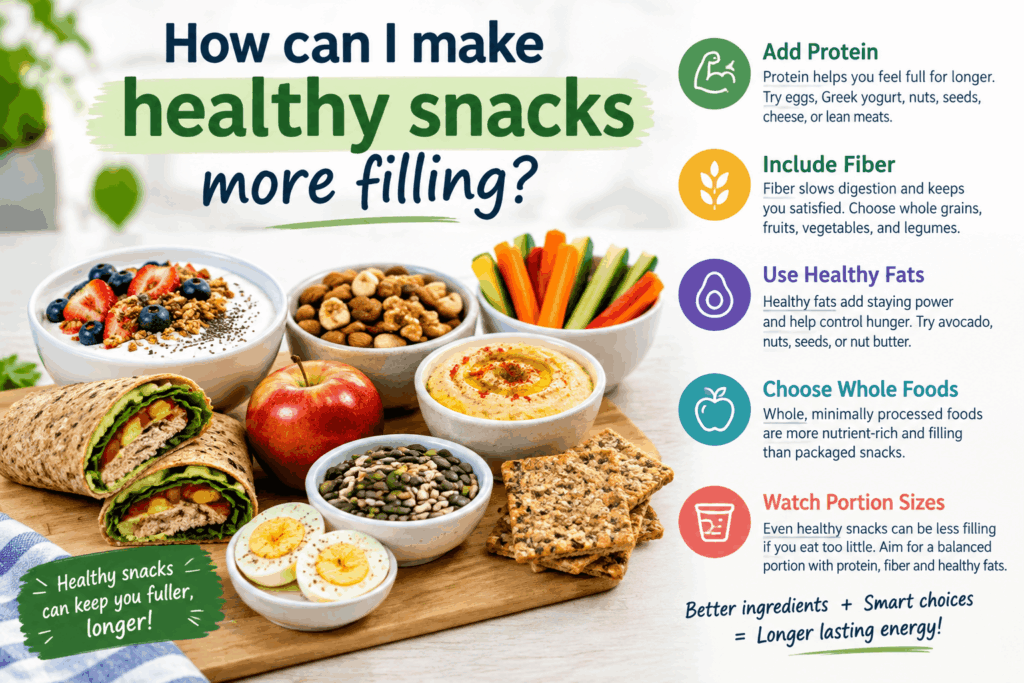
Try combining foods rather than eating only one item. Examples include an apple with peanut butter, yogurt with berries and seeds, or vegetables with hummus. This adds a combination of nutrients such as protein, fiber, and healthy fats.
Conclusion
The best healthy snacks do not need to be complicated, expensive, or boring. A handful of simple foods can give you plenty of variety throughout the week.
Keep fresh fruit, vegetables, whole grains, nuts, seeds, yogurt, eggs, and other nutritious foods available at home or work. When possible, combine a protein-rich food with fruit, vegetables, or another fiber-rich choice.
Most importantly, think about healthy snacking as part of your overall eating pattern rather than searching for one “perfect” snack. Small, practical choices made consistently can make healthy eating easier to maintain over time.
Disclaimer
This article is published solely for educational and informational purposes. The information provided is intended to increase general awareness and understanding of the topic. It should not be considered medical, insurance, financial, legal, or professional advice. Readers should consult qualified professionals before making any healthcare, insurance, financial, or legal decisions.
References
- Centers for Disease Control and Prevention (CDC)
- U.S. Department of Agriculture (USDA) MyPlate
- American Heart Association (AHA)
- National Health Service (NHS)
- U.S. Department of Health and Human Services (HHS)
- Dietary Guidelines for Americans