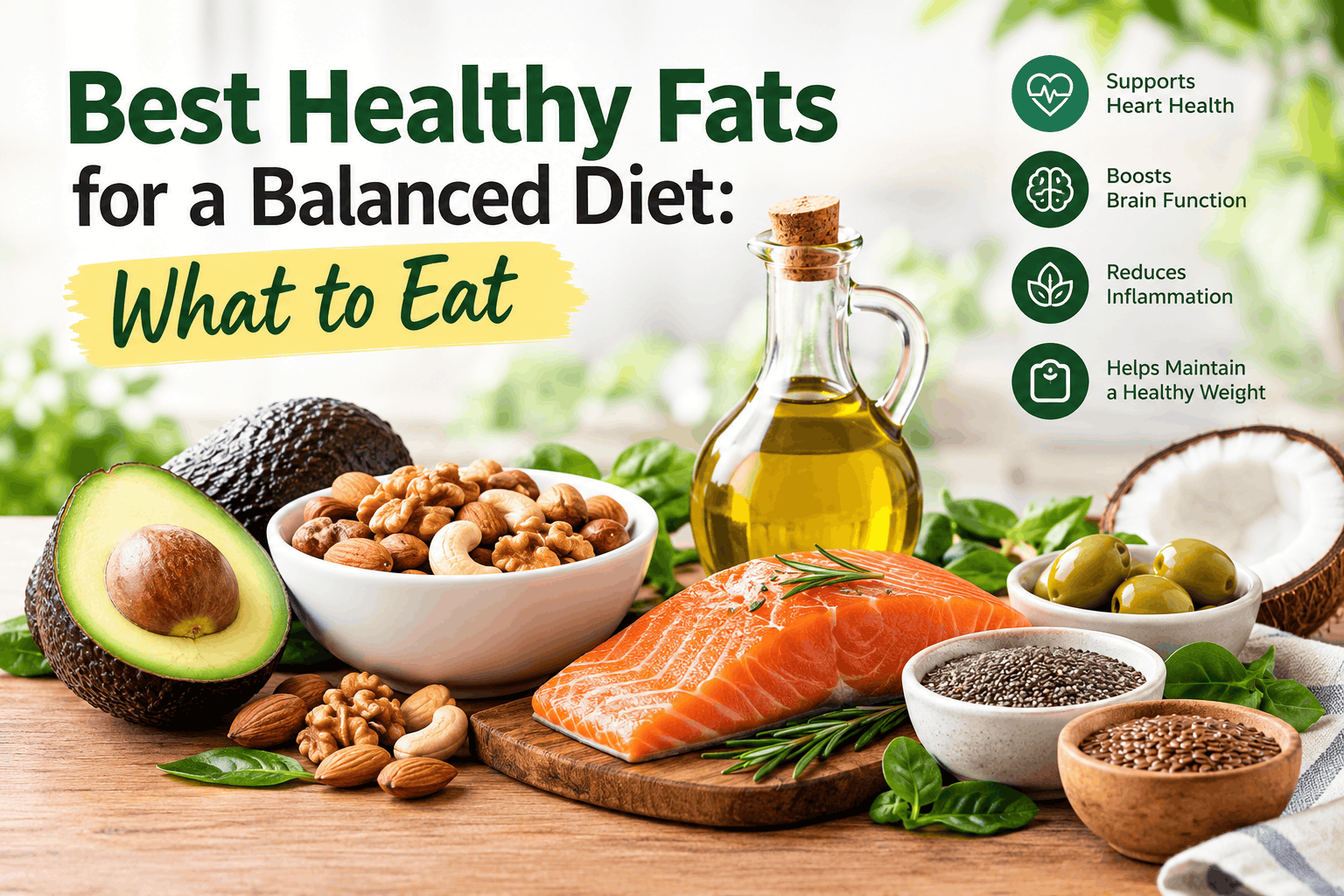
Best Healthy Fats for a Balanced Diet: What to Eat
Best Healthy Fats for a Balanced Diet: What to Eat
Best Healthy Fats for a Balanced Diet
Discover the best healthy fats for a balanced diet, including avocados, nuts, seeds, olive oil, and fatty fish, plus simple ways to enjoy them daily.
best-healthy-fats-for-a-balanced-diet
Fat has a complicated reputation. Some people avoid it because they believe it causes weight gain, while others add large amounts of foods labeled as healthy fats to their meals without considering portion sizes. Dietary fat is essential to a balanced diet, but the type you eat matters.
Think about a typical breakfast. You might have eggs and toast, a bowl of oatmeal with walnuts, or whole-grain bread topped with avocado. These meals can provide different amounts and types of fat, and some choices also offer nutrients like fiber, vitamins, and minerals.
Choosing healthy fats doesn’t require an expensive diet or complicated recipes. Everyday foods such as olive oil, nuts, seeds, avocados, and oily fish can help you build balanced meals while making food more satisfying and flavorful.
What Are Healthy Fats?
Healthy fats support normal body functions and contribute to a balanced eating pattern. They include monounsaturated and polyunsaturated fats, found in foods such as olive oil, avocados, nuts, seeds, and fatty fish. Replacing some saturated fats with unsaturated fats can help improve blood cholesterol levels and support heart health.
Why Does Your Body Need Healthy Fats?
Fat does more than add flavor and texture to food. Your body uses it for several essential functions.
- Nutrient absorption: Dietary fat helps your body absorb vitamins A, D, E, and K.
- Cell function: Fats are important components of cell membranes.
- – Energy: Each gram of fat supplies about 9 calories, making it a high-energy nutrient.
- Hormone production: Dietary fats provide building blocks that the body uses to produce certain hormones and other compounds.
- Satiety: Fat can help you feel full and satisfied after meals, particularly when eaten with protein- and fiber-rich foods.
Different fats can affect your health in different ways. Adding more unsaturated fats to your diet while reducing saturated and trans fats can help you maintain healthier eating habits.
The Two Main Types of Healthy Fats
Monounsaturated Fats
Monounsaturated fats are found in foods such as olive oil, avocados, almonds, peanuts, and hazelnuts. Replacing some saturated fat with monounsaturated fat can help lower LDL cholesterol, often called bad cholesterol.
These fats are easy to incorporate into everyday meals. Try tossing vegetables with olive oil, using avocado as a sandwich filling, or having a small portion of nuts between meals.
Polyunsaturated Fats
Polyunsaturated fats include omega-3 and omega-6 fatty acids. Your body cannot produce enough of these essential fatty acids on its own, so you need to get them from your diet.
Omega-3 fats occur in foods such as salmon, sardines, walnuts, chia seeds, and flaxseeds. Omega-6 fats are found in sunflower seeds, soybean oil, walnuts, and other plant foods.
Both types contribute to normal body functions. Instead of eliminating either type, include a range of foods in your diet to get both.
7 Best Healthy Fats to Include in Your Diet
1. Extra-Virgin Olive Oil
Extra-virgin olive oil is a useful source of monounsaturated fat. It also contains naturally occurring plant compounds, including polyphenols.
Use it in salad dressings, drizzle it over cooked vegetables, or add a small amount to soups and grain bowls. It can also be used for everyday cooking, depending on the cooking method and temperature required.
For a simple dressing, combine olive oil with lemon juice, black pepper, and a little mustard.
Best for: Salad dressings, vegetables, and everyday cooking.
2. Avocados
Avocados provide monounsaturated fats along with fiber and several vitamins and minerals. Their creamy texture makes them a convenient alternative to butter or mayonnaise in some meals.
Spread mashed avocado on whole-grain toast, add slices to a sandwich, or mix it into a salad. You can also use avocado in a dip served with vegetables.
Although avocados are nutritious, they are energy-dense. A portion that suits your appetite and overall dietary needs is more useful than assuming that unlimited amounts are beneficial.
Best for: Breakfast, sandwiches, salads, and dips.
3. Walnuts
Walnuts provide unsaturated fats, including the plant-based omega-3 fatty acid alpha-linolenic acid (ALA). They also supply protein, fiber, and minerals.
Add chopped walnuts to oatmeal, mix them into plain yogurt, or sprinkle them over roasted vegetables. They also work well in homemade trail mix.
For those seeking plant-based omega-3 sources, walnuts are a valuable option. However, the ALA they contain differs from the EPA and DHA found in seafood, and the body can convert only a small amount of ALA into these longer-chain omega-3 fatty acids.
Best for: Breakfast bowls, snacks, salads, and plant-based meals.
4. Fatty Fish
Salmon, sardines, trout, herring, and mackerel are valuable sources of omega-3 fats, particularly EPA and DHA. These fatty acids support essential bodily functions, while seafood also supplies protein, vitamin B12, and a range of other valuable nutrients.
Try baked salmon with brown rice and vegetables, sardines on whole-grain toast, or grilled trout with a side salad. Canned fish can be a convenient alternative to fresh seafood.
Fish choices should follow local food-safety guidelines, especially recommendations on mercury exposure during pregnancy and childhood. Choose a variety of seafood options that fit your circumstances.
Best for: Lunches, dinners, and protein-rich meals.
5. Chia Seeds
Chia seeds contain ALA omega-3 fats, fiber, and protein. They absorb liquid and develop a gel-like texture, making them useful for simple breakfasts and snacks.
Stir chia seeds into oatmeal or yogurt, blend them into a smoothie, or prepare chia pudding by soaking them in milk or a suitable plant-based alternative.
Because chia seeds absorb liquid, mix them with sufficient fluid rather than swallowing large quantities of dry seeds. If you are not used to eating much fiber, increase your intake gradually.
Best for: Smoothies, oatmeal, yogurt, and chia pudding.
6. Flaxseeds
Flaxseeds are another plant source of ALA omega-3 fats. They also contain fiber and other beneficial plant compounds.
Ground flaxseeds are generally easier for the body to digest than whole flaxseeds. Sprinkle a spoonful into oatmeal, blend it into a smoothie, or stir it into homemade muffin batter.
Store flaxseed products according to package directions. Ground flaxseeds can become rancid more quickly than intact seeds, so refrigeration may help preserve freshness.
Best for: Breakfast cereals, smoothies, baking, and yogurt.
7. Nuts and Seeds
Almonds, pistachios, peanuts, pumpkin seeds, and sunflower seeds offer different combinations of unsaturated fats, protein, fiber, vitamins, and minerals.
Keep a small container of unsalted nuts at work, add pumpkin seeds to a salad, or pair almonds with a piece of fruit for a convenient snack.
Nut and seed butters can also be practical options. Look for products with simple ingredient lists and little or no added sugar or excess salt.
If you have a nut or seed allergy, avoid the relevant food and follow advice from your healthcare professional.
Best for: Snacks, salads, oatmeal, and spreads.
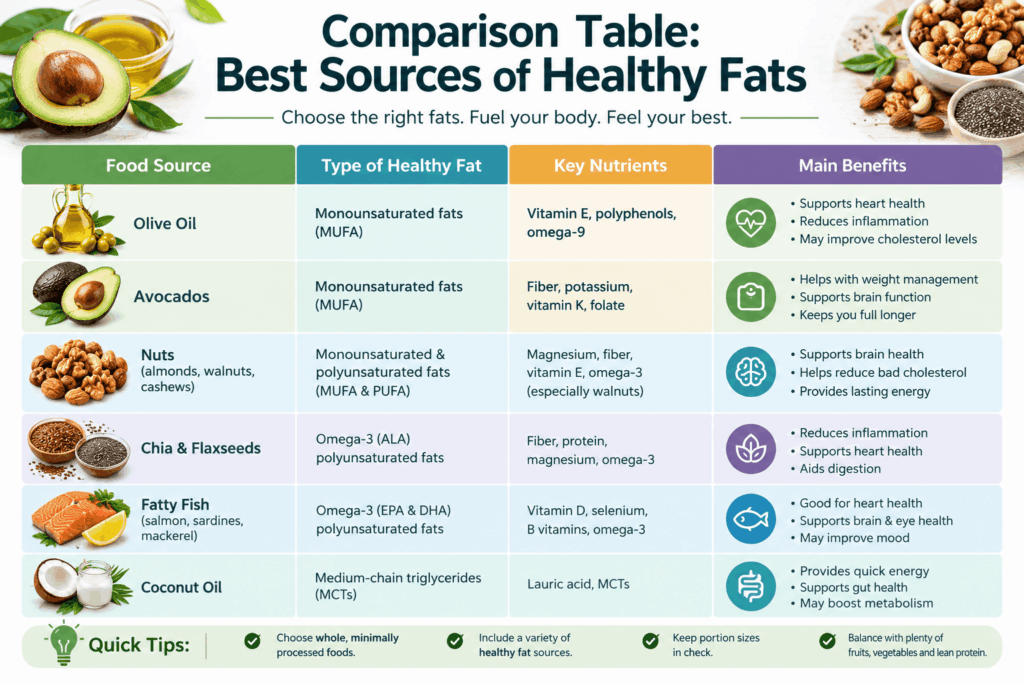
8. Comparison Table: Best Sources of Healthy Fats
| Extra-virgin olive oil | Monounsaturated | Plant compounds | Salad dressing |
| Avocado | Monounsaturated | Fiber, potassium | Toast or salads |
| Walnuts | Polyunsaturated, including ALA | Fiber, minerals | Oatmeal or yogurt |
| Salmon | Omega-3 EPA and DHA | Protein, vitamin B12 | Baked with vegetables |
| Chia seeds | Polyunsaturated, including ALA | Fiber, protein | Chia pudding |
| Ground flaxseeds | Polyunsaturated, including ALA | Fiber | Smoothies or cereal |
| Almonds | Mainly monounsaturated | Protein, vitamin E | A snack or topping |
| Sunflower seeds | Mainly polyunsaturated | Vitamin E | Salads or yogurt |
| Peanut butter | Mainly unsaturated | Protein | Whole-grain toast |
The exact nutrient composition varies by variety, brand, preparation, and serving size.
How Much Healthy Fat Should You Eat?
There is no single ideal amount of fat that suits everyone. Your needs depend on factors such as age, activity level, energy requirements, and overall dietary pattern.
The Dietary Guidelines for Americans recommend that adults obtain approximately 20% to 35% of their daily calories from fat. For someone eating 2,000 calories per day, that represents roughly 44 to 78 grams of fat from all sources combined.
This is a general guideline, not a personalized target. It includes the fat in cooking oils, dairy products, meat, fish, nuts, seeds, and other foods.
A practical approach is to include moderate portions of unsaturated-fat sources throughout the day. For example, you might use olive oil in a salad dressing, add walnuts to breakfast, and serve fish with dinner.
Remember that healthy fats still contain calories. You do not need to avoid them, but portion sizes should fit your overall eating pattern.
Healthy Fats vs. Unhealthy Fats
The distinction is mainly about the type of fat and what it replaces in your diet.
Unsaturated fats are generally the preferred choice. They are found in olive oil, nuts, seeds, avocados, and fish.
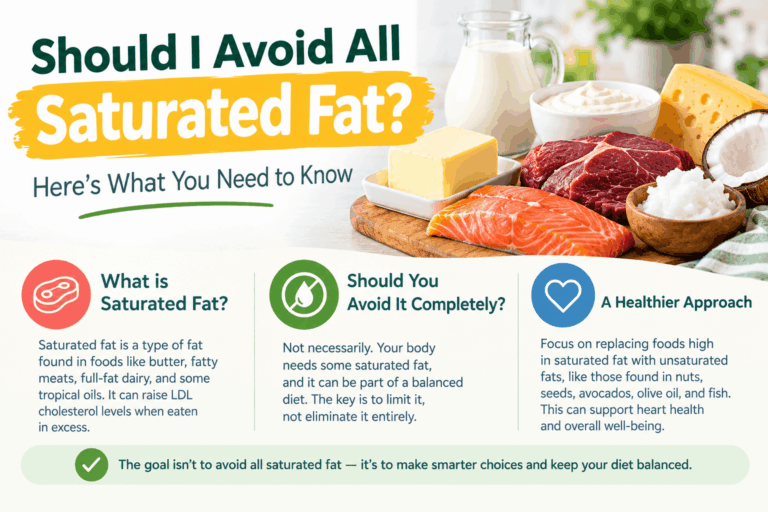
Saturated fats occur in foods such as butter, fatty cuts of meat, coconut oil, and some full-fat dairy products. Many dietary guidelines recommend limiting saturated fat and replacing some of it with unsaturated fats.
Trans fats can raise LDL cholesterol and lower HDL cholesterol. Industrial trans fats have been largely eliminated from the food supply in many countries, but regulations and product availability vary. Check ingredient lists for partially hydrogenated oils where relevant.
For example, replacing some butter with olive oil or choosing nuts instead of a pastry can improve the type of fat in your diet. The overall food choice matters, too. A balanced diet should include vegetables, fruits, whole grains, protein sources, and suitable amounts of fat.
9. Practical Tips for Eating More Healthy Fats
You don’t need to change your entire diet at once. Small substitutions can make a difference over time.
- Use olive oil more often: Try it in homemade dressings or when preparing vegetables.
- Add nuts to breakfast: A small handful of walnuts or almonds can make oatmeal more satisfying.
- Eat fish regularly: Include a variety of seafood options consistent with local dietary guidance.
- Prepare simple snacks: Pair fruit with nut butter or plain yogurt with ground flaxseed.
- Read food labels: Compare saturated fat, added sugar, sodium, and serving sizes when choosing packaged foods.
- Choose minimally processed options: Plain nuts, seeds, avocados, and fish are versatile starting points.
- Make gradual substitutions: Replace some saturated-fat sources with unsaturated-fat foods instead of simply adding extra calories to your usual meals.
10. Common Mistakes to Avoid
Assuming All Fat Causes Weight Gain
Dietary fat is not automatically unhealthy. Weight changes depend on overall energy intake, energy use, and other factors. Fat-rich foods can fit into a balanced diet when portions are appropriate.
Eating Unlimited Amounts of Healthy Fats
Olive oil, nuts, seeds, and avocados provide valuable nutrients, but they are energy-dense. Large portions can contribute more calories than you intend to eat.
Ignoring Saturated Fat
Adding olive oil or nuts to your diet does not automatically make the rest of your food choices balanced. Pay attention to the overall pattern, including foods high in saturated fat.
Relying Only on Plant-Based Omega-3 Sources
Walnuts, chia seeds, and flaxseeds provide ALA. Fish supplies EPA and DHA directly. If you do not eat seafood, consider discussing suitable alternatives with a qualified healthcare professional, especially if you have specific nutritional needs.
Buying Products Just Because They Say “Healthy”
Marketing terms do not tell you everything about a food’s nutritional value. Check the ingredient list and nutrition facts rather than relying on the front of the package.
11. Key Takeaways
- Healthy fats are an essential part of a balanced diet.
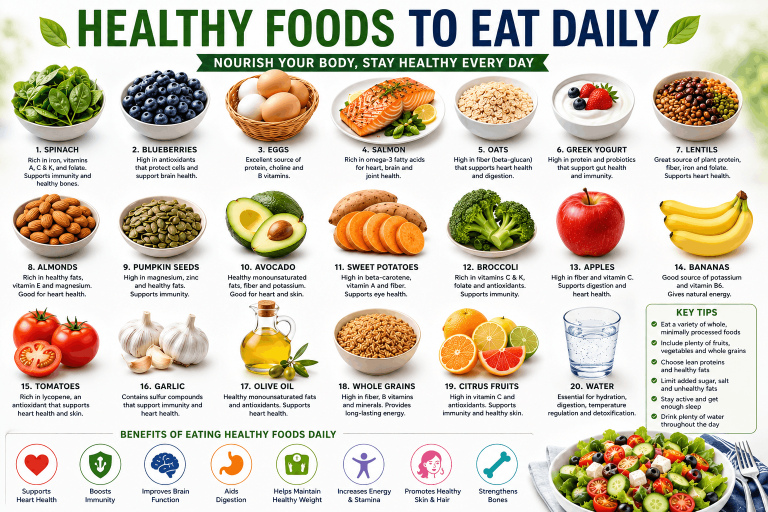
- Olive oil, avocados, nuts, seeds, and fatty fish are useful sources of unsaturated fats.
- Omega-3 and omega-6 fatty acids both have important roles in normal body function.
- Replacing some saturated fats with unsaturated fats can help improve blood cholesterol levels.
- Healthy fats still contain calories, so choose portions that suit your needs.
- Variety, food quality, and your overall eating pattern matter more than any single food.
12. Frequently Asked Questions
1. What are the healthiest fats to eat every day?
Olive oil, nuts, seeds, avocados, and suitable portions of fatty fish are useful options. The best choices depend on your dietary preferences, nutritional needs, budget, and any food allergies.
2. Are eggs a source of healthy fat?
Yes. Eggs contain fat, including monounsaturated and polyunsaturated fats, as well as some saturated fat. They also provide protein and other nutrients. Their place in your diet depends on your overall eating pattern and individual health needs.
3. Is olive oil healthier than butter?
Olive oil is higher in unsaturated fat, while butter contains more saturated fat. Replacing some butter with olive oil can improve the fat profile of your diet and may help lower LDL cholesterol.
4. Can healthy fats help with weight management?
Healthy fats can make meals more satisfying, especially when eaten alongside protein and fiber. However, they are calorie-dense, and eating large quantities can increase total calorie intake. Weight management depends on several factors, not one nutrient alone.
5. Which healthy fats are best for vegetarians?
Avocados, olive oil, walnuts, chia seeds, flaxseeds, almonds, and other nuts and seeds are useful choices. Walnuts, chia seeds, and flaxseeds provide plant-based ALA omega-3 fats. Vegetarians who avoid fish can seek guidance on meeting their individual omega-3 needs.
6. Are saturated fats always bad for you?
Saturated fats can be part of a balanced diet in limited amounts, but consuming too much may raise LDL cholesterol levels and increase the risk of heart disease. Many health guidelines recommend limiting them and replacing some saturated fat with unsaturated fat rather than simply adding more fat to the diet.
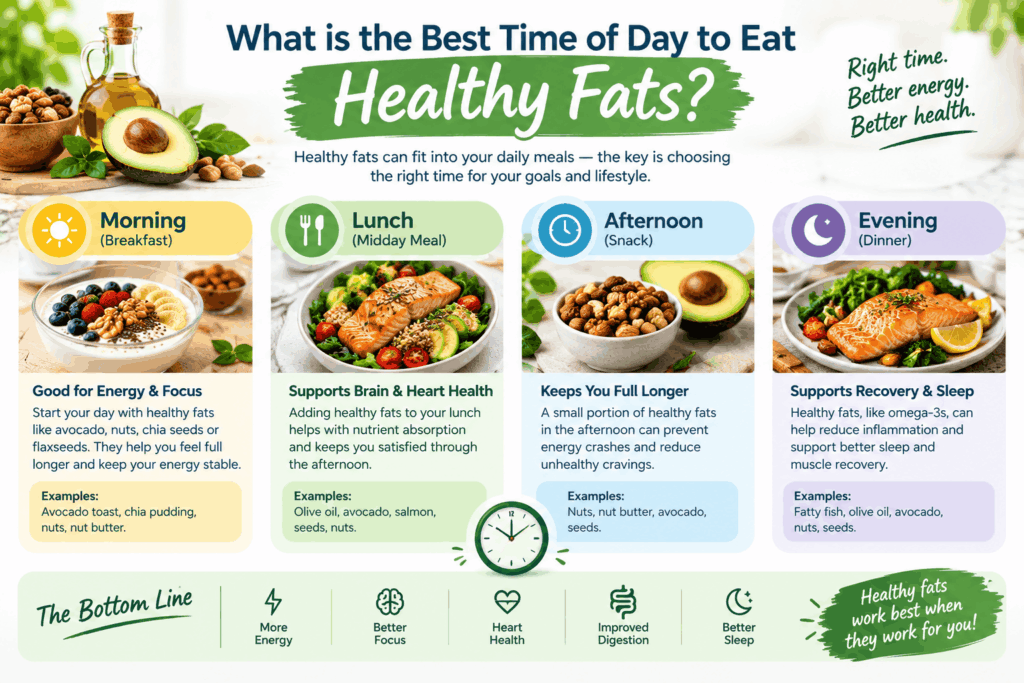
7. What is the best time of day to eat healthy fats?
There is no universally best time. You can include healthy fats at breakfast, lunch, dinner, or snack time. Prioritize nutritious food choices, keep serving sizes appropriate, and maintain a well-rounded eating routine throughout the day.
13. Conclusion
Healthy fats belong in a balanced diet. Foods such as olive oil, avocados, walnuts, chia seeds, flaxseeds, and fatty fish provide different types of unsaturated fats along with other useful nutrients.
The easiest way to improve your eating habits is to make practical substitutions. Use olive oil in place of some butter, add nuts or seeds to breakfast, and include suitable fish options in your weekly meals. Pay attention to portions, and remember that no single food determines the quality of your entire diet.
A varied eating pattern built around vegetables, fruits, whole grains, protein-rich foods, and appropriate sources of fat is a sensible foundation for long-term health.
14. Disclaimer
This article is published solely for educational and informational purposes. The information provided is intended to increase general awareness and understanding of the topic. It should not be considered medical, insurance, financial, legal, or professional advice. Readers should consult qualified professionals before making any healthcare, insurance, financial, or legal decisions.
References
- U.S. Department of Agriculture (USDA)
- U.S. Department of Health and Human Services (HHS)
- National Institutes of Health (NIH)
- National Heart, Lung, and Blood Institute (NHLBI)
- American Heart Association (AHA)
- National Health Service (NHS)
- Government of Canada
- Australian Government Department of Health and Aged Care
- World Health Organization (WHO)