Best Fruits to Eat Every Day
Best Fruits to Eat Every Day for Better Health
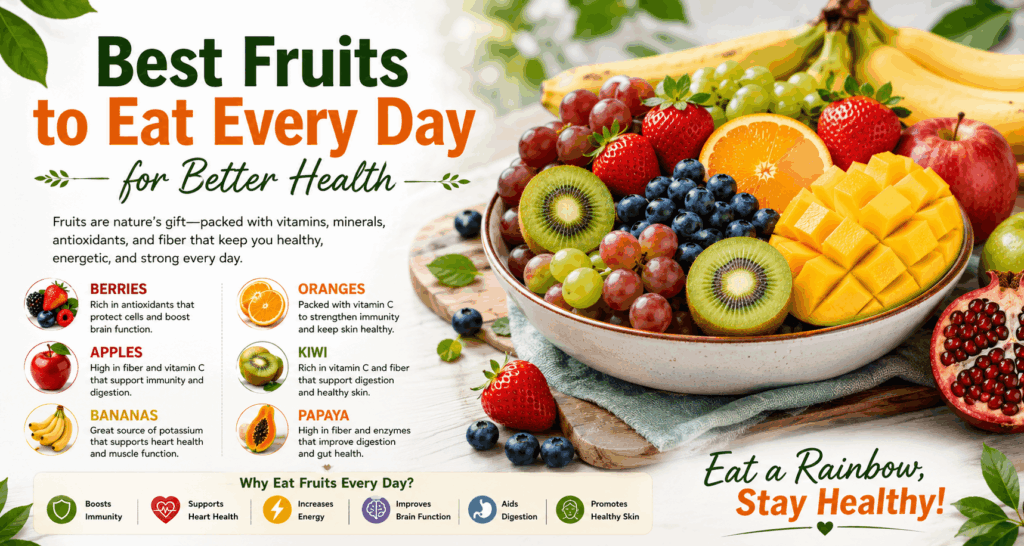
Discover the best fruits to eat every day, their health benefits, easy ways to enjoy them, and tips for choosing fresh, frozen, and dried fruit.
best-fruits-to-eat-every-day
What should you eat when you want something sweet but still want to make a healthy choice? For many people, fruit is the easiest answer. An apple on the way to work, berries with breakfast, a banana before a workout, or an orange as an afternoon snack can add valuable nutrients without complicated meal prep.
With so many options available, it’s natural to wonder which fruits are best to include in your daily diet. Should you choose berries instead of bananas, or is an apple better than an orange? You may also wonder whether grapes contain too much sugar and if frozen fruit offers the same benefits as fresh fruit.
The good news is that you do not need to find one “perfect” fruit. A healthy eating pattern includes a variety of fruits because different fruits provide different combinations of fiber, vitamins, minerals, and beneficial plant compounds. WHO and other public health organizations recommend including fruit as part of a varied, balanced diet.
This guide explains some of the best fruits to eat regularly, what makes them nutritious, how to include them in everyday meals, and common mistakes to avoid.
What Are the Best Fruits to Eat Every Day?
The best fruits to eat every day are nutrient-rich whole fruits such as berries, apples, oranges, kiwi, bananas, pears, and other fresh, frozen, or appropriately prepared options. Whole fruit provides fiber, vitamins, minerals, and other beneficial plant compounds. Eating a variety of fruits is more useful than focusing on one “superfruit.”
Why Is Eating Fruit Every Day Important?
Fruit can make a valuable contribution to a balanced diet. Fruits provide nutrients such as vitamin C, potassium, folate, and dietary fiber, although the exact nutritional profile differs from one fruit to another.
Fiber is particularly useful because it supports normal digestion and can help you feel satisfied after eating. Choosing whole fruit also gives you the natural structure and fiber that are reduced when fruit is turned into juice.
Fruit is not a replacement for vegetables, whole grains, legumes, protein foods, or healthy fats. Instead, it works alongside these foods as part of an overall balanced diet.
10 Best Fruits to Eat Every Day
1. Berries
Berries are an excellent choice when you want a flavorful fruit that works well in breakfast, snacks, and desserts.
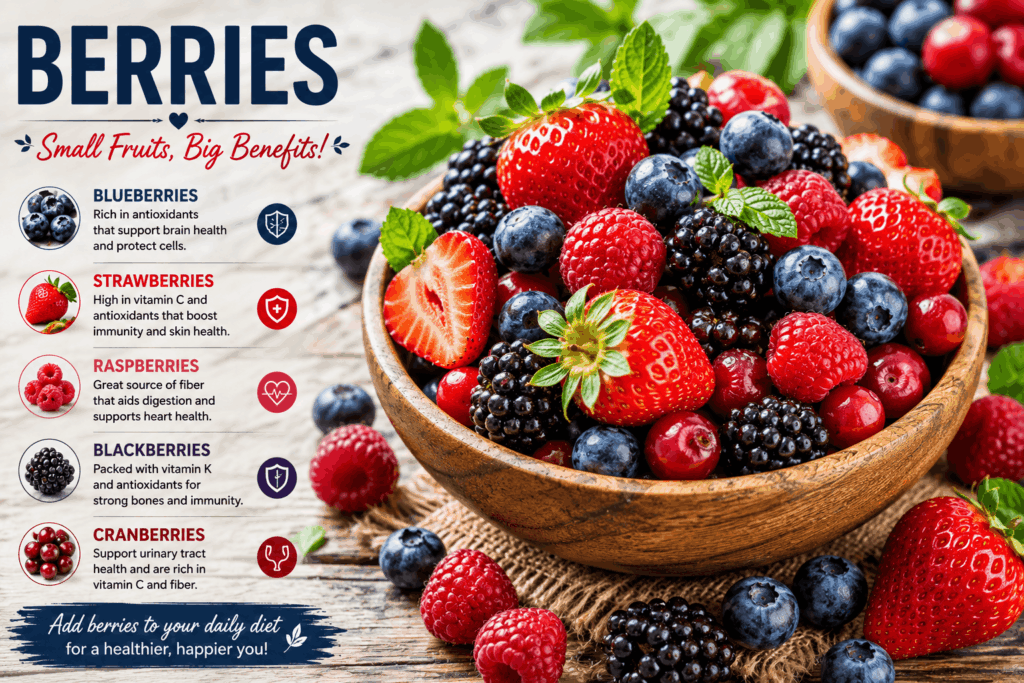
Strawberries, blueberries, raspberries, and blackberries provide fiber and a variety of vitamins and plant compounds.
They are also easy to combine with other nutritious foods. Add berries to plain yogurt, oatmeal, whole-grain cereal, or a smoothie.
Fresh berries are convenient when they are in season, while frozen berries can be useful throughout the year.
2. Apples
Apples are one of the easiest fruits to keep available at home or take with you.
They provide fiber and vitamin C and can be eaten without preparation beyond washing them. Keeping the edible skin on can also contribute additional fiber.
Try pairing an apple with a small serving of nuts or nut butter for a more satisfying snack.
Apples also work well sliced into oatmeal, salads, or yogurt.
3. Oranges
Oranges are well known for their vitamin C content and are an easy way to add fruit to breakfast or snacks.
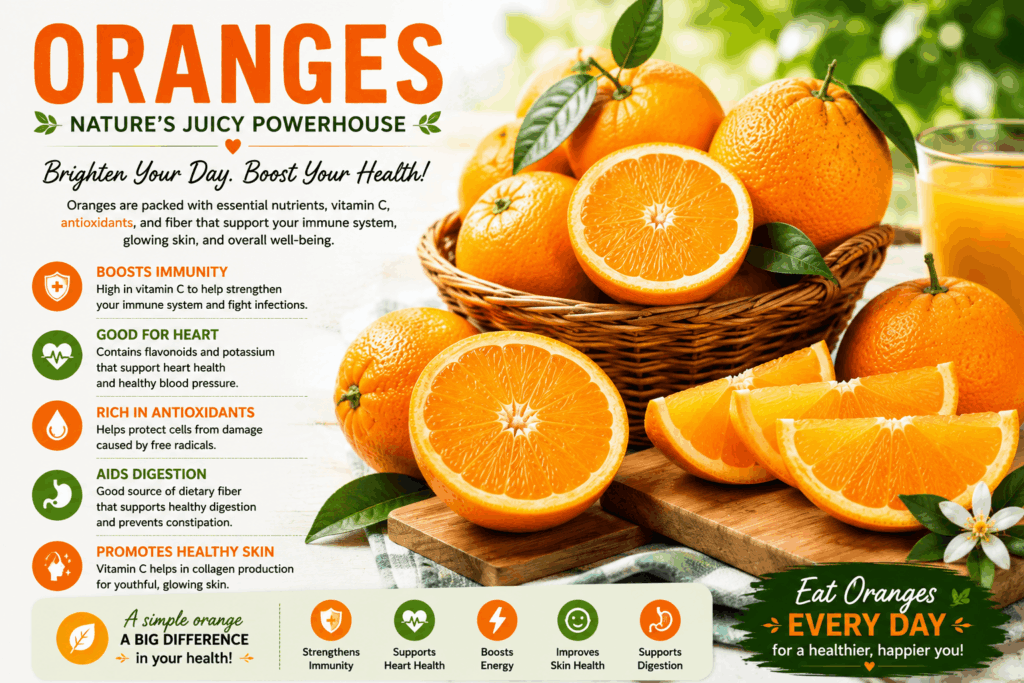
They are naturally sweet, refreshing and portable. Other citrus fruits, including grapefruit, mandarins and tangerines, can also add variety.
For most people, eating the whole orange is preferable to drinking orange juice because whole fruit retains its fiber.
4. Bananas
Bananas are practical, affordable and easy to eat almost anywhere.
They provide carbohydrates and potassium and can be particularly convenient around physical activity because they require little preparation.
Add sliced banana to oatmeal, whole-grain toast with nut butter, or plain yogurt.
A banana does not need to be avoided simply because it contains natural sugar. The overall quality and variety of your diet matter more than judging individual fruits by sugar content alone.
5. Kiwi
Kiwi is a small fruit with a strong nutritional profile. It provides vitamin C and fiber and can add variety to your fruit choices.
Slice it into yogurt or oatmeal, add it to a fruit bowl, or simply eat it on its own.
Choosing less familiar fruits from time to time can help prevent your diet from becoming repetitive.
6. Pears
Pears are another convenient source of fruit and fiber.
They make a useful snack because they can be carried easily and eaten without cooking. Like apples, pears can also be added to salads or paired with yogurt and nuts.
Choose ripe pears when you prefer a softer texture, or slightly firmer fruit when you want something crisp.
7. Grapes
Grapes are convenient for snacks and can be served fresh or added to fruit salads.
Their small size makes them easy to eat, so portion awareness can be useful. Instead of eating directly from a large bag, place a serving in a bowl.
Frozen grapes can also be a refreshing option, although they should be eaten safely and not offered whole to young children because of choking risk.
8. Avocado
Although many people think of avocado as a vegetable, botanically it is a fruit.
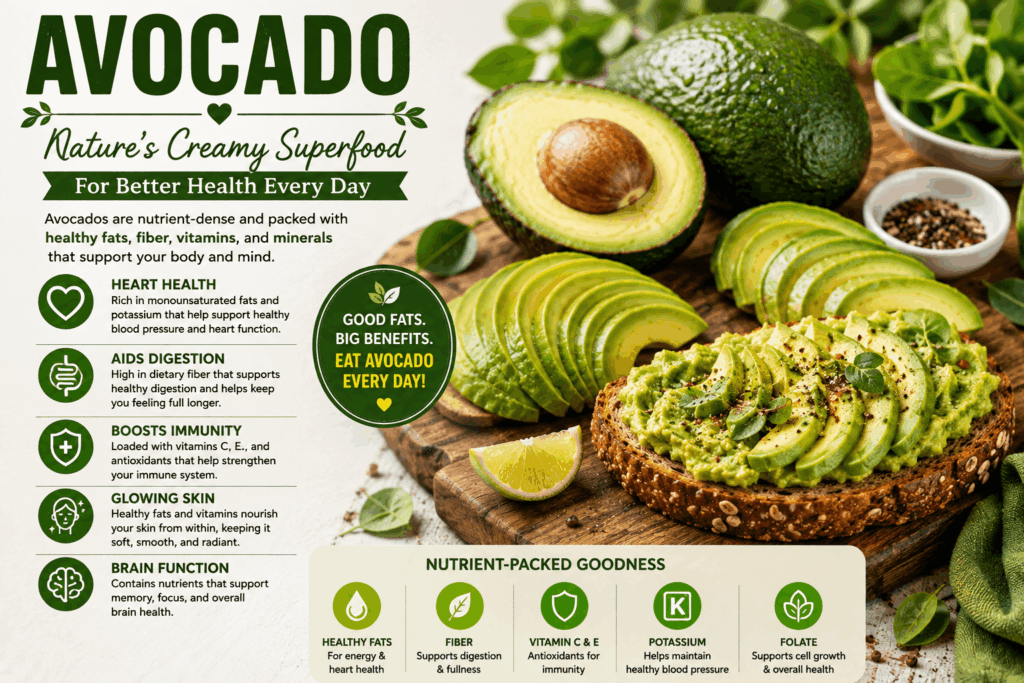
Unlike most sweet fruits, avocado is relatively high in fat and provides fiber and other nutrients. Its fat is predominantly unsaturated.
You can add avocado to whole-grain toast, salads, sandwiches, or grain bowls.
Because avocado is energy-dense, a reasonable portion can fit comfortably into a balanced diet.
9. Mango
Mango is a flavorful tropical fruit that provides vitamin C and other nutrients.
Its naturally sweet taste can make it useful when you want a healthier alternative to highly processed desserts.
Enjoy fresh mango with breakfast, add it to plain yogurt, or combine it with other fruit for a simple fruit salad.
Frozen mango can also be convenient when fresh fruit is unavailable.
10. Pomegranate
Pomegranate can add variety to your diet and provides fiber when you eat the seeds along with the surrounding edible portions.
Sprinkle the seeds over yogurt, oatmeal, salads, or grain bowls.
As with other fruits, there is no need to treat pomegranate as a miracle food. Its main advantage is that it adds another nutritious plant food to an already varied diet.
Whole Fruit vs. Fruit Juice
One of the most important distinctions is how you consume fruit.
Whole fruit is generally the better everyday choice because it contains fiber and requires chewing, which can make it more filling than drinking fruit juice.
Fruit juice can still be part of a diet, but it is easier to consume a large amount quickly. WHO notes that even fruit juice without added sugar can contain significant amounts of free sugars.
The NHS recommends limiting fruit juice and smoothies to a combined maximum of 150 ml per day.
For example, eating an orange gives you the whole fruit. Drinking a large glass of orange juice can provide much more fruit sugar in a short period and considerably less fiber.
Fresh, Frozen, Canned or Dried Fruit: Which Is Best?
You do not have to buy only fresh fruit.
Fresh, frozen, and canned fruit can all fit into a healthy eating pattern. WHO specifically notes that frozen and canned fruits can be good choices when they do not contain excessive added sugars or sodium.
When buying canned fruit, look for fruit packed in water or natural juice rather than heavy syrup.
Dried fruit can also provide nutrients and fiber, but removing water makes it much easier to eat a larger amount in a short time. The NHS lists about 30 grams as an adult portion and recommends enjoying dried fruit with meals because it can stick to teeth and contribute to tooth decay.
How Much Fruit Should You Eat?
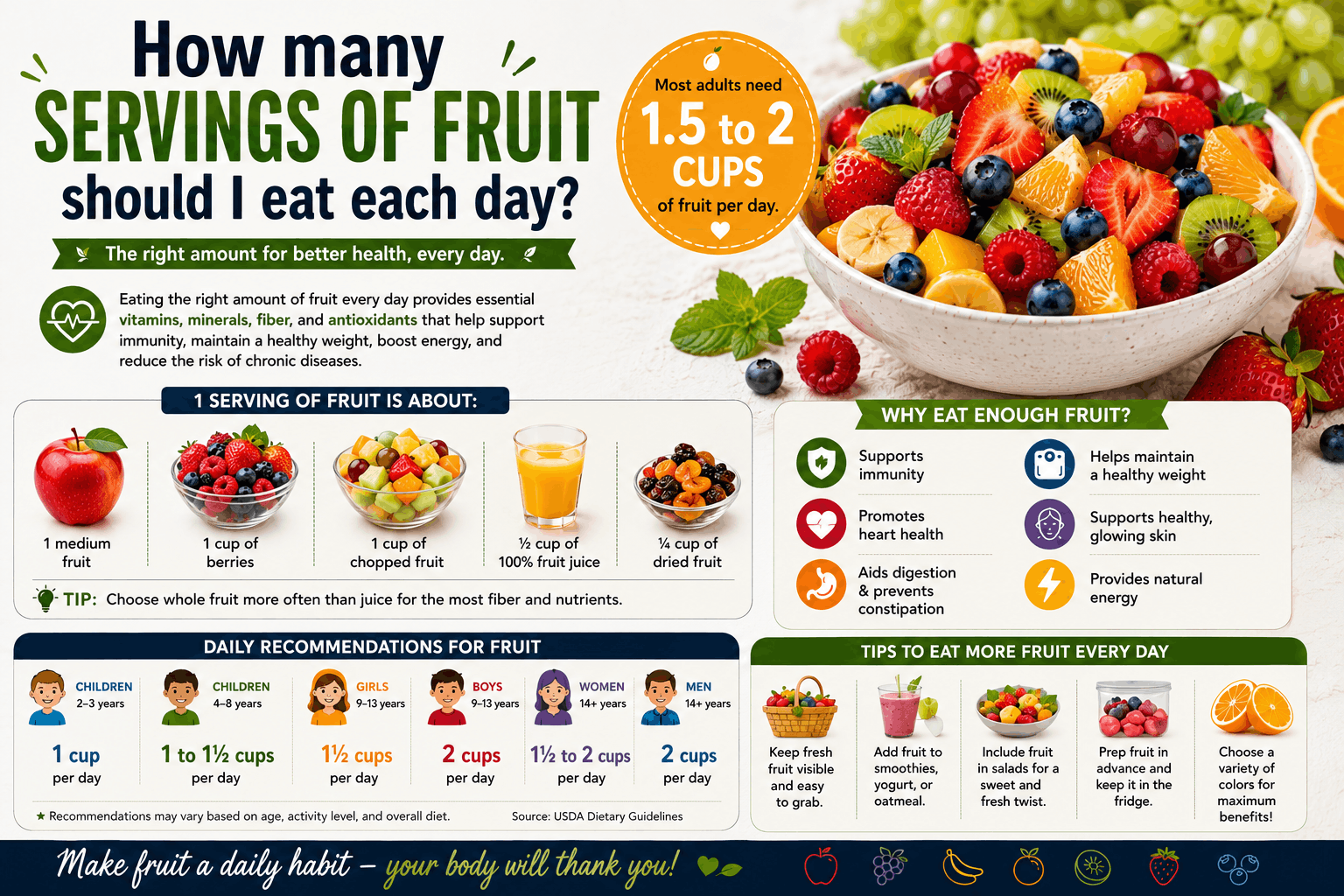
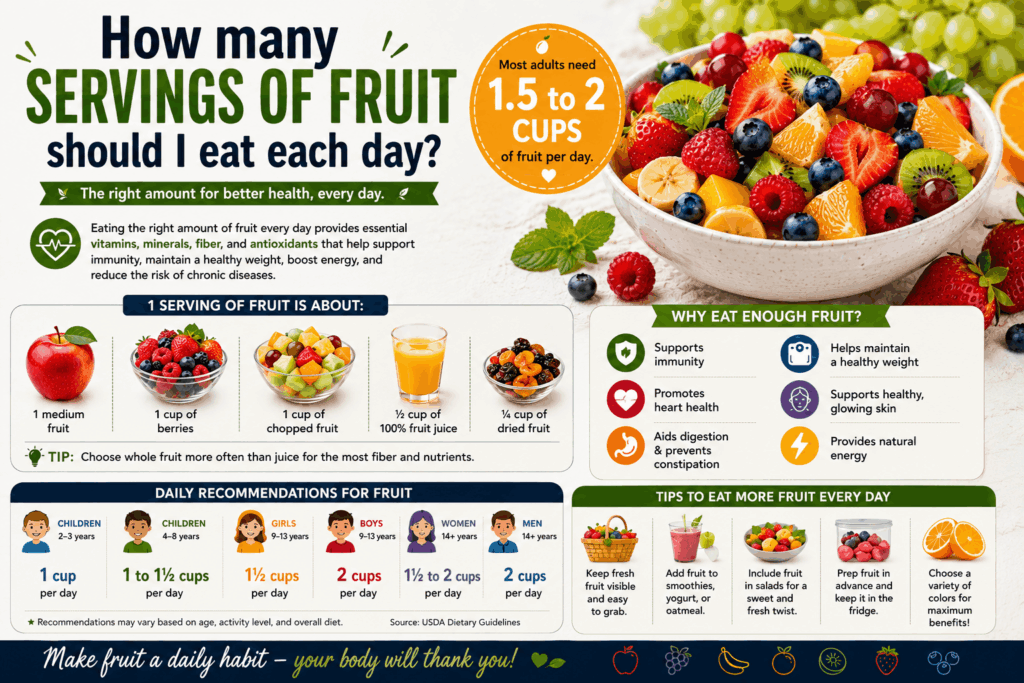
There is no single fruit amount that is ideal for every person because dietary needs vary according to factors such as age, activity level, health status, and overall diet.
Instead of focusing on a strict number of servings of fruit alone, think about your total fruit and vegetable intake.
WHO recommends that people over age 10 aim for at least 400 grams of fruits and vegetables per day combined.
The UK’s NHS uses a different but complementary approach, recommending at least five portions of fruit and vegetables combined each day, with an adult portion generally around 80 grams.
These recommendations highlight an important point: healthy eating is about variety and overall dietary balance, not eating unlimited amounts of one food.
Easy Ways to Add More Fruit to Your Day
You do not need complicated recipes to eat more fruit.
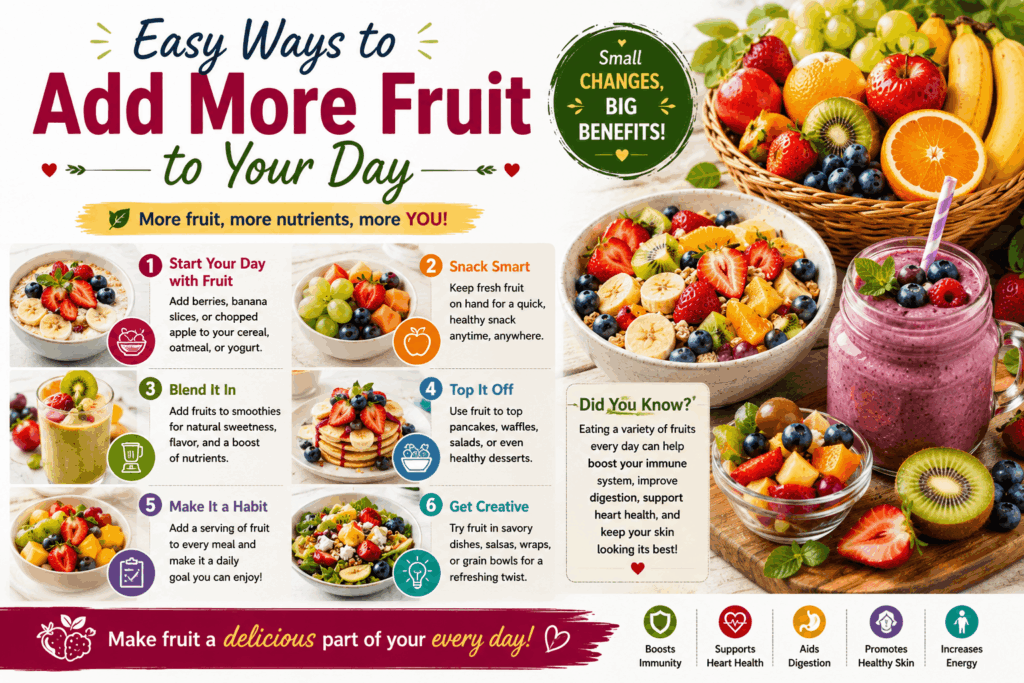
At Breakfast
Add berries or sliced banana to oatmeal, whole-grain cereal or plain yogurt.
You can also add chopped apple, pear or kiwi to a breakfast bowl.
As a Snack
Keep washed fruit where you can easily see it.
An apple, orange, pear or banana can be more convenient than preparing a complicated snack.
With Lunch
Add fruit to a salad or have a piece of fruit alongside your main meal.
For example, a simple lunch could include a whole-grain sandwich, vegetables, a protein source, and an orange.
After Dinner
If you want something sweet after dinner, fresh berries, sliced fruit or plain yogurt with fruit can be a simple option.
The goal is not to make every dessert “perfect.” It is simply to create more opportunities for nutritious foods.
Can Fruit Help With a Healthy Weight?
Fruit can be part of a healthy eating pattern that supports weight management, particularly when it replaces foods and drinks that are high in added sugars, unhealthy fats, or excess calories.
However, fruit should not be described as a weight-loss treatment. Overall food intake, physical activity, sleep, genetics, medications, health conditions, and many other factors can influence body weight.
WHO notes that diets rich in fruits and vegetables are associated with health benefits and may help reduce the risk of unhealthy weight gain when they are part of an overall healthy diet.
Comparison Table
| Berries | Fiber, vitamin C, plant compounds | Yogurt or oatmeal | Variety |
| Apple | Fiber, vitamin C | Whole as a snack | Convenient |
| Orange | Vitamin C, fiber | Whole fruit | Refreshing |
| Banana | Potassium, carbohydrates | Breakfast or snack | Portable |
| Kiwi | Vitamin C, fiber | Yogurt or fruit bowl | Nutrient-rich |
| Pear | Fiber, vitamin C | Whole as a snack | Filling |
| Grapes | Vitamins, plant compounds | Fresh snack | Convenient |
| Avocado | Fiber, unsaturated fat | Toast or salad | Healthy fats |
| Mango | Vitamin C, other nutrients | Fresh or frozen | Naturally sweet |
| Pomegranate | Fiber and plant compounds | Seeds over yogurt | Adds variety |
7. Practical Tips
Choose Variety Over One “Superfruit”
You do not need to eat blueberries every day to have a healthy diet.
Rotate your choices. One day you might have apples and berries, while another day you choose oranges, bananas, or kiwi.
A varied diet makes it easier to obtain a broad range of nutrients. WHO emphasizes diversity as one of the foundations of a healthy diet.
Keep Fruit Ready to Eat
Wash fruit when appropriate and store it where it is easy to see.
Convenience matters. If fruit is hidden at the back of the refrigerator while processed snacks are sitting on the counter, the easier option often wins.
Buy Seasonal Fruit
Seasonal fruit can be flavorful and may be more affordable depending on where you live.
Do not worry if your favorite fruit is unavailable. Frozen options can help maintain variety throughout the year.
Pair Fruit With Other Foods
Fruit does not have to be eaten alone.
Pairing fruit with foods such as plain yogurt, nuts, seeds, or whole grains can create a more balanced snack or breakfast.
Read Labels on Packaged Fruit
For canned fruit, check the label for added sugar and choose options packed in water or natural juice when possible.
8. Common Mistakes
Drinking Too Much Fruit Juice
Juice can seem healthier simply because it comes from fruit. However, it can contain significant amounts of free sugars and much less fiber than whole fruit.
Eating Only One Type of Fruit
Eating the same fruit every day is not necessarily harmful, but variety gives you access to different nutrients and plant compounds.
Avoiding Bananas or Mangoes Because They Taste Sweet
Natural sweetness does not automatically make a fruit unhealthy.
Instead of judging fruit by taste alone, consider the entire food and your overall dietary pattern.
Eating Large Amounts of Dried Fruit
Dried fruit is concentrated because much of its water has been removed. It is easy to eat more than intended, so smaller portions are sensible.
Replacing Vegetables With Fruit
Fruit is nutritious, but it should not replace vegetables entirely.
A balanced diet includes both. WHO recommends a diverse combination of fruits, vegetables, whole grains, legumes, nuts and other nutritious foods.
9. Key Takeaways
- Whole fruit is generally the best everyday choice.
- Berries, apples, oranges, bananas, kiwi and pears are easy nutritious options.
- Avocado is a fruit that provides fiber and predominantly unsaturated fat.
- Fresh, frozen and appropriately packaged canned fruit can all fit into a healthy diet.
- Limit fruit juice and smoothies rather than treating them as unlimited alternatives to whole fruit.
- Dried fruit can be nutritious but should be eaten in sensible portions.
- Variety matters more than finding one “best” fruit.
- Fruit works best as part of an overall balanced diet that also includes vegetables, whole grains, legumes and nutritious protein foods.
10. Frequently Asked Questions
What is the best fruit to eat every day?
There is no single best fruit for everyone. Berries, apples, oranges, bananas, kiwi and pears are all nutritious choices, but eating a variety of fruits is generally more useful than relying on one type.
Is it healthy to eat fruit every day?
Yes. Fruit can be an important part of a balanced diet and provides fiber, vitamins, minerals and beneficial plant compounds. The best approach is to include different fruits alongside other nutritious food groups.
Which fruit is highest in fiber?
Many fruits provide fiber, but the amount varies by fruit and serving size. Berries, pears, and apples with their edible skins are practical choices for increasing fiber intake.
Is eating fruit better than drinking fruit juice?
For everyday eating, whole fruit is generally preferable because it retains its fiber. Fruit juice can contain significant amounts of free sugars even when no sugar has been added.
Can I eat bananas every day?
Bananas can fit into a healthy diet and provide nutrients such as potassium and carbohydrates. There is generally no need to avoid bananas simply because they taste sweet.
Is frozen fruit as healthy as fresh fruit?
Frozen fruit can be a nutritious option and is particularly useful when fresh fruit is unavailable. Choose products without unnecessary added sugars when possible.
How many servings of fruit should I eat each day?
Recommended amounts vary by age and dietary guidance. Rather than focusing only on fruit, consider total fruit and vegetable intake. WHO recommends at least 400 grams of fruits and vegetables per day for people over age 10, while the NHS recommends at least five portions of fruit and vegetables combined each day.
11. Conclusion
The best fruits to eat every day are not necessarily the most expensive or exotic ones. Apples, berries, oranges, bananas, pears, kiwi and many other familiar fruits can make healthy eating easier because they are practical, versatile and nutrient-rich.
The most important habit is variety. Instead of searching for one fruit that does everything, rotate different choices throughout the week and enjoy them alongside vegetables, whole grains, legumes, protein foods and healthy fats.
Choose whole fruit more often than juice, keep portions of dried fruit reasonable, and use fresh, frozen or appropriately packaged fruit according to what is convenient and available.
Healthy eating does not require perfection. A few simple fruit choices made consistently can become an easy part of a balanced lifestyle.
12. Disclaimer
This article is published solely for educational and informational purposes. The information provided is intended to increase general awareness and understanding of the topic. It should not be considered medical, insurance, financial, legal, or professional advice. Readers should consult qualified professionals before making any healthcare, insurance, financial, or legal decisions.
13. References
- World Health Organization (WHO)
- Food and Agriculture Organization of the United Nations (FAO)
- National Health Service (NHS)
- Health Canada
- U.S. Department of Agriculture (USDA)
- U.S. Department of Health & Human Services (HHS)
- Dietary Guidelines for Americans