Best Foods for Heart Health: 15 Heart-Healthy Foods to Eat More Often
Best Foods for Heart Health: What to Eat
Discover the best foods for heart health, including fruits, vegetables, whole grains, fish, beans, nuts, and healthy fats for everyday meals.
best-foods-for-heart-health
Your heart works around the clock, but many everyday eating habits can either support cardiovascular health or work against it. A quick breakfast of sugary cereal, a salty takeout lunch, or frequent processed meats may seem harmless on its own. Over time, however, your overall eating pattern matters.
The good news is that eating for heart health does not mean following a complicated diet or giving up everything you enjoy. Simple foods such as oatmeal, berries, leafy greens, beans, salmon, nuts, seeds, and whole grains can fit into regular meals while providing important nutrients.
In this guide, you’ll learn about the best foods for heart health, why they are useful, what foods to limit, and practical ways to build heart-friendly meals at home or when eating out. Current American Heart Association guidance emphasizes an overall dietary pattern rather than relying on one “superfood.”
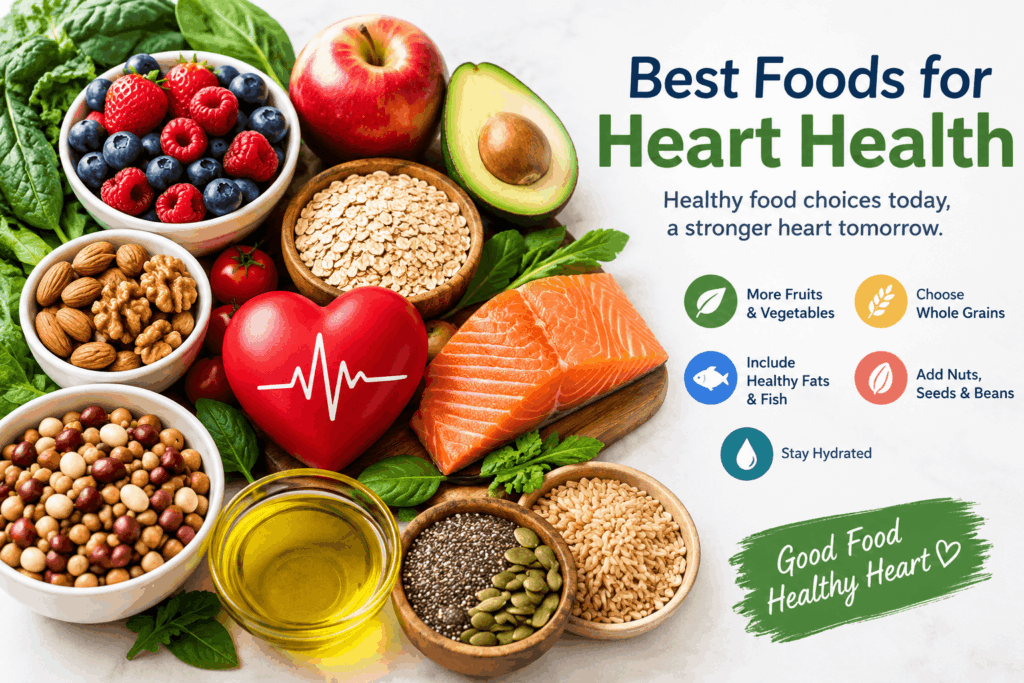
What Are the Best Foods for Heart Health?
The best foods for heart health are generally vegetables, fruits, whole grains, beans and legumes, nuts and seeds, fish, lean proteins, and foods containing unsaturated fats. A heart-healthy eating pattern also limits sodium, added sugars, saturated fat, processed meats, and highly processed foods.
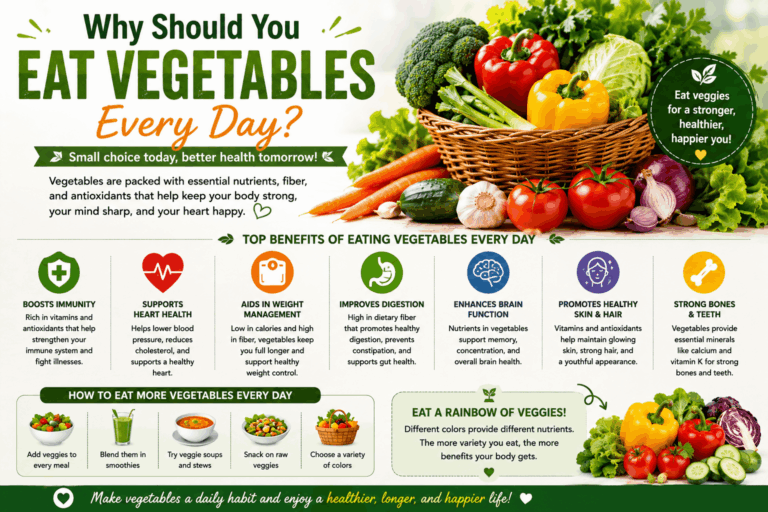
1. Leafy Green Vegetables
Leafy greens such as spinach, kale, collard greens, and other dark green vegetables are excellent additions to a heart-conscious diet.
They provide fiber, vitamins, minerals, and other plant compounds while generally being low in calories and saturated fat. The National Heart, Lung, and Blood Institute includes leafy greens among foods that form the foundation of a heart-healthy eating plan.
Try adding spinach to eggs, kale to a salad, or cooked greens as a side dish with dinner.
2. Berries and Other Whole Fruits
Berries, apples, oranges, pears, bananas, and other whole fruits can easily fit into a heart-friendly diet.
Whole fruit provides dietary fiber along with vitamins and other nutrients. Choosing whole fruit instead of sugary desserts or sweetened snacks can also help reduce added sugar intake.
Good options include:
- Blueberries
- Strawberries
- Raspberries
- Apples
- Oranges
- Pears
- Bananas
Fresh, frozen, and unsweetened canned fruit can all be practical choices.
3. Oatmeal and Other Whole Grains
Whole grains are an important part of a heart-healthy eating pattern. Examples include oatmeal, brown rice, barley, whole-wheat bread, whole-grain pasta, and whole-grain cereals.
Oats are particularly useful because they contain soluble fiber. The NHLBI notes that soluble fiber from foods such as oats, fruits, and beans can help manage cholesterol.
Instead of starting your day with a highly sweetened breakfast cereal, try plain oatmeal topped with berries, walnuts, and a small amount of fruit.
4. Beans and Lentils
Beans, chickpeas, lentils, peas, and other legumes provide plant-based protein and fiber.
They can be an affordable alternative to some meat-based meals and work well in soups, salads, curries, chili, and grain bowls.
For canned beans, check the label and choose low-sodium options when available. You can also rinse canned beans to remove some of the sodium.
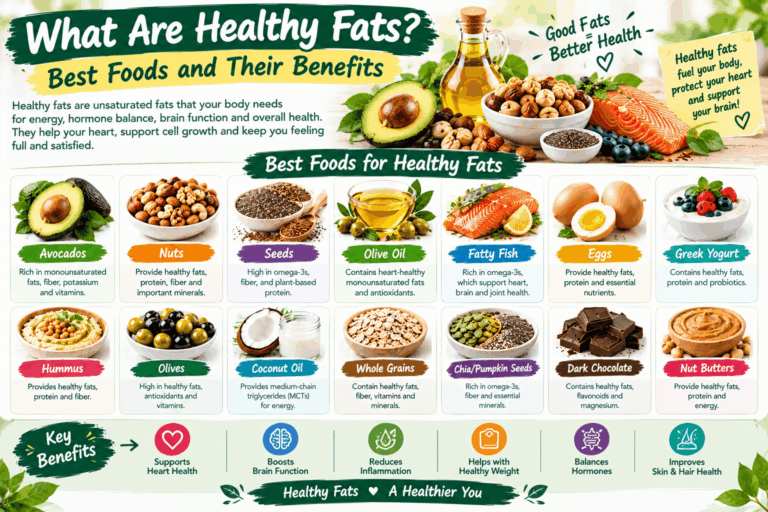
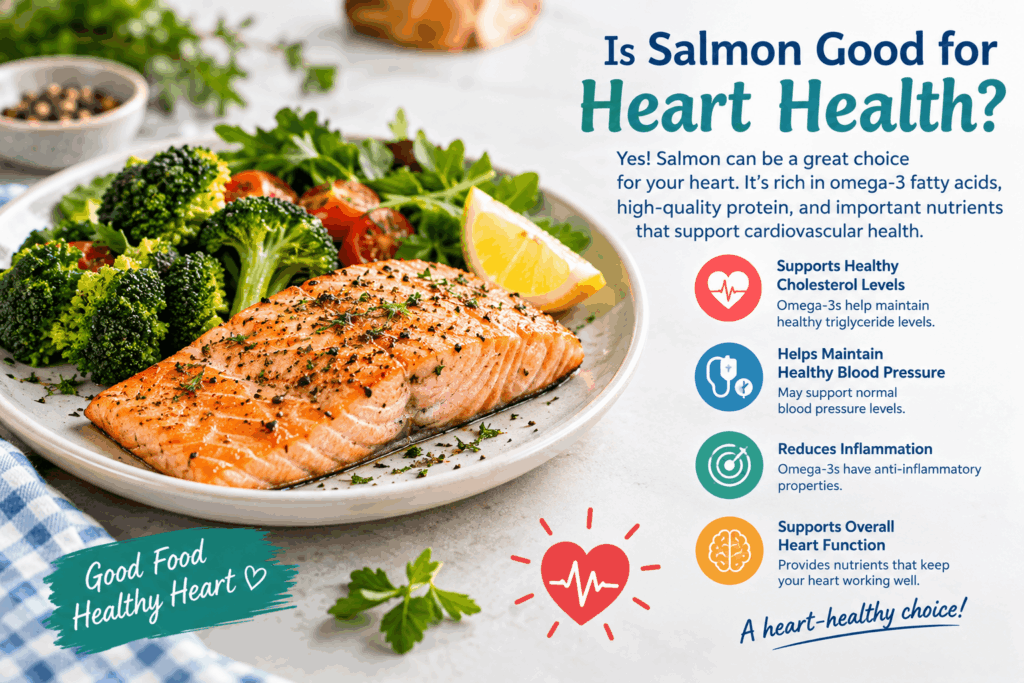
5. Fatty Fish
Fatty fish such as salmon, trout, sardines, herring, and mackerel provide omega-3 fatty acids and high-quality protein.
The American Heart Association recommends regularly including fish and seafood as part of a heart-healthy dietary pattern.
A simple meal could be grilled salmon with roasted vegetables and brown rice.
When possible, choose baked, grilled, or steamed fish instead of heavily breaded or deep-fried versions.
6. Nuts and Seeds
Nuts and seeds can provide unsaturated fats, protein, fiber, and other nutrients.
Useful choices include:
- Walnuts
- Almonds
- Pistachios
- Chia seeds
- Flaxseeds
- Pumpkin seeds
- Sunflower seeds
Choose unsalted nuts most of the time to avoid unnecessary sodium. Because nuts are calorie-dense, portion size still matters.
A small handful can make an easy snack, while chopped nuts can be added to oatmeal, yogurt, salads, or whole-grain dishes.
7. Avocados
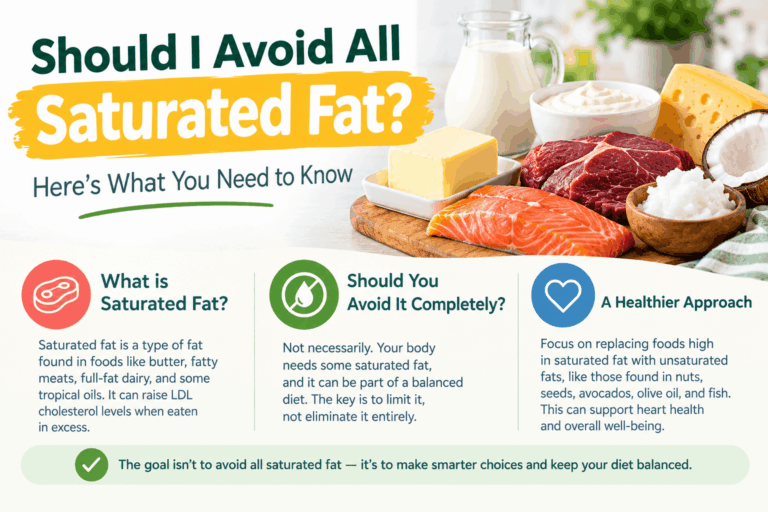
Avocados provide unsaturated fats and can replace foods that contain higher amounts of saturated fat.
Try adding avocado to whole-grain toast, salads, sandwiches, or grain bowls.
The goal is not to eat unlimited amounts of high-fat foods. Instead, heart-healthy eating focuses on choosing healthier unsaturated fats in place of saturated fats.
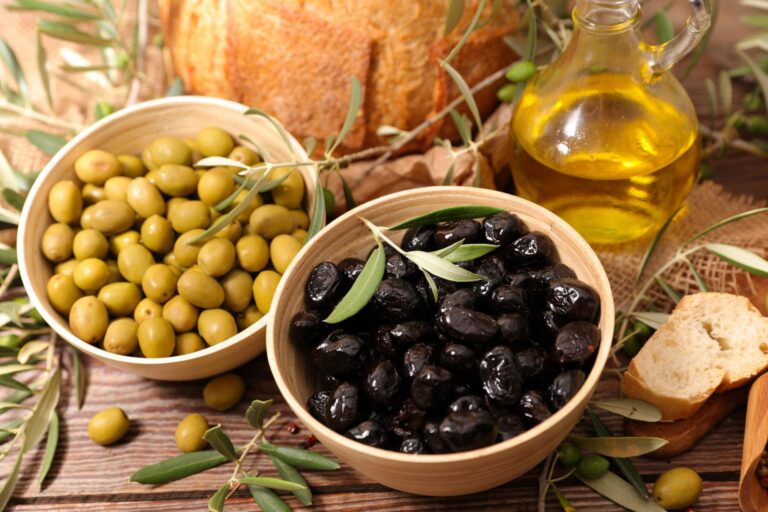
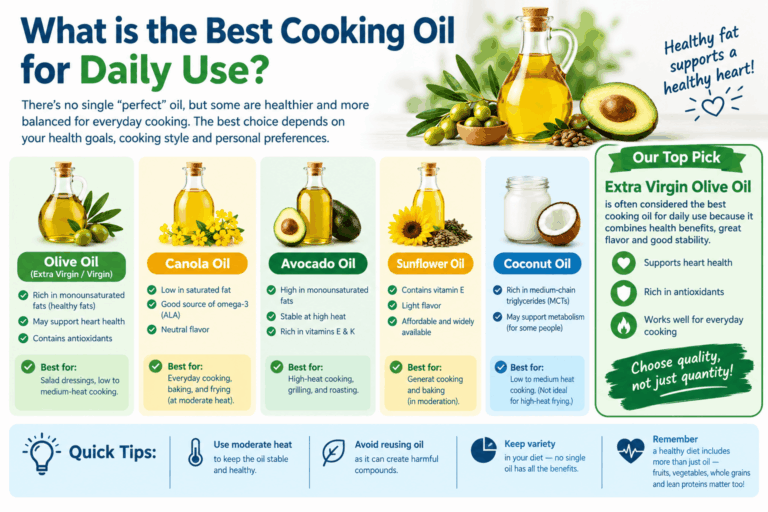
8. Olive and Other Nontropical Plant Oils
Olive oil and other liquid plant oils can be useful alternatives to butter and other solid fats.
The American Heart Association recommends using nontropical liquid plant oils as part of a heart-healthy eating pattern.
You can use olive oil for:
- Salad dressings
- Roasted vegetables
- Light sautéing
- Homemade marinades
Canola, sunflower, soybean, and other plant oils can also fit into a healthy dietary pattern.
9. Tomatoes
Tomatoes are an easy way to add vegetables to everyday meals. Fresh tomatoes, no-salt-added canned tomatoes, and tomato-based dishes can all be useful options.
Add them to salads, soups, whole-grain pasta, sandwiches, or bean dishes.
When buying canned tomato products, compare labels because some sauces and prepared products can contain considerable amounts of sodium or added sugar.
10. Low-Fat or Fat-Free Dairy
Plain low-fat or fat-free yogurt, milk, and other lower-fat dairy products can provide protein and important nutrients.
Flavored yogurt, for example, can contain significantly more added sugar than plain yogurt.
If you prefer dairy alternatives, fortified soy beverages and other fortified options may also fit into a balanced eating pattern.
11. Lean Poultry
Skinless chicken and turkey are good options for lean protein.
The way you prepare them also matters. Grilling, baking, roasting, or steaming is generally a better fit for a heart-healthy diet than deep-frying.
Processed poultry products can also contain substantial sodium, so check the nutrition label when buying packaged options.
12. Tofu and Other Soy Foods
Tofu and other minimally processed soy foods can provide plant-based protein.
They are particularly useful for people who want to replace some meat-based meals with plant-based options.
Try adding tofu to stir-fries, soups, salads, or grain bowls. Choose preparations that are not heavily fried or covered in high-sodium sauces.
13. Whole-Grain Bread and Brown Rice
You do not have to eliminate carbohydrates to eat for heart health.
The better approach is often to choose whole grains more frequently than refined grains. The American Heart Association recommends choosing foods made mostly with whole grains.
Good swaps include:
- White bread → whole-grain bread
- White rice → brown rice or another whole grain
- Refined cereal → oatmeal
- Regular pasta → whole-grain pasta
14. Seeds Rich in Healthy Fats
Flaxseeds, chia seeds, pumpkin seeds, and sunflower seeds can add texture and nutrients to meals.
Ground flaxseed can be stirred into oatmeal or yogurt, while chia seeds work well in smoothies or overnight oats.
As with nuts, choose minimally processed and preferably unsalted varieties.
15. Water and Unsweetened Drinks
Heart-healthy eating is not only about food.
Sugary drinks can add substantial amounts of added sugar without providing much nutritional value. The American Heart Association recommends minimizing sugar-sweetened beverages as part of a heart-healthy eating pattern.
Water is a simple everyday choice. Unsweetened tea and coffee can also fit into a healthy diet for many adults.
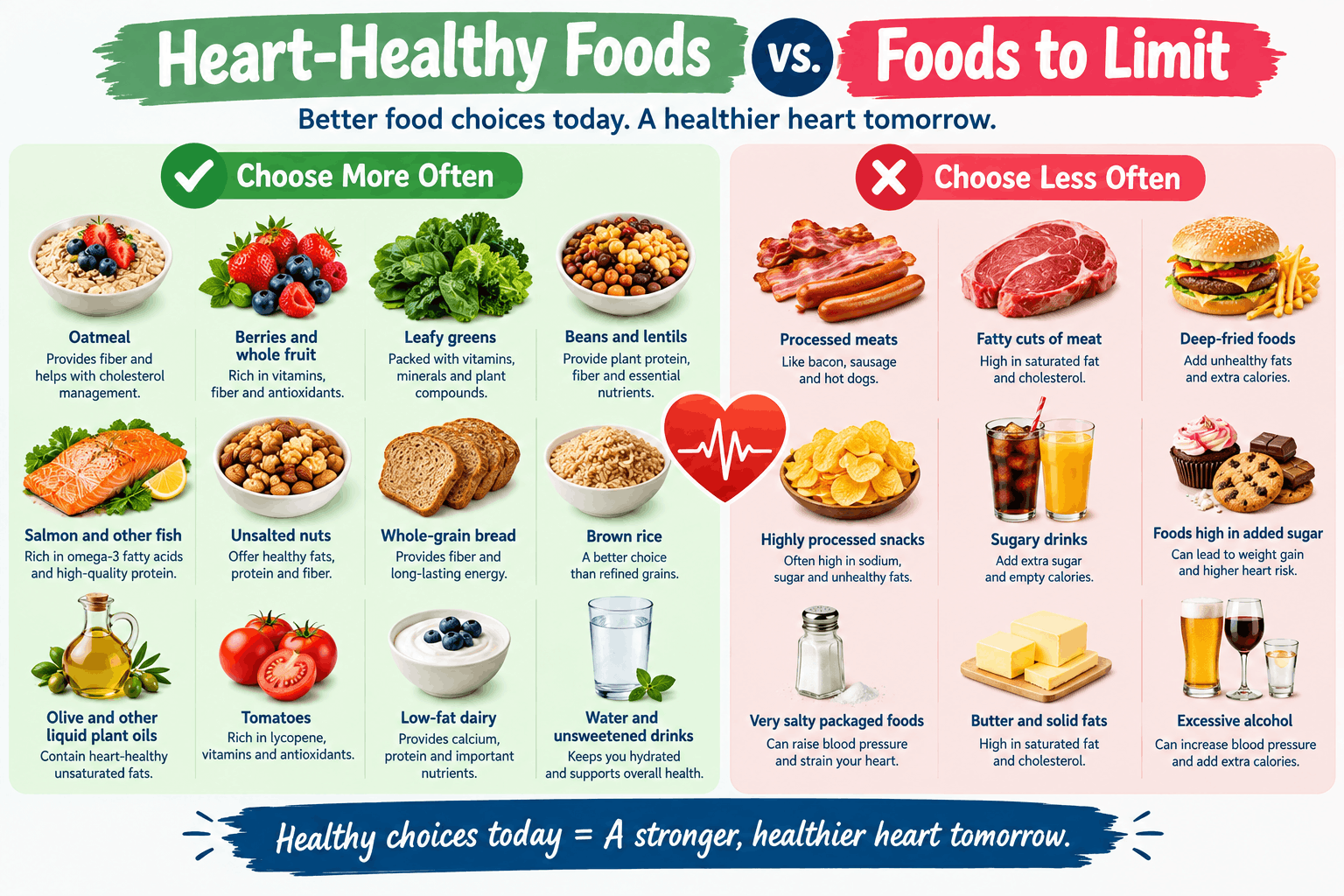
Foods to Limit for Better Heart Health
A heart-healthy diet is not about labeling individual foods as completely forbidden. Instead, focus on what you eat most often.
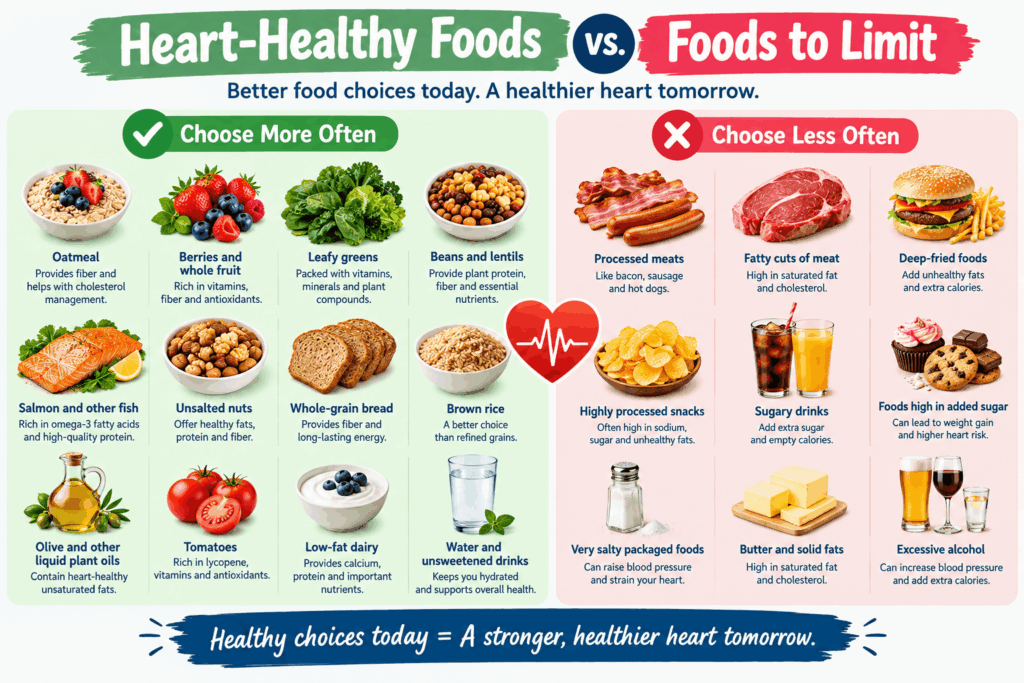
Foods to limit include:
- Processed meats such as bacon, sausages, and hot dogs
- Fatty cuts of meat
- Foods high in saturated fat
- Butter and other solid fats
- Deep-fried foods
- Highly processed snacks
- Sugary drinks
- Foods high in added sugar
- Very salty packaged foods
- Excessive alcohol
The 2026 American Heart Association dietary guidance emphasizes vegetables, fruits, whole grains, healthy proteins, unsaturated fats, minimally processed foods, and lower amounts of sodium, added sugars, and saturated fat.
Heart-Healthy Foods vs. Foods to Limit
| Oatmeal | Sugary breakfast cereals |
| Berries and whole fruit | Sugary desserts |
| Leafy greens | Fried side dishes |
| Beans and lentils | Processed meats |
| Salmon and other fish | Deep-fried fish |
| Unsalted nuts | Salted or sugar-coated nuts |
| Whole-grain bread | Refined white bread |
| Brown rice | Highly refined grain products |
| Olive or other liquid plant oils | Butter and solid fats |
| Low-fat yogurt | High-sugar dairy desserts |
Practical Tips
Build a Balanced Plate
A simple approach is to make vegetables and fruit a major part of your meal, then add a whole-grain food and a healthy protein source.
For example:
Dinner: grilled salmon + roasted broccoli + brown rice + fresh fruit.
Make One
Try replacing butter with a liquid plant oil, processed meat with beans or fish, or refined grains with whole grains.
Read Nutrition Labels
When comparing packaged foods, look at sodium, saturated fat, added sugars, and serving size. The American Heart Association recommends using nutrition labels to make more informed choices.
Choose Lower-Sodium Options
Canned soups, sauces, processed meats, instant noodles, and packaged meals can contain a lot of sodium.
Look for low-sodium or no-salt-added versions when available.
Prepare More Meals at Home
Cooking at home makes it easier to control salt, added sugar, cooking fats, and portion sizes.
Common Mistakes
Focusing on One “Superfood”
No single food can protect your heart on its own. Current guidance emphasizes an overall dietary pattern rather than individual foods.
Assuming All Packaged Foods Are Unhealthy
Frozen vegetables, canned beans, plain oats, and other minimally processed foods can be convenient and nutritious. Check labels instead of judging a food simply by its packaging.
Ignoring Sodium
A meal can look healthy while still containing a large amount of sodium because of sauces, dressings, processed meats, or packaged ingredients.
Eating Too Much of a Healthy Food
Nuts, avocado, oils, and other nutritious foods can still contribute substantial calories. Healthy eating also involves reasonable portions.
Choosing Fried Versions of Healthy Foods
Fish, vegetables, and chicken can become much less heart-friendly when they are regularly deep-fried or paired with high-sodium sauces.
Key Takeaways
- A heart-healthy diet is an overall eating pattern, not a list of magical foods.
- Eat plenty of vegetables and whole fruits.
- Choose whole grains more often than refined grains.
- Include beans, lentils, nuts, seeds, fish, and other healthy protein sources.
- Use unsaturated plant oils instead of foods high in saturated fat.
- Limit processed meats, added sugars, excess sodium, and highly processed foods.
- Read nutrition labels and pay attention to serving sizes.
- Small, consistent food choices can make a healthier eating pattern easier to maintain.
Frequently Asked Questions
What is the number one food for heart health?
You know, no single food is considered the best for heart health.
A varied diet that includes vegetables, fruits, whole grains, legumes, fish, nuts, seeds, and healthy unsaturated fats is more important than relying on any one food.
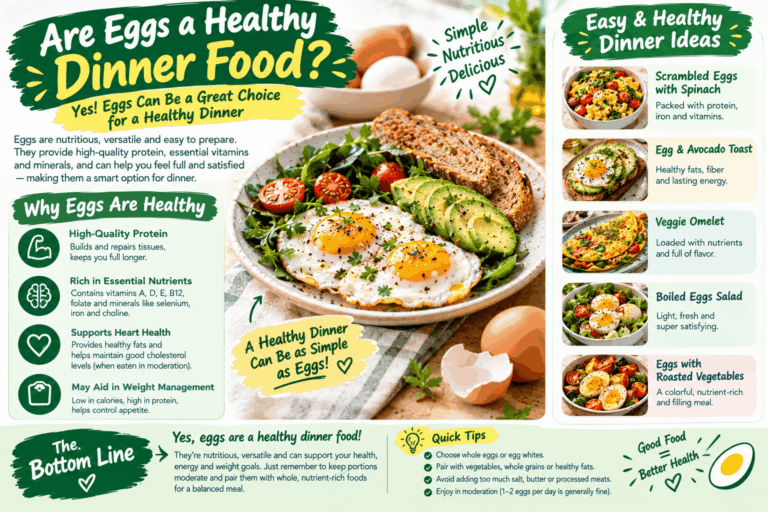
Are eggs good for heart health?
Eggs can fit into a balanced eating pattern for many people. What matters is the overall diet, including the amount of saturated fat, sodium, and processed foods used alongside them.
People with specific medical conditions or dietary restrictions should discuss their individual needs with a qualified healthcare professional.
Is oatmeal good for your heart?
Yes. Oatmeal is a whole-grain food and provides soluble fiber. Soluble fiber from foods such as oats, fruits, and beans can support healthy cholesterol levels.
Are nuts good for your heart?
Nuts can be part of a heart-healthy diet because they provide unsaturated fats, protein, fiber, and other nutrients. Choose mostly unsalted varieties and keep portions reasonable.
Is salmon good for heart health?
Salmon is a source of omega-3 fatty acids and protein and can fit well into a heart-healthy eating pattern. Baking, grilling, or steaming is generally preferable to deep-frying.
What foods should I avoid for heart health?
Rather than completely banning individual foods, focus on limiting foods high in saturated fat, sodium, added sugars, and highly processed ingredients. For better health, manufactured meats, sugary drinks, and salty packaged foods high in saturated fat should be used less often.
Can I eat meat on a heart-healthy diet?
Yes. If you eat meat, current guidance favors lean, unprocessed options and encourages regularly including plant-based proteins and seafood. Manufactured meats and fatty cuts of meat should be used in moderate amounts.
Conclusion
Eating for heart health does not require an extreme diet. The most practical approach is to build meals around vegetables, whole fruits, whole grains, beans, fish, nuts, seeds, and other nutrient-rich foods while cutting back on excess sodium, added sugars, saturated fat, and highly processed foods.
Start with small changes that you can maintain. Add berries to breakfast, choose whole-grain bread, include beans in a weekly meal, replace some processed meat with fish, and use unsaturated plant oils instead of solid fats.
Over time, these everyday choices can help create a more heart-friendly eating pattern. The goal is not perfection. It is consistency and variety.
Disclaimer
This article is published solely for educational and informational purposes. The information provided is intended to increase general awareness and understanding of the topic. It should not be considered medical, insurance, financial, legal, or professional advice. Readers should consult qualified professionals before making any healthcare, insurance, financial, or legal decisions.
References
- American Heart Association (AHA)
- National Heart, Lung, and Blood Institute (NHLBI)
- National Institutes of Health (NIH)
- U.S. Department of Agriculture (USDA)
- Dietary Guidelines for Americans